THE ADVENTURE COLLECTIVE® · Independent discovery and booking for outdoor travel

Stand a short distance from the world’s most fortified border on a guided DMZ tour from Seoul. Visit Imjingak Park, the 3rd Infiltration Tunnel, Dora Observatory and Dorasan Station with expert commentary and practical guidance for a focused half-day experience.
Stand a short distance from the world’s most fortified border on a guided DMZ tour from Seoul. Visit Imjingak Park, the 3rd Infiltration Tunnel, Dora Observatory and Dorasan Station with expert commentary and practical guidance for a focused half-day experience.
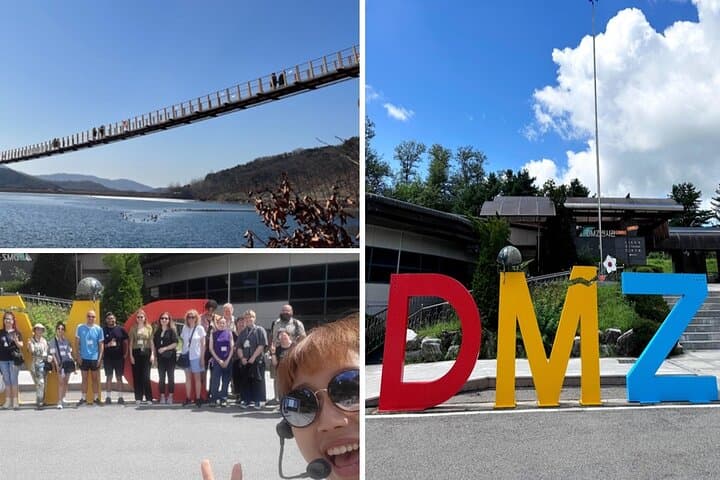
You arrive before the fence line, the coach pulling up beneath a sky where the Imjin River cuts a cool, stubborn path toward the sea. Guides step aboard with clear, clipped English; metal plaques and artillery at Imjingak park sit like reminders that the landscape still keeps score.
Verified experiences and guided adventures in the surrounding area.
Operated by SEOUL CITY TOUR CO. LTD. · Paju, Gyeonggi-do
You arrive before the fence line, the coach pulling up beneath a sky where the Imjin River cuts a cool, stubborn path toward the sea. Guides step aboard with clear, clipped English; metal plaques and artillery at Imjingak park sit like reminders that the landscape still keeps score.
This highway-length visit moves through places that compress modern Korean history into short, sharp chapters: Imjingak’s memorials and Freedom Bridge; the claustrophobic 3rd Infiltration Tunnel bored under the border; Dora Observatory’s binoculars trained on Kijong-dong and the silent roofs of the North; Dorasan Station, a single platform that carries a re-unification promise more than passengers. The DMZ itself is a Cold War artifact and an accidental refuge—decades of limited human access mean fields and reed beds have reclaimed parts of this edge.
Expect a blend of military history, civic memory and local culture: guides explain armistice lines, wartime displacements and the symbolic role of Dorasan in Korea’s reunification narrative. The geology is basic—river plains with human-cut tunnels and observation points—but the experience hinges on proximity and context more than elevation or terrain.
Practical notes: bring a passport and arrive on time for hotel pickup; photo rules and security checks are strict. Wear comfortable, closed shoes for steep, narrow tunnels and layered clothing—the wind along the river can be sharp. Listen closely to the guide: access can change with military conditions, and the most memorable moments come from the concise, factual commentary that links place to past.
easy.
6–7 hours.
Suitable for most travelers in reasonable health; includes short walks, stairs and one steep, narrow tunnel.
Yes—your valid passport is required on the day of travel for identification and security clearance.
No; some areas have strict photo rules. Follow your guide’s directions about when and where photography is allowed.
The tour is rated easy but includes steep and narrow tunnel stairs and some walking; infants must sit on laps and consider mobility limitations before booking.
Itineraries can change without refund due to military conditions—guides will provide alternatives where possible.
The Korean Demilitarized Zone was established by the 1953 armistice and has since marked the boundary between North and South Korea, with Dorasan Station symbolizing hopes for reunification.
Restricted human access over decades has made parts of the DMZ an accidental nature reserve; visitors should stick to designated paths and follow guides to minimize impact.
SEOUL CITY TOUR CO. LTD. operates guided outdoor trips and adventures with an emphasis on safety, stewardship, and memorable experiences.
You arrive before the fence line, the coach pulling up beneath a sky where the Imjin River cuts a cool, stubborn path toward the sea. Guides step aboard with clear, clipped English; metal plaques and artillery at Imjingak park sit like reminders that the landscape still keeps score.
You arrive before the fence line, the coach pulling up beneath a sky where the Imjin River cuts a cool, stubborn path toward the sea. Guides step aboard with clear, clipped English; metal plaques and artillery at Imjingak park sit like reminders that the landscape still keeps score.
This highway-length visit moves through places that compress modern Korean history into short, sharp chapters: Imjingak’s memorials and Freedom Bridge; the claustrophobic 3rd Infiltration Tunnel bored under the border; Dora Observatory’s binoculars trained on Kijong-dong and the silent roofs of the North; Dorasan Station, a single platform that carries a re-unification promise more than passengers. The DMZ itself is a Cold War artifact and an accidental refuge—decades of limited human access mean fields and reed beds have reclaimed parts of this edge.
Expect a blend of military history, civic memory and local culture: guides explain armistice lines, wartime displacements and the symbolic role of Dorasan in Korea’s reunification narrative. The geology is basic—river plains with human-cut tunnels and observation points—but the experience hinges on proximity and context more than elevation or terrain.
Practical notes: bring a passport and arrive on time for hotel pickup; photo rules and security checks are strict. Wear comfortable, closed shoes for steep, narrow tunnels and layered clothing—the wind along the river can be sharp. Listen closely to the guide: access can change with military conditions, and the most memorable moments come from the concise, factual commentary that links place to past.