THE ADVENTURE COLLECTIVE® · Independent discovery and booking for outdoor travel

A full-day DMZ tour from Seoul that combines a rare defector interview with visits to Imjingak, the Third Tunnel, Dora Observatory and optional Gamaksan Suspension Bridge. Expect a 7–9 hour, historically dense itinerary with variable walking and strict ID rules.
A full-day DMZ tour from Seoul that combines a rare defector interview with visits to Imjingak, the Third Tunnel, Dora Observatory and optional Gamaksan Suspension Bridge. Expect a 7–9 hour, historically dense itinerary with variable walking and strict ID rules.
You step off an air-conditioned coach into a landscape where fences, watchtowers and planted rice fields meet an uneasy quiet—this is the edge of a divided peninsula. The DMZ tour from Seoul threads through Imjingak Park’s rusting relics, pauses at the Third Tunnel’s cold concrete mouth, and rises to Dora Observatory where binoculars pick out places tourists rarely see.
Verified experiences and guided adventures in the surrounding area.
Operated by Cosmojin Agency · Seoul, Seoul
You step off an air-conditioned coach into a landscape where fences, watchtowers and planted rice fields meet an uneasy quiet—this is the edge of a divided peninsula. The DMZ tour from Seoul threads through Imjingak Park’s rusting relics, pauses at the Third Tunnel’s cold concrete mouth, and rises to Dora Observatory where binoculars pick out places tourists rarely see.
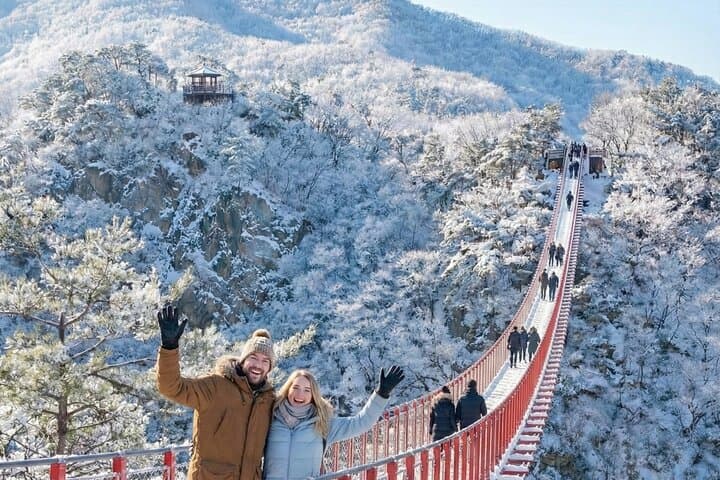
The route is both modern museum and battlefield archive: Imjingak preserves Freedom Bridge and war-era artifacts, while Dorasan Station stands as a symbolic terminal for a railway that once linked two Koreas. Geologically, the area sits on rolling low mountains and river valleys carved by the Imjin River; Gamaksan’s craggy ridgeline offers a clear autumn panorama, and the Gamaksan Chulleong Suspension Bridge adds a pulse of vertigo to a history-heavy day.
Culturally, the highlight is the defector interview—an intimate, firsthand account that reframes geopolitics into human experience. Guides with national security backgrounds provide context about armistice lines, tunnels, and propaganda villages seen from across the border.
Practically: expect a 7–9 hour day with periods of walking and standing. Military access is conditional—bring your passport, wear comfortable shoes, and be ready for sudden itinerary changes if sites close. Pack water, layers for wind on exposed overlooks, and a charged camera. Photography rules vary by site; follow guide instructions. The tour balances sobering history and sharp landscape, giving travelers a direct, clear-eyed look at one of the world’s most controlled frontiers.
moderate.
7–9 hours.
Participants should have a moderate level of fitness—able to walk 20–30 minutes uphill and stand through museum and observation stops.
Yes, all participants must bring a valid passport for military checkpoints; tours will deny entry without it.
Children may join but must be accompanied by an adult; age restrictions can vary for certain DMZ sites—check with the operator in advance.
Yes. The DMZ is an active military area and can close with little notice; operators typically provide an alternative itinerary if sites are inaccessible.
No. Photography rules vary by location—follow the guide and posted signs, especially at observation points and inside tunnel exhibits.
The DMZ was established by the 1953 armistice and has since become both a military buffer and a living museum of the Korean War’s legacy.
The restricted zone has unintentionally preserved pockets of habitat; visitors should stay on designated paths and avoid disturbing vegetation or wildlife.
Cosmojin Agency operates guided outdoor trips and adventures with an emphasis on safety, stewardship, and memorable experiences.
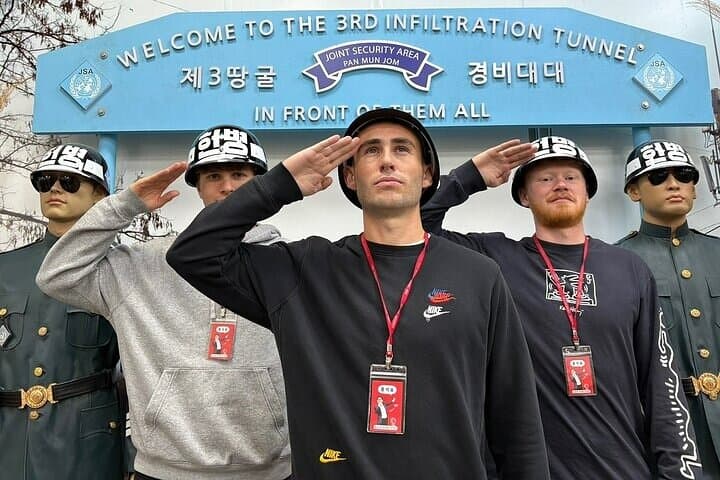

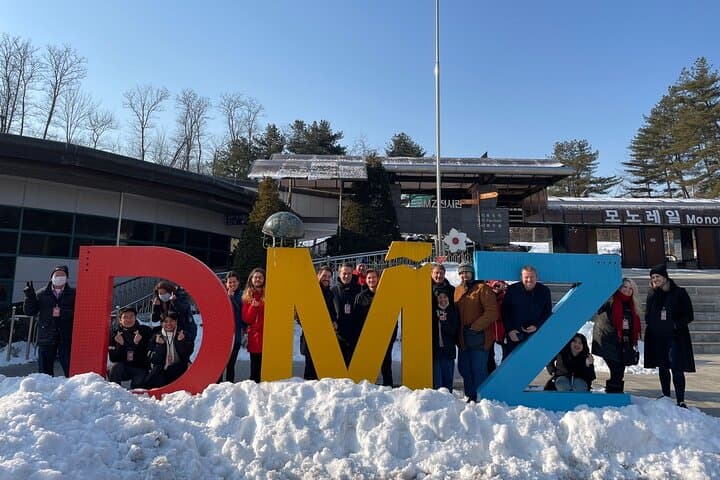
You step off an air-conditioned coach into a landscape where fences, watchtowers and planted rice fields meet an uneasy quiet—this is the edge of a divided peninsula. The DMZ tour from Seoul threads through Imjingak Park’s rusting relics, pauses at the Third Tunnel’s cold concrete mouth, and rises to Dora Observatory where binoculars pick out places tourists rarely see.
You step off an air-conditioned coach into a landscape where fences, watchtowers and planted rice fields meet an uneasy quiet—this is the edge of a divided peninsula. The DMZ tour from Seoul threads through Imjingak Park’s rusting relics, pauses at the Third Tunnel’s cold concrete mouth, and rises to Dora Observatory where binoculars pick out places tourists rarely see.
The route is both modern museum and battlefield archive: Imjingak preserves Freedom Bridge and war-era artifacts, while Dorasan Station stands as a symbolic terminal for a railway that once linked two Koreas. Geologically, the area sits on rolling low mountains and river valleys carved by the Imjin River; Gamaksan’s craggy ridgeline offers a clear autumn panorama, and the Gamaksan Chulleong Suspension Bridge adds a pulse of vertigo to a history-heavy day.
Culturally, the highlight is the defector interview—an intimate, firsthand account that reframes geopolitics into human experience. Guides with national security backgrounds provide context about armistice lines, tunnels, and propaganda villages seen from across the border.
Practically: expect a 7–9 hour day with periods of walking and standing. Military access is conditional—bring your passport, wear comfortable shoes, and be ready for sudden itinerary changes if sites close. Pack water, layers for wind on exposed overlooks, and a charged camera. Photography rules vary by site; follow guide instructions. The tour balances sobering history and sharp landscape, giving travelers a direct, clear-eyed look at one of the world’s most controlled frontiers.