THE ADVENTURE COLLECTIVE® · Independent discovery and booking for outdoor travel

Visit Aegibong Peace Ecopark for close-up views across the DMZ, then unwind with a hands-on K‑BBQ campnic in the woods. This full-day tour combines history, nature and Korean food culture into one accessible escape from Seoul.
Visit Aegibong Peace Ecopark for close-up views across the DMZ, then unwind with a hands-on K‑BBQ campnic in the woods. This full-day tour combines history, nature and Korean food culture into one accessible escape from Seoul.
You step off the coach into a cool river breeze and a view that refuses to look ordinary: across low tidal flats, a string of farmhouses sits in North Korea, quiet and oddly domestic. Aegibong Peace Ecopark perches on a low ridge above the Imjin–Han confluence; the observatory’s railings frame villages, levees and a river that seems to dare you to imagine the border differently.
Verified experiences and guided adventures in the surrounding area.
Operated by Hanatour ITC (하나투어 아이티씨) · Paju, Gyeonggi-do
You step off the coach into a cool river breeze and a view that refuses to look ordinary: across low tidal flats, a string of farmhouses sits in North Korea, quiet and oddly domestic. Aegibong Peace Ecopark perches on a low ridge above the Imjin–Han confluence; the observatory’s railings frame villages, levees and a river that seems to dare you to imagine the border differently.
The DMZ here is recent geology meeting recent history — alluvial plains shaped by centuries of Han and Imjin flow, then sharp human lines drawn after 1950. Aegibong itself was a contested hill during the Korean War; today the park is managed for peace and memory, with walking paths, interpretive signs and a bridge that marks a literal crossing point between past and present.
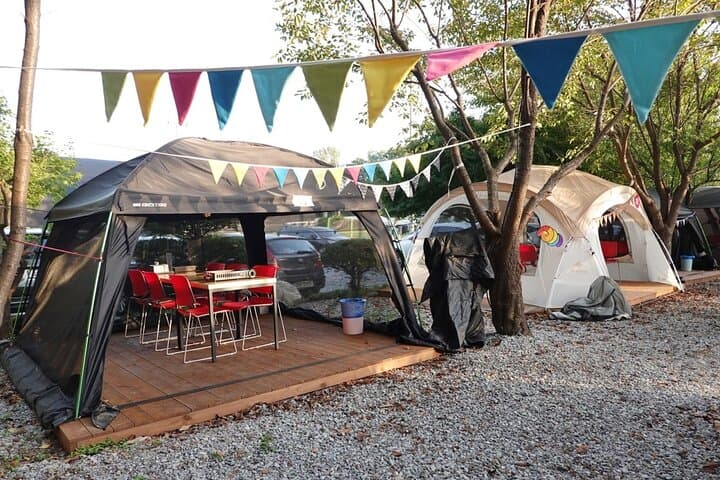
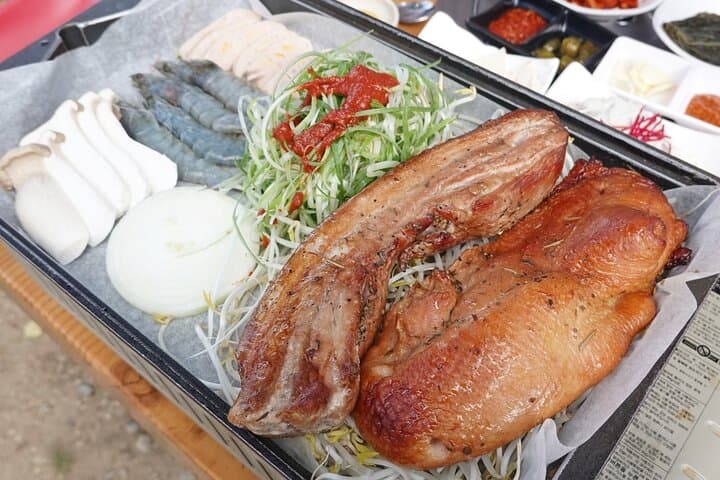
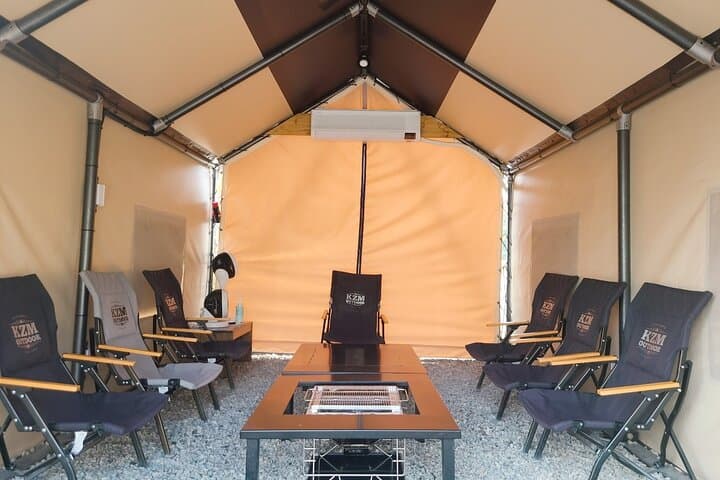
Culturally the day blends solemn observation with a familiar Korean lift: a campsite dinner of charcoal K‑BBQ. At nearby woodland campsites staff set up tents and grills so the meal becomes the slow, social counterpoint to the brisk, guided DMZ visits.
Practical guidance: this is a long day (about 7–8 hours) with multiple short hikes and standing at viewpoints — bring a valid passport or ID for checkpoints, wear layered clothes for riverside wind, and expect clear rules on photography and movement inside DMZ sites. Transportation and admission are usually included, but follow the local guide’s instructions closely; the area’s access rules are strict and staffing or site assignments can change. Arrive hydrated, camera charged, and mentally ready for a day that pairs geopolitical perspective with forest smoke and sizzling meat.
moderate.
7–8 hours.
Comfortable standing and short hikes; good cardiovascular fitness recommended for multiple stops and uneven trails
Yes — guests are required to present a valid passport or national ID at DMZ checkpoints; bring originals, not copies.
Yes — the campsite barbecue, utensils and setup are included; notify operators in advance for dietary restrictions.
Many areas and the vehicle are wheelchair accessible, but some viewpoints may involve steps or uneven ground—check with the operator beforehand.
Photography from public observatories is generally allowed, but photographing military personnel, equipment or restricted areas is prohibited—follow the guide’s instructions.
Aegibong was a contested hill in the Korean War; its current role as an ecopark reflects South Korea’s efforts to convert frontline sites into places of remembrance and education.
The DMZ and adjacent river corridors are ecologically sensitive; visitors should follow stay-on-trail rules and avoid leaving waste to protect habitat and migration routes.
Hanatour ITC (하나투어 아이티씨) operates guided outdoor trips and adventures with an emphasis on safety, stewardship, and memorable experiences.

You step off the coach into a cool river breeze and a view that refuses to look ordinary: across low tidal flats, a string of farmhouses sits in North Korea, quiet and oddly domestic. Aegibong Peace Ecopark perches on a low ridge above the Imjin–Han confluence; the observatory’s railings frame villages, levees and a river that seems to dare you to imagine the border differently.
You step off the coach into a cool river breeze and a view that refuses to look ordinary: across low tidal flats, a string of farmhouses sits in North Korea, quiet and oddly domestic. Aegibong Peace Ecopark perches on a low ridge above the Imjin–Han confluence; the observatory’s railings frame villages, levees and a river that seems to dare you to imagine the border differently.
The DMZ here is recent geology meeting recent history — alluvial plains shaped by centuries of Han and Imjin flow, then sharp human lines drawn after 1950. Aegibong itself was a contested hill during the Korean War; today the park is managed for peace and memory, with walking paths, interpretive signs and a bridge that marks a literal crossing point between past and present.
Culturally the day blends solemn observation with a familiar Korean lift: a campsite dinner of charcoal K‑BBQ. At nearby woodland campsites staff set up tents and grills so the meal becomes the slow, social counterpoint to the brisk, guided DMZ visits.
Practical guidance: this is a long day (about 7–8 hours) with multiple short hikes and standing at viewpoints — bring a valid passport or ID for checkpoints, wear layered clothes for riverside wind, and expect clear rules on photography and movement inside DMZ sites. Transportation and admission are usually included, but follow the local guide’s instructions closely; the area’s access rules are strict and staffing or site assignments can change. Arrive hydrated, camera charged, and mentally ready for a day that pairs geopolitical perspective with forest smoke and sizzling meat.