THE ADVENTURE COLLECTIVE® · Independent discovery and booking for outdoor travel

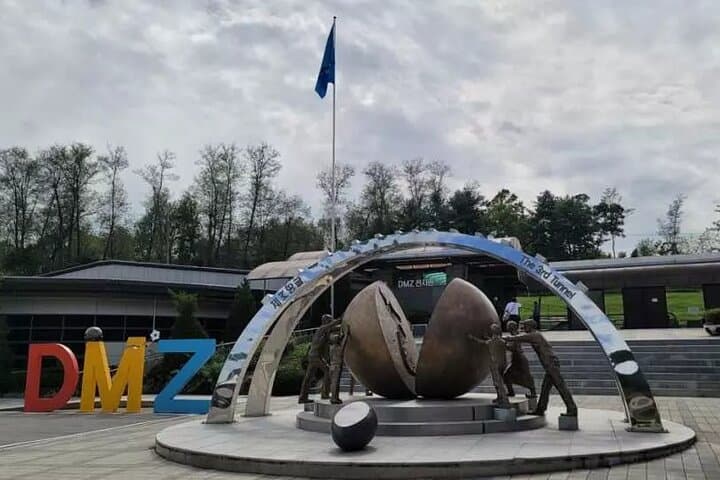
A focused half-day journey to Korea’s DMZ—see the 3rd Infiltration Tunnel, peer into North Korea from Dora Observatory, and visit Dorasan Station. This compact tour packs historical context, on-the-ground access and practical logistics for a city-side excursion.
A focused half-day journey to Korea’s DMZ—see the 3rd Infiltration Tunnel, peer into North Korea from Dora Observatory, and visit Dorasan Station. This compact tour packs historical context, on-the-ground access and practical logistics for a city-side excursion.
You step off the bus into a neutral rectangle of land where signs, fences and watchtowers keep an uneasy rhythm. Wind rides across low rice paddies; binoculars at Dora Observatory train on a distant cluster of buildings in North Korea as guides lay out the human stories behind the landscape.
Verified experiences and guided adventures in the surrounding area.
Operated by TrevoTour Travels · Paju, Gyeonggi-do
You step off the bus into a neutral rectangle of land where signs, fences and watchtowers keep an uneasy rhythm. Wind rides across low rice paddies; binoculars at Dora Observatory train on a distant cluster of buildings in North Korea as guides lay out the human stories behind the landscape.
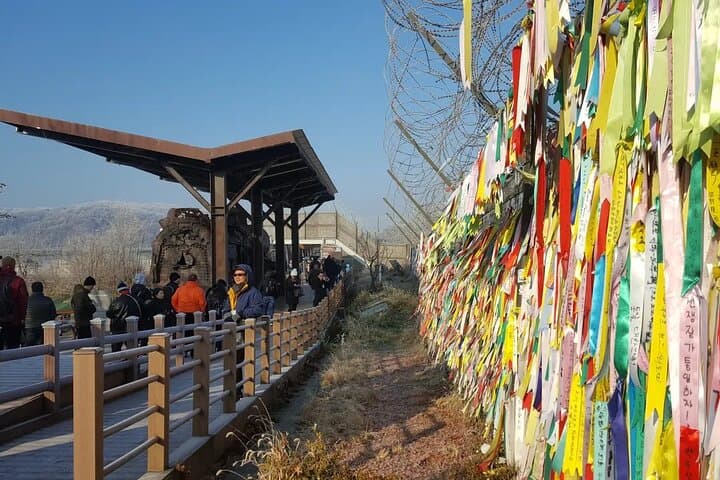
The DMZ was drawn with the 1953 armistice and is part battlefield, part buffer zone. Geological features are modest—flat plains, small hills and the Imjin River—but the real layers are political and cultural: rusted locomotives at Imjingak, family altars where separated relatives still leave offerings, and Dorasan Station, a railway platform that embodies a stalled hope for reconnection.
Walk the 3rd Infiltration Tunnel to feel the claustrophobic scale of Cold War engineering; stand at Dora Observatory and watch propaganda flags shrink into the distance; cross Dokgae Bridge for a quieter encounter with the river and countryside. Local guides provide historical context and point out subtle markers of life on both sides of the border.
Practical guidance: tours run 7–8 hours—bring your passport, arrive on time for the mandatory ID check, and dress in layers for variable weather and security procedures. Footwear should be comfortable for short walks and stair descents into the tunnel. Photography is allowed in some areas but restricted in others—follow your guide and military signage. The DMZ can close without notice; if that happens expect alternative stops or rescheduling. This half-day itinerary pairs heavy history with accessible logistics—ideal for curious travelers who want a concentrated, sober look at one of the world’s last Cold War frontiers.
easy.
7–8 hours.
Light fitness required—short walks, stairs into tunnel; mostly seated on transfers
Yes—a current valid passport is required on the day of travel for military ID checks.
Yes—the tunnel has been modified for visitors with walkways and lighting, but expect low ceilings and stairs.
Yes—military or weather conditions can close the area; operators offer alternatives or refunds per policy.
Children can join, but infants often must sit on laps and some areas may be emotionally intense for young children.
The DMZ was established by the 1953 Korean Armistice as a buffer between North and South Korea; its features reflect military strategy and the long pause in full-scale hostilities.
Restricted access has created pockets of rich biodiversity; visitors should stick to paths and carry out waste to minimize impact.
TrevoTour Travels operates guided outdoor trips and adventures with an emphasis on safety, stewardship, and memorable experiences.

You step off the bus into a neutral rectangle of land where signs, fences and watchtowers keep an uneasy rhythm. Wind rides across low rice paddies; binoculars at Dora Observatory train on a distant cluster of buildings in North Korea as guides lay out the human stories behind the landscape.
You step off the bus into a neutral rectangle of land where signs, fences and watchtowers keep an uneasy rhythm. Wind rides across low rice paddies; binoculars at Dora Observatory train on a distant cluster of buildings in North Korea as guides lay out the human stories behind the landscape.
The DMZ was drawn with the 1953 armistice and is part battlefield, part buffer zone. Geological features are modest—flat plains, small hills and the Imjin River—but the real layers are political and cultural: rusted locomotives at Imjingak, family altars where separated relatives still leave offerings, and Dorasan Station, a railway platform that embodies a stalled hope for reconnection.
Walk the 3rd Infiltration Tunnel to feel the claustrophobic scale of Cold War engineering; stand at Dora Observatory and watch propaganda flags shrink into the distance; cross Dokgae Bridge for a quieter encounter with the river and countryside. Local guides provide historical context and point out subtle markers of life on both sides of the border.
Practical guidance: tours run 7–8 hours—bring your passport, arrive on time for the mandatory ID check, and dress in layers for variable weather and security procedures. Footwear should be comfortable for short walks and stair descents into the tunnel. Photography is allowed in some areas but restricted in others—follow your guide and military signage. The DMZ can close without notice; if that happens expect alternative stops or rescheduling. This half-day itinerary pairs heavy history with accessible logistics—ideal for curious travelers who want a concentrated, sober look at one of the world’s last Cold War frontiers.