THE ADVENTURE COLLECTIVE® · Independent discovery and booking for outdoor travel

Travel the razor-edge between history and landscape on a full-day DMZ tour from Seoul. Visit the 3rd Infiltration Tunnel, scan the horizon from Dora Observatory, and cross a suspension bridge for panoramic views and powerful context.
Travel the razor-edge between history and landscape on a full-day DMZ tour from Seoul. Visit the 3rd Infiltration Tunnel, scan the horizon from Dora Observatory, and cross a suspension bridge for panoramic views and powerful context.
You step off the coach into a wind that seems to measure borders—sharp, cool, insistent—at Imjingak Park, the first real pause after Seoul's bustle. The tour unfolds as a series of curated perspectives: the engineered hush of the 3rd Infiltration Tunnel, the aluminum gaze of Dora Observatory toward North Korea, and the thin sway of a suspension bridge spanning folded valleys. Each stop reworks scale—small human footprints beside geopolitical infrastructure, long lines of barbed wire and a landscape that both resists and records history.
Verified experiences and guided adventures in the surrounding area.
Operated by Korea Time Tour · Paju, Gyeonggi-do
You step off the coach into a wind that seems to measure borders—sharp, cool, insistent—at Imjingak Park, the first real pause after Seoul's bustle. The tour unfolds as a series of curated perspectives: the engineered hush of the 3rd Infiltration Tunnel, the aluminum gaze of Dora Observatory toward North Korea, and the thin sway of a suspension bridge spanning folded valleys. Each stop reworks scale—small human footprints beside geopolitical infrastructure, long lines of barbed wire and a landscape that both resists and records history.
The DMZ was created after the 1953 armistice and today functions as a heavily controlled buffer that unintentionally preserves habitats often rare in the region. Geologically, the area is typical low-lying Korean upland with river-cut valleys; culturally it is a palimpsest of post-war memory, reunification hope, and local narratives like Woljeongri station and Dorasan's stalled rails.
Practical guidance: this is a full-day, guided outing with lengthy transfers from Seoul and multiple short hikes and stair descents (the 3rd Tunnel requires about 30 minutes of moderate walking underground). Bring your passport (six months validity minimum), dress in layers for variable winds and observatory exposure, and carry a charged camera and small water bottle. Weather and political conditions can alter the itinerary—expect substitutions like alternate suspension bridges or observatories. Be ready to move with the group, follow guide instructions inside restricted sites, and respect signage; the DMZ is as much a controlled museum as it is a landscape to explore.
moderate.
7–11 hours.
Reasonable mobility and stamina for several short walks, stairs and a 30-minute tunnel descent are required.
Yes—every participant must carry a valid passport with at least six months' validity to enter DMZ checkpoints.
Yes; from Dora Observatory you can view North Korean territory on clear days, but visibility depends on weather and political access.
No—gondola and certain options are not available on Mondays; confirm your chosen options when booking.
No—the 3rd Tunnel involves stairs and a steep, 30-minute walk; those with heart, leg or back conditions may be restricted from entering.
The DMZ was established by the 1953 Korean Armistice as a 4-km wide buffer; many tour sites—tunnels, observatories and Dorasan Station—reflect ongoing hopes and tensions around reunification.
Limited human access has made parts of the DMZ a de facto wildlife refuge; visitors must follow strict rules to minimize disturbance and respect protected areas.
Korea Time Tour operates guided outdoor trips and adventures with an emphasis on safety, stewardship, and memorable experiences.

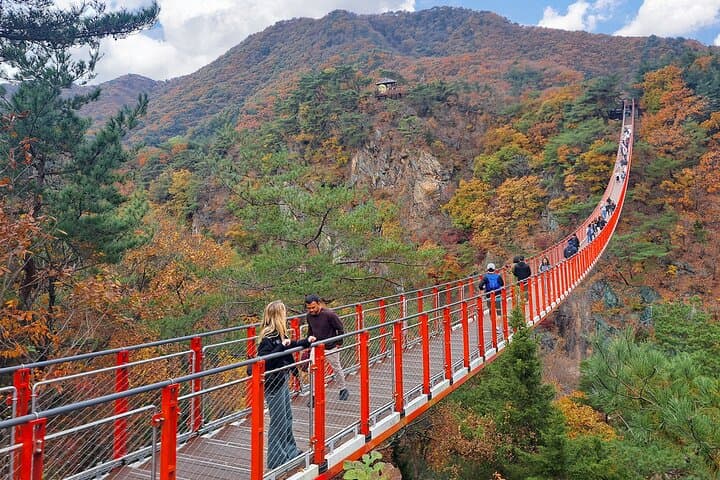
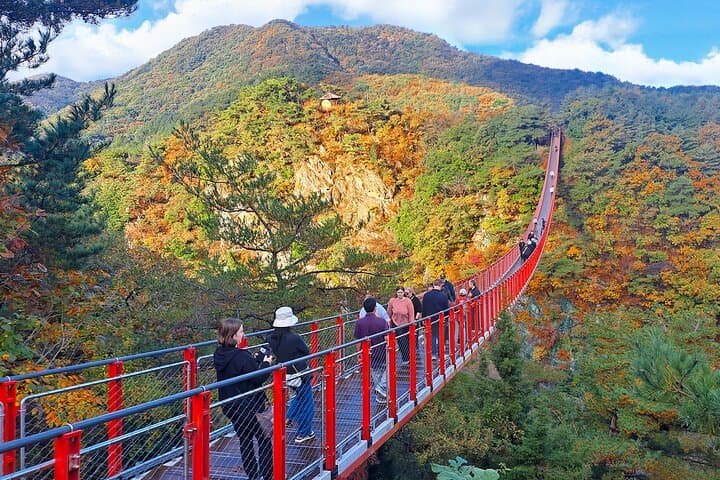

You step off the coach into a wind that seems to measure borders—sharp, cool, insistent—at Imjingak Park, the first real pause after Seoul's bustle. The tour unfolds as a series of curated perspectives: the engineered hush of the 3rd Infiltration Tunnel, the aluminum gaze of Dora Observatory toward North Korea, and the thin sway of a suspension bridge spanning folded valleys. Each stop reworks scale—small human footprints beside geopolitical infrastructure, long lines of barbed wire and a landscape that both resists and records history.
You step off the coach into a wind that seems to measure borders—sharp, cool, insistent—at Imjingak Park, the first real pause after Seoul's bustle. The tour unfolds as a series of curated perspectives: the engineered hush of the 3rd Infiltration Tunnel, the aluminum gaze of Dora Observatory toward North Korea, and the thin sway of a suspension bridge spanning folded valleys. Each stop reworks scale—small human footprints beside geopolitical infrastructure, long lines of barbed wire and a landscape that both resists and records history.
The DMZ was created after the 1953 armistice and today functions as a heavily controlled buffer that unintentionally preserves habitats often rare in the region. Geologically, the area is typical low-lying Korean upland with river-cut valleys; culturally it is a palimpsest of post-war memory, reunification hope, and local narratives like Woljeongri station and Dorasan's stalled rails.
Practical guidance: this is a full-day, guided outing with lengthy transfers from Seoul and multiple short hikes and stair descents (the 3rd Tunnel requires about 30 minutes of moderate walking underground). Bring your passport (six months validity minimum), dress in layers for variable winds and observatory exposure, and carry a charged camera and small water bottle. Weather and political conditions can alter the itinerary—expect substitutions like alternate suspension bridges or observatories. Be ready to move with the group, follow guide instructions inside restricted sites, and respect signage; the DMZ is as much a controlled museum as it is a landscape to explore.