THE ADVENTURE COLLECTIVE® · Independent discovery and booking for outdoor travel

Trace the 17th parallel on a full-day DMZ tour from Hue: visit Khe Sanh, the Vinh Moc tunnels and Hien Luong Bridge while learning frontline history and rural life. Expect multiple stops, uneven terrain and a long but rewarding day of exploration.
Trace the 17th parallel on a full-day DMZ tour from Hue: visit Khe Sanh, the Vinh Moc tunnels and Hien Luong Bridge while learning frontline history and rural life. Expect multiple stops, uneven terrain and a long but rewarding day of exploration.
You step out of Hue’s humid morning into a van that eases north, the road folding through low jungle ridges and rice plains. The Ben Hai River appears like a ribbon daring you to remember—steel beams of Hien Luong Bridge crouch over a quiet current that once marked the 17th parallel. The day moves in measured stages: roadside relics, former artillery bases, and the cool, underground hush of the Vinh Moc tunnel complex.
Verified experiences and guided adventures in the surrounding area.
Operated by Indochina Unique Tourist · Hue, Thua Thien-Hue
You step out of Hue’s humid morning into a van that eases north, the road folding through low jungle ridges and rice plains. The Ben Hai River appears like a ribbon daring you to remember—steel beams of Hien Luong Bridge crouch over a quiet current that once marked the 17th parallel. The day moves in measured stages: roadside relics, former artillery bases, and the cool, underground hush of the Vinh Moc tunnel complex.
This region bears visible layers of 20th-century geopolitics. After the 1954 Geneva Accords the demarcation line created a contested zone; later, the Ho Chi Minh Trail and McNamara’s electronic barrier etched military strategy into the land. Geologically the area is low karst ridges and alluvial plains, with forested hills that still hold bomb craters and reforested slopes. Culturally, small fishing and farming communities rebuilt life around river crossings and market towns like Dong Ha.
Practical guidance: expect a long day (the full route runs roughly 200–300 km by road with multiple stops), wear sturdy walking shoes and sun protection, and bring a rain layer—tropical storms can arrive fast. Guides usually include lunch, entrance fees and bottled water; confirm pickup locations in Hue. Mobility is moderate—some tunnel passages and ruined sites require stooping and short walks over uneven ground. Carry ID (sometimes checked), a charged phone, and respectful clothing for memorial sites. By sunset, the drive back to Hue gives you time to absorb history and landscape, the river’s current seeming to push you gently toward reflection.
moderate.
10 hours.
Moderate fitness—comfortable with several short walks over uneven ground and a full day on the road
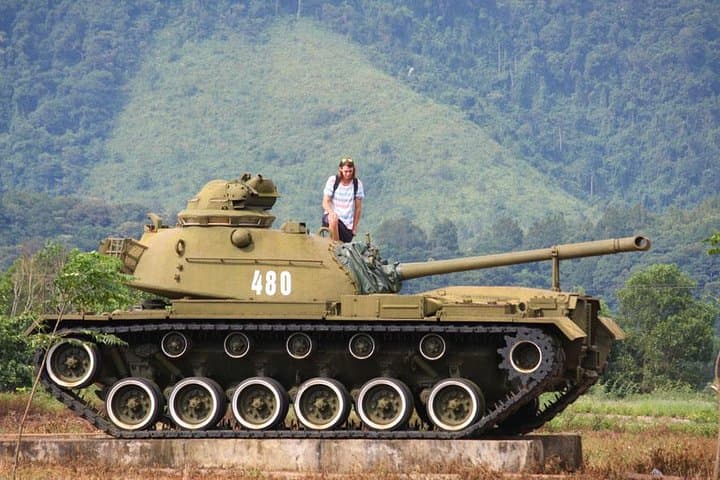
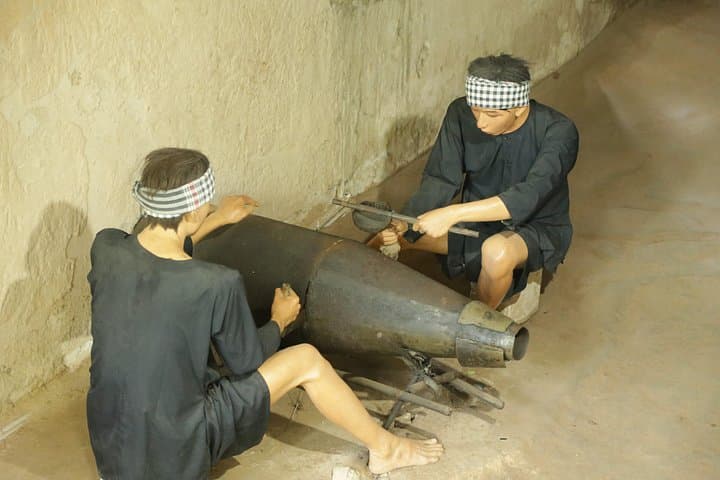
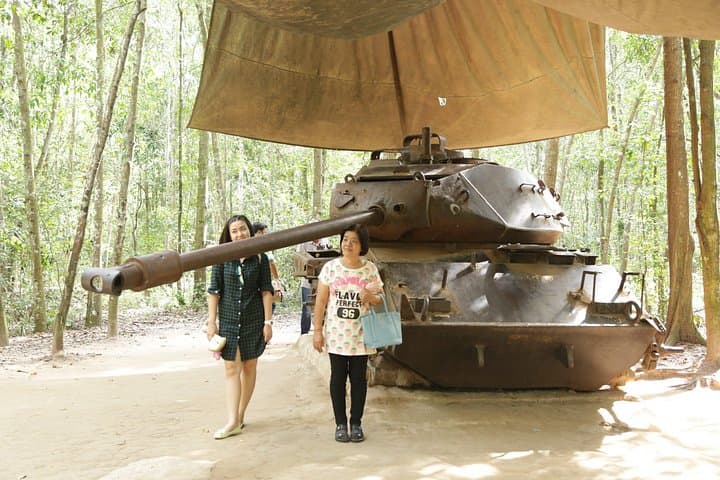
This is a full-day tour (about 10 hours) that typically visits Dong Ha, Khe Sanh, Doc Mieu, Hien Luong Bridge/Ben Hai River and the Vinh Moc tunnels, with time at key viewpoints and museums.
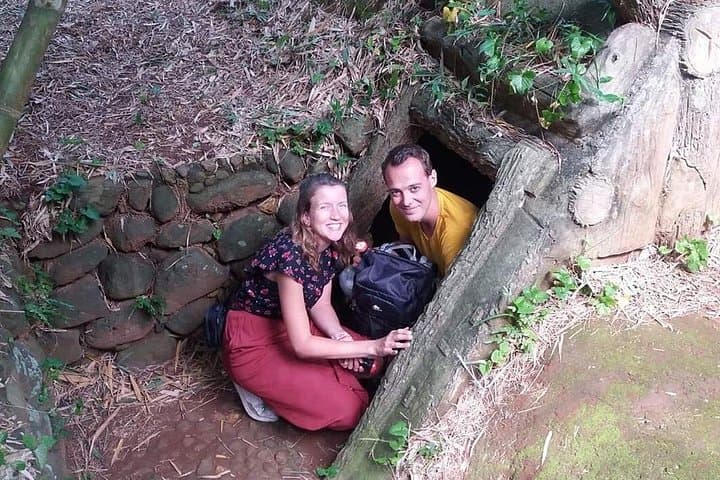
The tunnels require crouching and walking on uneven, often dim, passages—most visitors manage, but it's not suitable for those with serious mobility or spinal issues.
Yes—most operators include lunch, bottled water and entrance fees; confirm specifics when booking and notify dietary needs in advance.
Yes—operators usually offer hotel pickup and return in Hue; confirm your pickup point when booking and note there may be surcharge for hotels outside the pickup zone.
The 1954 Geneva Conference set the provisional military demarcation line near the 17th parallel; the area later became a focal point during the Vietnam–U.S. conflict with fortified bases and supply routes.
Many former battlefields are now reforested or agricultural land; visitors should follow marked paths, avoid touching memorial artifacts, and carry out waste to reduce impact.
Indochina Unique Tourist operates guided outdoor trips and adventures with an emphasis on safety, stewardship, and memorable experiences.
You step out of Hue’s humid morning into a van that eases north, the road folding through low jungle ridges and rice plains. The Ben Hai River appears like a ribbon daring you to remember—steel beams of Hien Luong Bridge crouch over a quiet current that once marked the 17th parallel. The day moves in measured stages: roadside relics, former artillery bases, and the cool, underground hush of the Vinh Moc tunnel complex.
You step out of Hue’s humid morning into a van that eases north, the road folding through low jungle ridges and rice plains. The Ben Hai River appears like a ribbon daring you to remember—steel beams of Hien Luong Bridge crouch over a quiet current that once marked the 17th parallel. The day moves in measured stages: roadside relics, former artillery bases, and the cool, underground hush of the Vinh Moc tunnel complex.
This region bears visible layers of 20th-century geopolitics. After the 1954 Geneva Accords the demarcation line created a contested zone; later, the Ho Chi Minh Trail and McNamara’s electronic barrier etched military strategy into the land. Geologically the area is low karst ridges and alluvial plains, with forested hills that still hold bomb craters and reforested slopes. Culturally, small fishing and farming communities rebuilt life around river crossings and market towns like Dong Ha.
Practical guidance: expect a long day (the full route runs roughly 200–300 km by road with multiple stops), wear sturdy walking shoes and sun protection, and bring a rain layer—tropical storms can arrive fast. Guides usually include lunch, entrance fees and bottled water; confirm pickup locations in Hue. Mobility is moderate—some tunnel passages and ruined sites require stooping and short walks over uneven ground. Carry ID (sometimes checked), a charged phone, and respectful clothing for memorial sites. By sunset, the drive back to Hue gives you time to absorb history and landscape, the river’s current seeming to push you gently toward reflection.