THE ADVENTURE COLLECTIVE® · Independent discovery and booking for outdoor travel

A guided half- or full-day from Seoul that pairs the 3rd Invasion Tunnel and Dora Observatory with an optional traditional boat ride on the Imjin River. Expect close-up Cold War relics, strict security checks, and a striking river route that bridges history and nature.
A guided half- or full-day from Seoul that pairs the 3rd Invasion Tunnel and Dora Observatory with an optional traditional boat ride on the Imjin River. Expect close-up Cold War relics, strict security checks, and a striking river route that bridges history and nature.
You step off the coach into a wind that seems to remember the peninsula’s past—the Imjin River nudges its current past concrete piers, and the hillside across the border holds a quiet, watchful profile.
Verified experiences and guided adventures in the surrounding area.
Operated by PLK TRAVEL · Paju, Gyeonggi-do
You step off the coach into a wind that seems to remember the peninsula’s past—the Imjin River nudges its current past concrete piers, and the hillside across the border holds a quiet, watchful profile.
This half- to full-day tour threads history and landscape. Founded by the 1953 armistice, the DMZ is a frozen boundary where geology and geopolitics meet: low river terraces, scarred bridges and narrow infiltration tunnels carved through Cretaceous and Tertiary bedrock. Sites like Mangbaedan Altar, the steam locomotive wreck, and the bullet-marked Dokgae Bridge show the human cost, while Dora Observatory offers a rare platform to scan North Korean plains and the Gaeseong Industrial Complex.
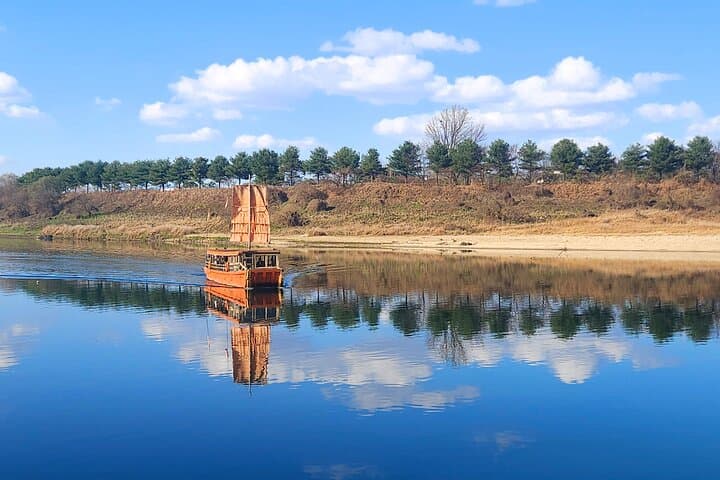
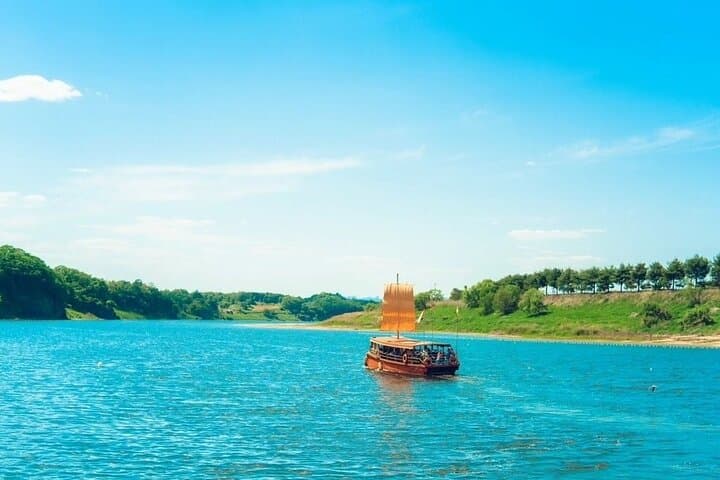
On the full-day option, a traditional Korean boat follows the Imjin’s course where, for decades, access was restricted; the river now dares visitors to reconcile natural beauty and recent history. Walking into the 3rd Invasion Tunnel is claustrophobic and sobering—its 1.6 km length and low ceiling put scale to the Cold War threat.
Practical guidance: bring a valid passport and wear sturdy shoes—some exhibits require short, uneven walks and stair descents. Expect security checks, strict photo rules, and possible itinerary changes tied to military schedules. If you choose the boat leg, sun protection and motion-awareness are sensible—currents can shift and the boat ride is exposed.
Tours depart from Seoul, last roughly 6–9 hours, and balance close-up historical interpretation with quiet sections along the river—an excursion that informs as much as it unsettles.
moderate.
6–9 hours.
Moderate fitness: able to stand, walk short uneven distances and descend stairs into the tunnel.
Yes—a current valid passport is required on the day of travel for ID checks and military clearance.
The boat is an option on the full-day itinerary; availability can be limited and may depend on river access and military schedules—confirm when booking.
Yes—photo rules apply at military-controlled sites; guides will brief you on where photography is prohibited or limited.
The tour involves stairs, narrow tunnel sections and bus transfers; it’s not recommended for infants on laps for some sites, pregnant travelers, or those with significant mobility restrictions.
The DMZ was established by the 1953 armistice, creating a fortified buffer that has preserved unique historical structures and, indirectly, ecological habitats.
Restricted access has allowed fragile wetland and grassland habitats to recover; visitors must follow strict paths and rules to minimize disturbance.
PLK TRAVEL operates guided outdoor trips and adventures with an emphasis on safety, stewardship, and memorable experiences.


You step off the coach into a wind that seems to remember the peninsula’s past—the Imjin River nudges its current past concrete piers, and the hillside across the border holds a quiet, watchful profile.
You step off the coach into a wind that seems to remember the peninsula’s past—the Imjin River nudges its current past concrete piers, and the hillside across the border holds a quiet, watchful profile.
This half- to full-day tour threads history and landscape. Founded by the 1953 armistice, the DMZ is a frozen boundary where geology and geopolitics meet: low river terraces, scarred bridges and narrow infiltration tunnels carved through Cretaceous and Tertiary bedrock. Sites like Mangbaedan Altar, the steam locomotive wreck, and the bullet-marked Dokgae Bridge show the human cost, while Dora Observatory offers a rare platform to scan North Korean plains and the Gaeseong Industrial Complex.
On the full-day option, a traditional Korean boat follows the Imjin’s course where, for decades, access was restricted; the river now dares visitors to reconcile natural beauty and recent history. Walking into the 3rd Invasion Tunnel is claustrophobic and sobering—its 1.6 km length and low ceiling put scale to the Cold War threat.
Practical guidance: bring a valid passport and wear sturdy shoes—some exhibits require short, uneven walks and stair descents. Expect security checks, strict photo rules, and possible itinerary changes tied to military schedules. If you choose the boat leg, sun protection and motion-awareness are sensible—currents can shift and the boat ride is exposed.
Tours depart from Seoul, last roughly 6–9 hours, and balance close-up historical interpretation with quiet sections along the river—an excursion that informs as much as it unsettles.