THE ADVENTURE COLLECTIVE® · Independent discovery and booking for outdoor travel

A full-day DMZ tour that pairs the Third Infiltration Tunnel and Dora Observatory with a nature walk to Gamaksan Suspension Bridge. Expect short uphill walking sections, security checks, and close-up views that illuminate Korea’s division.
A full-day DMZ tour that pairs the Third Infiltration Tunnel and Dora Observatory with a nature walk to Gamaksan Suspension Bridge. Expect short uphill walking sections, security checks, and close-up views that illuminate Korea’s division.
You step off the coach into a hard, cool air where the road divides history and landscape—concrete posts, guard signs and a broad river valley that seems to hold its breath. The tour threads through Imjingak’s rusted relics to the Third Infiltration Tunnel, then climbs toward Gamaksan’s suspension bridge where firs and granite cliffs keep pace with the wind.
Verified experiences and guided adventures in the surrounding area.
Operated by Cosmojin Agency · Paju, Gyeonggi-do
You step off the coach into a hard, cool air where the road divides history and landscape—concrete posts, guard signs and a broad river valley that seems to hold its breath. The tour threads through Imjingak’s rusted relics to the Third Infiltration Tunnel, then climbs toward Gamaksan’s suspension bridge where firs and granite cliffs keep pace with the wind.
This corridor is geography and geopolitics at once: the DMZ follows pre-war front lines carved through low ridgelines and reclaimed rice flats. The Third Tunnel (discovered in 1978) and Dora Observatory offer immediate lessons in Cold War engineering and ongoing division; Dorasan Station stands as a railhead built for a reunion that has not yet come. Gamaksan’s suspension bridge provides a different angle—forested slopes and a 20–30 minute uphill approach that rewards you with tighter views back toward the Imjin River and, on clear days, the distant edge of North Korea.
Expect clipped, informative stops rather than long hikes; time at each site is set by access windows and security checks. Bring a lightweight daypack, comfortable walking shoes for short uphill stretches and a jacket—the wind on exposed viewpoints bites. Plan for 7–9 hours including transit, and build in buffer time for ID checks and variable local conditions.
Practical timing: arrive in Seoul early to avoid rush-hour delays. Keep passport or ID handy, follow guide instructions inside military-controlled areas, and leave drones at home—airspace is restricted. The tour mixes history, landscape and controlled access into a focused day of observation and perspective.
moderate.
7–9 hours.
Suitable for most travelers who can handle several short walks including a 20–30 minute uphill section; comfortable mobility recommended.
Yes—bring a passport or national ID for security checks and mandatory verification at DMZ entry points.
Children can join but rules vary; infants must sit on laps and some areas have age or access restrictions—check with the operator when booking.
Photography is allowed in many areas but restricted in others; your licensed guide will brief you on no-photo zones and military instructions.
Overall it’s low-impact but includes a 20–30 minute uphill walk to Gamaksan Suspension Bridge and short stair or ramp access at observatories, so basic mobility is required.
The DMZ follows the 1953 armistice line; sites like the Third Tunnel and Dorasan Station reflect both wartime tactics and post-war hopes for reconnection.
Parts of the DMZ have become accidental wildlife refuges; visitors should stay on designated paths, avoid disturbing vegetation, and follow all guide and signage to minimize impact.
Cosmojin Agency operates guided outdoor trips and adventures with an emphasis on safety, stewardship, and memorable experiences.
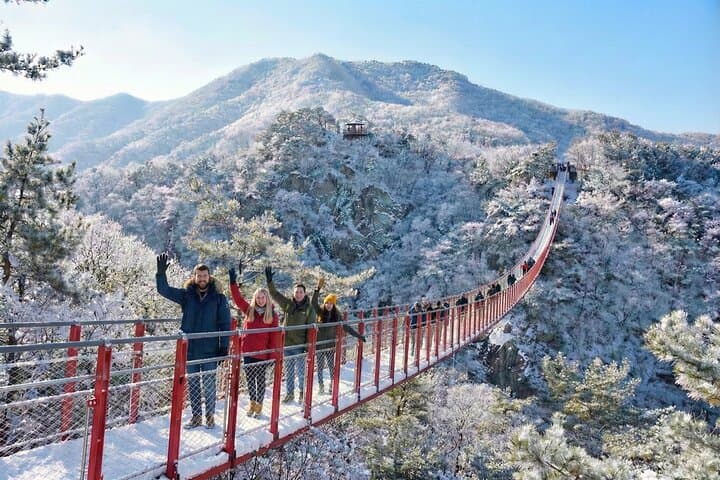
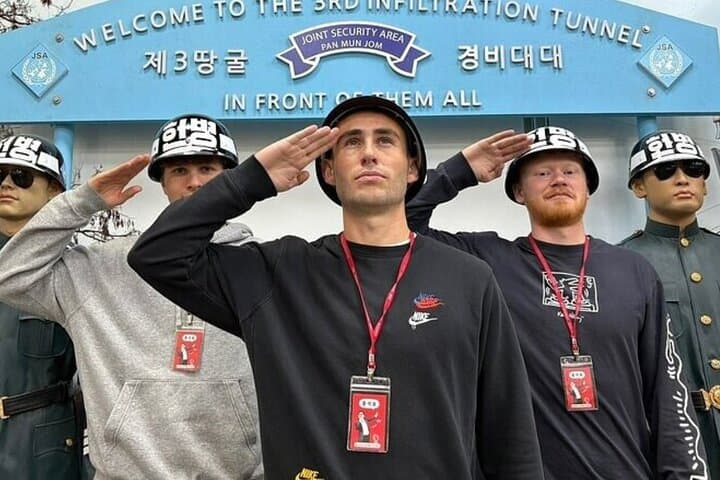
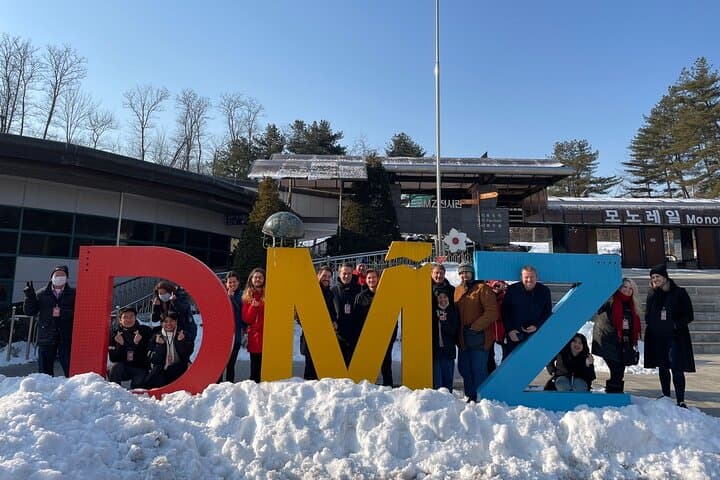
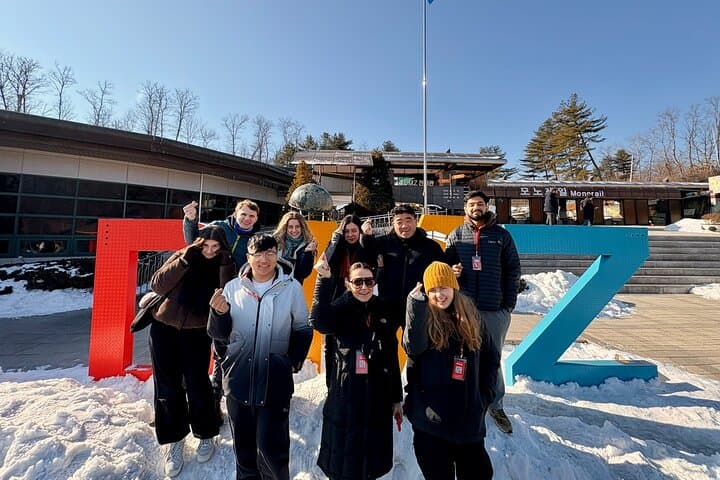
You step off the coach into a hard, cool air where the road divides history and landscape—concrete posts, guard signs and a broad river valley that seems to hold its breath. The tour threads through Imjingak’s rusted relics to the Third Infiltration Tunnel, then climbs toward Gamaksan’s suspension bridge where firs and granite cliffs keep pace with the wind.
You step off the coach into a hard, cool air where the road divides history and landscape—concrete posts, guard signs and a broad river valley that seems to hold its breath. The tour threads through Imjingak’s rusted relics to the Third Infiltration Tunnel, then climbs toward Gamaksan’s suspension bridge where firs and granite cliffs keep pace with the wind.
This corridor is geography and geopolitics at once: the DMZ follows pre-war front lines carved through low ridgelines and reclaimed rice flats. The Third Tunnel (discovered in 1978) and Dora Observatory offer immediate lessons in Cold War engineering and ongoing division; Dorasan Station stands as a railhead built for a reunion that has not yet come. Gamaksan’s suspension bridge provides a different angle—forested slopes and a 20–30 minute uphill approach that rewards you with tighter views back toward the Imjin River and, on clear days, the distant edge of North Korea.
Expect clipped, informative stops rather than long hikes; time at each site is set by access windows and security checks. Bring a lightweight daypack, comfortable walking shoes for short uphill stretches and a jacket—the wind on exposed viewpoints bites. Plan for 7–9 hours including transit, and build in buffer time for ID checks and variable local conditions.
Practical timing: arrive in Seoul early to avoid rush-hour delays. Keep passport or ID handy, follow guide instructions inside military-controlled areas, and leave drones at home—airspace is restricted. The tour mixes history, landscape and controlled access into a focused day of observation and perspective.