THE ADVENTURE COLLECTIVE® · Independent discovery and booking for outdoor travel

Inspect the Korean divide from land and sea on a full-day DMZ & NLL Combination Tour. Visit Imjingak, the 3rd Infiltration Tunnel, Dora Observatory and Dorasan Station while learning the history and present realities of a peninsula still split.
Inspect the Korean divide from land and sea on a full-day DMZ & NLL Combination Tour. Visit Imjingak, the 3rd Infiltration Tunnel, Dora Observatory and Dorasan Station while learning the history and present realities of a peninsula still split.
You step off an air-conditioned coach at Imjingak Park with the river’s current daring you toward a border you cannot cross. Metal fences, rows of donated shoes and a military cadence in the distance make the boundary feel immediate—an edge the guide frames with dates, artifacts and hard facts.
Verified experiences and guided adventures in the surrounding area.
Operated by Cosmojin Agency · Paju, Gyeonggi-do
You step off an air-conditioned coach at Imjingak Park with the river’s current daring you toward a border you cannot cross. Metal fences, rows of donated shoes and a military cadence in the distance make the boundary feel immediate—an edge the guide frames with dates, artifacts and hard facts.
The day moves through the layered history of a divided peninsula: Imjingak’s monuments from the Korean War, the Unification Bridge’s modern symbolism, and Dorasan Station’s ironic signage about a line that once joined trains. Beneath the surface is geology and strategy—tunnels bored through granite, a coastline carved by tidal flats and the contested Northern Limit Line in the Yellow Sea where patrols set the de facto maritime border.
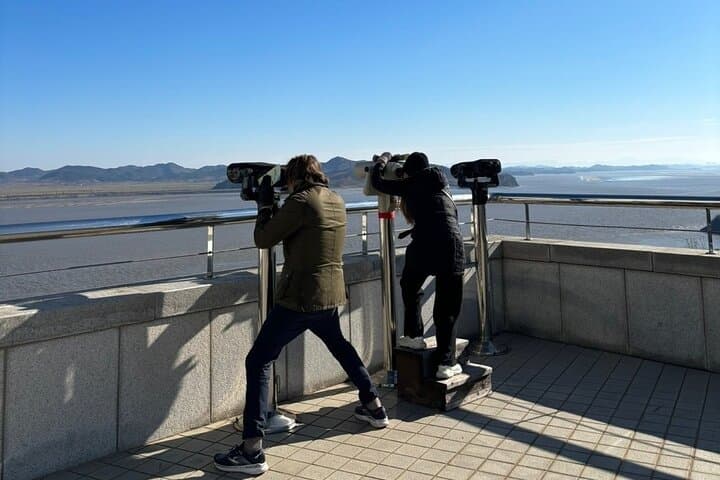
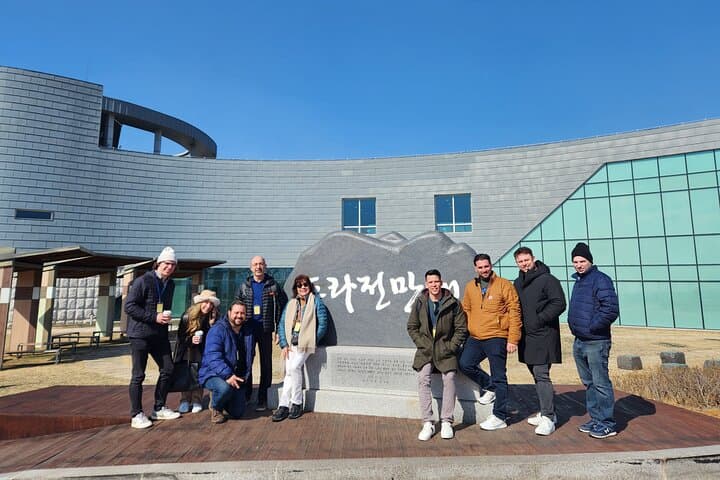
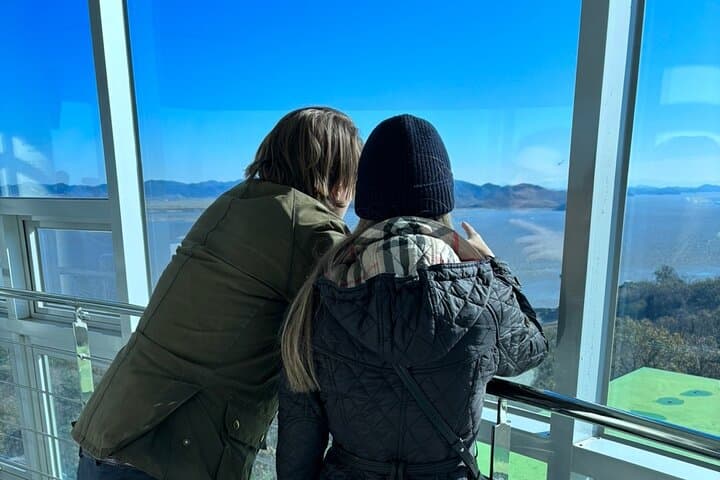
Culturally the tour balances solemn remembrance and everyday life; soldiers on sentry, farmers on the far side of fences and a cuisine stop that nods to regional tastes. You’ll descend into the 3rd Infiltration Tunnel, stand at Dora Observatory watching Gaeseong’s outskirts, and scan the sea from Ganghwa for fishing boats near the NLL.
Practical guidance: bring a valid passport, arrive with sturdy sneakers and a charged camera (photo rules are strict in some zones). Expect an 8–10 hour day with multiple ID checks, photo restrictions and the possibility of last-minute cancellations for military activity. Stay close to your guide, hydrate through the bus legs and plan taxi or hotel pickup windows around Seoul traffic. This is part history lesson, part frontline reconnaissance—a controlled, revealing glimpse at one of the world’s most visible divides.
easy.
8–10 hours.
Suitable for most fitness levels; involves standing, short walks, and descending a tunnel (no technical exertion).
Yes. Foreign visitors must present a current valid passport on the day of travel for security checks.
No. Photo zones are restricted in certain parts of the DMZ, the tunnel and near military posts—follow guide directions to avoid violations.
Tours may be canceled on short notice; operators will refund or reschedule according to their cancellation policy if the area is closed for safety.
Generally yes—tour notes indicate suitability for all fitness levels, but children must be accompanied by an adult and participants should be able to board the coach and walk short distances.
The DMZ traces to the 1953 armistice that paused the Korean War; multiple infiltration tunnels (the 3rd discovered in 1978) reveal Cold War-era strategies and ongoing tension.
Restricted human access has unintentionally protected habitats in parts of the DMZ, but visitors must avoid disturbing sites and follow strict rules to minimize impact.
Cosmojin Agency operates guided outdoor trips and adventures with an emphasis on safety, stewardship, and memorable experiences.

You step off an air-conditioned coach at Imjingak Park with the river’s current daring you toward a border you cannot cross. Metal fences, rows of donated shoes and a military cadence in the distance make the boundary feel immediate—an edge the guide frames with dates, artifacts and hard facts.
You step off an air-conditioned coach at Imjingak Park with the river’s current daring you toward a border you cannot cross. Metal fences, rows of donated shoes and a military cadence in the distance make the boundary feel immediate—an edge the guide frames with dates, artifacts and hard facts.
The day moves through the layered history of a divided peninsula: Imjingak’s monuments from the Korean War, the Unification Bridge’s modern symbolism, and Dorasan Station’s ironic signage about a line that once joined trains. Beneath the surface is geology and strategy—tunnels bored through granite, a coastline carved by tidal flats and the contested Northern Limit Line in the Yellow Sea where patrols set the de facto maritime border.
Culturally the tour balances solemn remembrance and everyday life; soldiers on sentry, farmers on the far side of fences and a cuisine stop that nods to regional tastes. You’ll descend into the 3rd Infiltration Tunnel, stand at Dora Observatory watching Gaeseong’s outskirts, and scan the sea from Ganghwa for fishing boats near the NLL.
Practical guidance: bring a valid passport, arrive with sturdy sneakers and a charged camera (photo rules are strict in some zones). Expect an 8–10 hour day with multiple ID checks, photo restrictions and the possibility of last-minute cancellations for military activity. Stay close to your guide, hydrate through the bus legs and plan taxi or hotel pickup windows around Seoul traffic. This is part history lesson, part frontline reconnaissance—a controlled, revealing glimpse at one of the world’s most visible divides.