THE ADVENTURE COLLECTIVE® · Independent discovery and booking for outdoor travel

Trace Star Wars locations across Djerba while pairing cinematic stops with real history: Roman Meninx, Guellala pottery, and El Ghriba synagogue. This eight‑hour private tour blends easy walks, photo stops, and cultural immersion with practical local insight.
Trace Star Wars locations across Djerba while pairing cinematic stops with real history: Roman Meninx, Guellala pottery, and El Ghriba synagogue. This eight‑hour private tour blends easy walks, photo stops, and cultural immersion with practical local insight.
You step from an air-conditioned minivan into glaring light and wind-pricked salt air, the Mediterranean on one side and low, ochre ruins on the other. In Djerba the landscape feels cinematic — flat coastal plains, wind-polished stone, and narrow lanes that suddenly open onto a pottery kiln or a whitewashed house made famous by a galaxy far, far away.
Verified experiences and guided adventures in the surrounding area.
Operated by Depart Travel Services · Houmt Souk, Medenine
You step from an air-conditioned minivan into glaring light and wind-pricked salt air, the Mediterranean on one side and low, ochre ruins on the other. In Djerba the landscape feels cinematic — flat coastal plains, wind-polished stone, and narrow lanes that suddenly open onto a pottery kiln or a whitewashed house made famous by a galaxy far, far away.
This day trip threads film history through deeper layers: Roman Meninx once hummed with trade, leaving tile and mosaic traces; Guellala keeps an ancient pottery craft alive; El Ghriba synagogue on the island is one of North Africa’s oldest Jewish sites, visited by pilgrims for centuries. Geologically, Djerba is a barrier island of sand, limestone and coastal marshes shaped by Mediterranean currents — a simple palette that made it a convincing Tatooine stand-in in 1976.
Expect a practical loop: short archaeological stop, a pottery demonstration, a courtyard synagogue visit, free time in Houmt Souk or DjerbaHood, then an extended search for shooting locations — the stormtrooper checkpoint, the cantina exterior, Ben Kenobi’s house near Ajim — where recognizable angles sit beside altered modern fabric.
Plan for strong sun, wind and tight walking spaces in villages. Bring sun protection, cash for small shops and a camera with a modest zoom to frame weathered film locations. The tour runs about 8 hours with private transport and a licensed guide; pace is relaxed but includes uneven surfaces and short strolls. Respect signs at heritage sites, ask permission before photographing people, and leave room in your day for a leisurely potter’s lunch and quiet coastal views.
easy.
6–8 hours.
Suitable for most fitness levels; involves short walks, light stair and uneven surfaces but no sustained hiking.
Pickups are arranged from hotels in Djerba; you’ll provide a pickup point at booking and receive local confirmation from the operator.
Transportation is wheelchair accessible, but some sites and narrow village lanes may be difficult to navigate; check specifics with the operator before booking.
You’ll visit filmed locations and recognizable exteriors, though many have changed since 1976 and some scenes were modified in later editions of the films.
Private transport, an accredited guide and lunch (excluding drinks) are included; confirm any museum entrance fees with the operator.
Djerba has Phoenician, Roman and Berber layers — Meninx was a Roman trade center and El Ghriba is one of the oldest Jewish pilgrimage sites in North Africa.
Local groups work to protect traditional pottery methods and threatened heritage buildings; visitors help by following site rules and avoiding off-trail walking near fragile ruins.
Depart Travel Services operates guided outdoor trips and adventures with an emphasis on safety, stewardship, and memorable experiences.
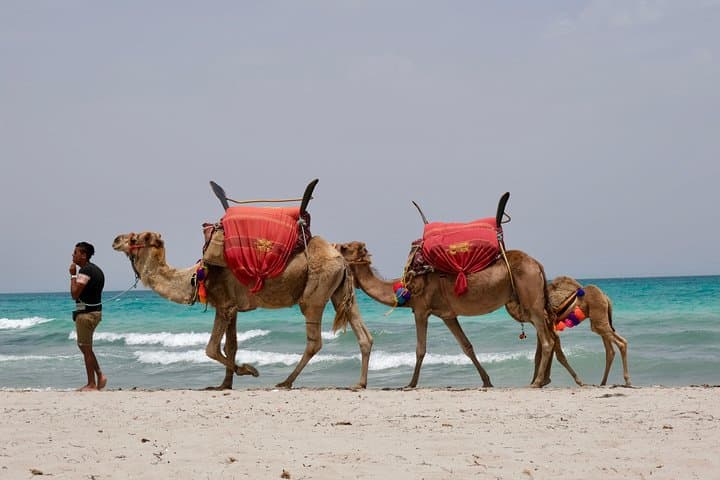
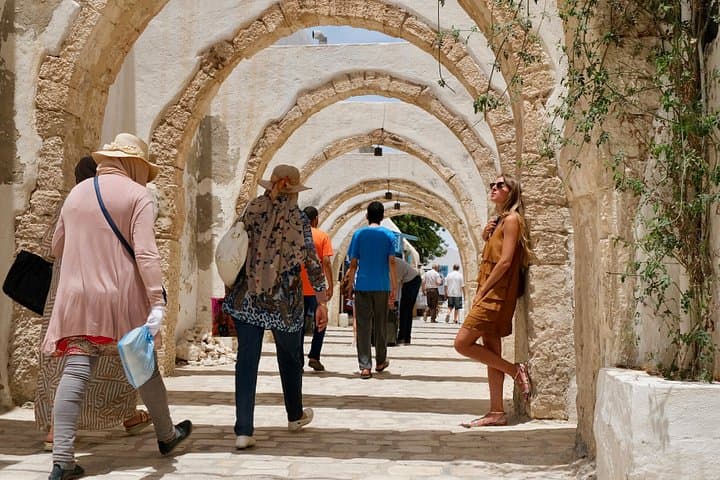
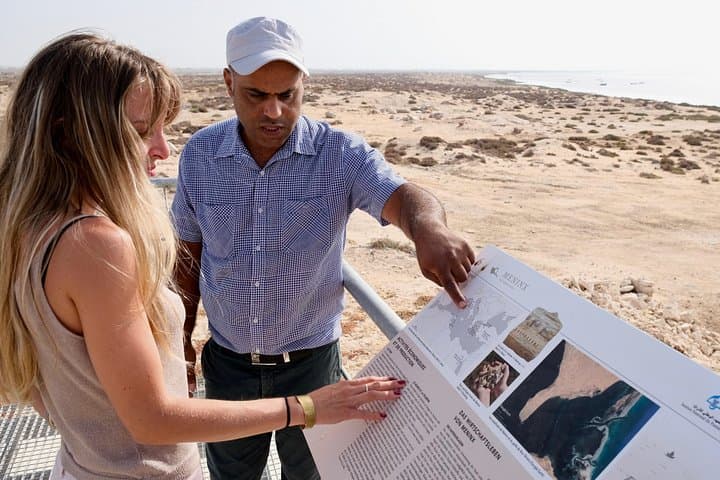
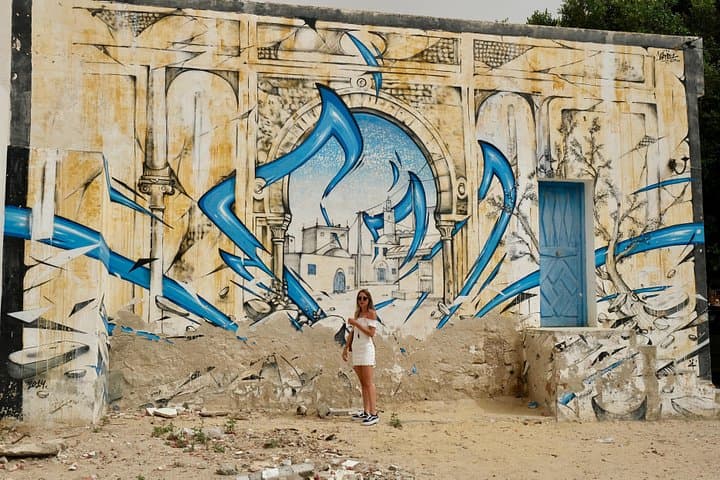
You step from an air-conditioned minivan into glaring light and wind-pricked salt air, the Mediterranean on one side and low, ochre ruins on the other. In Djerba the landscape feels cinematic — flat coastal plains, wind-polished stone, and narrow lanes that suddenly open onto a pottery kiln or a whitewashed house made famous by a galaxy far, far away.
You step from an air-conditioned minivan into glaring light and wind-pricked salt air, the Mediterranean on one side and low, ochre ruins on the other. In Djerba the landscape feels cinematic — flat coastal plains, wind-polished stone, and narrow lanes that suddenly open onto a pottery kiln or a whitewashed house made famous by a galaxy far, far away.
This day trip threads film history through deeper layers: Roman Meninx once hummed with trade, leaving tile and mosaic traces; Guellala keeps an ancient pottery craft alive; El Ghriba synagogue on the island is one of North Africa’s oldest Jewish sites, visited by pilgrims for centuries. Geologically, Djerba is a barrier island of sand, limestone and coastal marshes shaped by Mediterranean currents — a simple palette that made it a convincing Tatooine stand-in in 1976.
Expect a practical loop: short archaeological stop, a pottery demonstration, a courtyard synagogue visit, free time in Houmt Souk or DjerbaHood, then an extended search for shooting locations — the stormtrooper checkpoint, the cantina exterior, Ben Kenobi’s house near Ajim — where recognizable angles sit beside altered modern fabric.
Plan for strong sun, wind and tight walking spaces in villages. Bring sun protection, cash for small shops and a camera with a modest zoom to frame weathered film locations. The tour runs about 8 hours with private transport and a licensed guide; pace is relaxed but includes uneven surfaces and short strolls. Respect signs at heritage sites, ask permission before photographing people, and leave room in your day for a leisurely potter’s lunch and quiet coastal views.