THE ADVENTURE COLLECTIVE® · Independent discovery and booking for outdoor travel

Escape the city for a guided 3–4 hour trek across Divis and Black Mountain, where basalt ridges, blanket bog and upland birds frame panoramic views over Belfast. Learn geology, local history and spot priority species while a guide handles navigation.
Escape the city for a guided 3–4 hour trek across Divis and Black Mountain, where basalt ridges, blanket bog and upland birds frame panoramic views over Belfast. Learn geology, local history and spot priority species while a guide handles navigation.
The wind on Divis eases and then pushes you onward, opening a sweep of grass, bog and basalt that drops away toward Belfast. Start on a minor lane, step past grazing cattle and climb through heath that hums with skylarks; within minutes the city shrinks and the horizon widens — on clear days you can pick out the Mournes to the south and, faint and distant, the outline of Scotland.
Verified experiences and guided adventures in the surrounding area.
Operated by Giants Causeway Tours · Belfast, Northern Ireland
The wind on Divis eases and then pushes you onward, opening a sweep of grass, bog and basalt that drops away toward Belfast. Start on a minor lane, step past grazing cattle and climb through heath that hums with skylarks; within minutes the city shrinks and the horizon widens — on clear days you can pick out the Mournes to the south and, faint and distant, the outline of Scotland.
Divis (from the Irish Dubhais, “black ridge”) sits on basalt bedrock left by ancient volcanics; the range and neighbouring Black Mountain form a 1,500‑acre mosaic of upland heath, blanket bog and archaeological traces of past farm use. The area supports priority species — red grouse, stonechat and peregrine — and offers a lived‑in rural culture with working farms and old field walls that mark long human presence.
Expect wide, exposed ridgelines, peat patches and short tussocky grass underfoot. A private guide steers you to viewpoints and wildlife‑watching spots, explains geology and local history, and keeps the group away from sensitive nesting areas.
Practical guidance: plan for 3–4 hours covering roughly 5 miles (8 km) with modest elevation change but uneven terrain; waterproof layers, sturdy boots and binoculars improve the day; check weather first — visibility is the prize. Respect closed gates and stay on established paths to protect fragile bog and ground‑nesting birds. With a guide, you trade route finding for stories, local insight and safer wildlife encounters — and a cleaner view of Belfast from above.
moderate.
3–4 hours.
Moderate fitness—able to walk 5 miles over uneven ground and handle short climbs.
The guided walk runs about 3–4 hours and covers roughly 5 miles (8 km) on varied terrain with moderate elevation change.
Yes, with a moderate level of fitness; the route is guided so you don't need navigation skills, but you should be comfortable on uneven ground.
You may encounter skylarks, red grouse, peregrine falcons, ravens and occasionally the Irish hare; sightings depend on season and time of day.
Expect changeable, often windy conditions; bring waterproof and windproof layers, sturdy boots and check the guide/operator for weather cancellations.
Divis (Dubhais) sits on dark basalt linked to ancient lava flows; the Belfast Hills carry archaeological traces of long‑standing pastoral use and boundary walls.
Blanket bog and upland heath are fragile; stay on paths, avoid peat extraction areas and follow guidance to minimize disturbance to priority species.
Giants Causeway Tours operates guided outdoor trips and adventures with an emphasis on safety, stewardship, and memorable experiences.
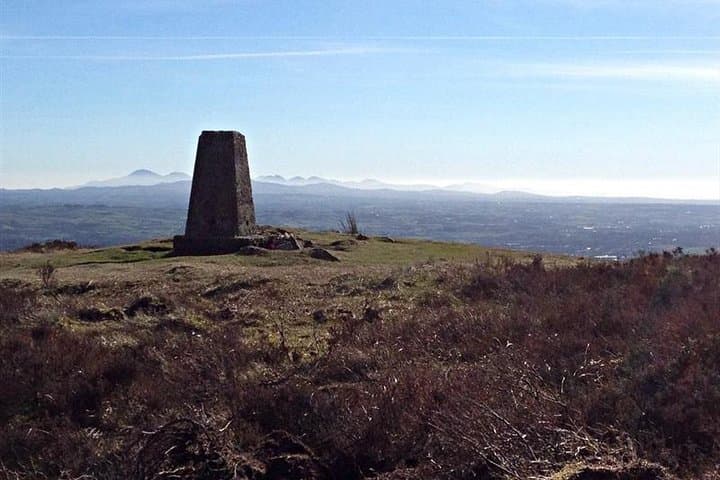


The wind on Divis eases and then pushes you onward, opening a sweep of grass, bog and basalt that drops away toward Belfast. Start on a minor lane, step past grazing cattle and climb through heath that hums with skylarks; within minutes the city shrinks and the horizon widens — on clear days you can pick out the Mournes to the south and, faint and distant, the outline of Scotland.
The wind on Divis eases and then pushes you onward, opening a sweep of grass, bog and basalt that drops away toward Belfast. Start on a minor lane, step past grazing cattle and climb through heath that hums with skylarks; within minutes the city shrinks and the horizon widens — on clear days you can pick out the Mournes to the south and, faint and distant, the outline of Scotland.
Divis (from the Irish Dubhais, “black ridge”) sits on basalt bedrock left by ancient volcanics; the range and neighbouring Black Mountain form a 1,500‑acre mosaic of upland heath, blanket bog and archaeological traces of past farm use. The area supports priority species — red grouse, stonechat and peregrine — and offers a lived‑in rural culture with working farms and old field walls that mark long human presence.
Expect wide, exposed ridgelines, peat patches and short tussocky grass underfoot. A private guide steers you to viewpoints and wildlife‑watching spots, explains geology and local history, and keeps the group away from sensitive nesting areas.
Practical guidance: plan for 3–4 hours covering roughly 5 miles (8 km) with modest elevation change but uneven terrain; waterproof layers, sturdy boots and binoculars improve the day; check weather first — visibility is the prize. Respect closed gates and stay on established paths to protect fragile bog and ground‑nesting birds. With a guide, you trade route finding for stories, local insight and safer wildlife encounters — and a cleaner view of Belfast from above.