THE ADVENTURE COLLECTIVE® · Independent discovery and booking for outdoor travel

Explore Pecio el Peñón off Tabaiba, a deliberately sunken tugboat that’s become one of Tenerife’s premier wreck-diving classrooms. This guided wreck course builds penetration, reel work, and buoyancy skills at depths to 30 m.
Explore Pecio el Peñón off Tabaiba, a deliberately sunken tugboat that’s become one of Tenerife’s premier wreck-diving classrooms. This guided wreck course builds penetration, reel work, and buoyancy skills at depths to 30 m.
You push off from the little harbor at Tabaiba as the Atlantic draws a cool line along the hull. Salt and diesel, a chorus of gulls and the muffled thud of kit being checked — then the boat slips over blue that quickly deepens. Below, the stricken silhouette of Pecio el Peñón waits: a tugboat laid intentionally on the seabed that now hosts encrusting life and narrow corridors to explore.
Verified experiences and guided adventures in the surrounding area.
Operated by Scubadivepro Tenerife · Tabaiba, Santa Cruz de Tenerife
You push off from the little harbor at Tabaiba as the Atlantic draws a cool line along the hull. Salt and diesel, a chorus of gulls and the muffled thud of kit being checked — then the boat slips over blue that quickly deepens. Below, the stricken silhouette of Pecio el Peñón waits: a tugboat laid intentionally on the seabed that now hosts encrusting life and narrow corridors to explore.
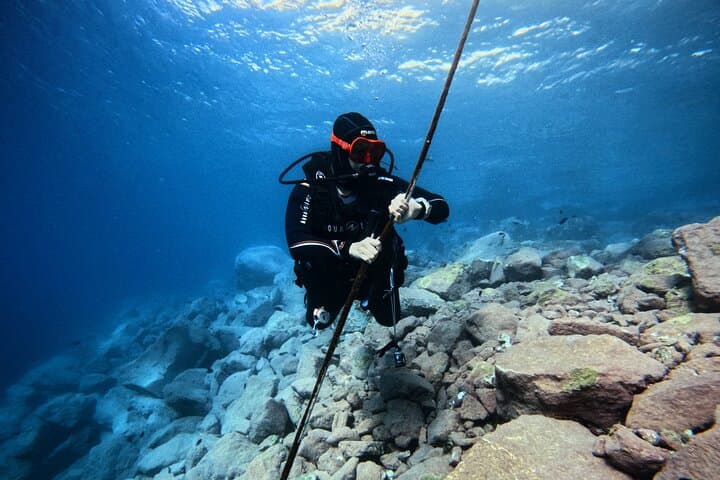
The wreck was sunk in 2006 to create habitat and training ground; decades of volcanic geology around Tenerife mean steep drop-offs and clear water that reveal basalt benches and sand channels. Local diving culture here mixes Mediterranean-style club diving with international technical training — expect instructors fluent in wreck procedures and a focus on safe penetration techniques.
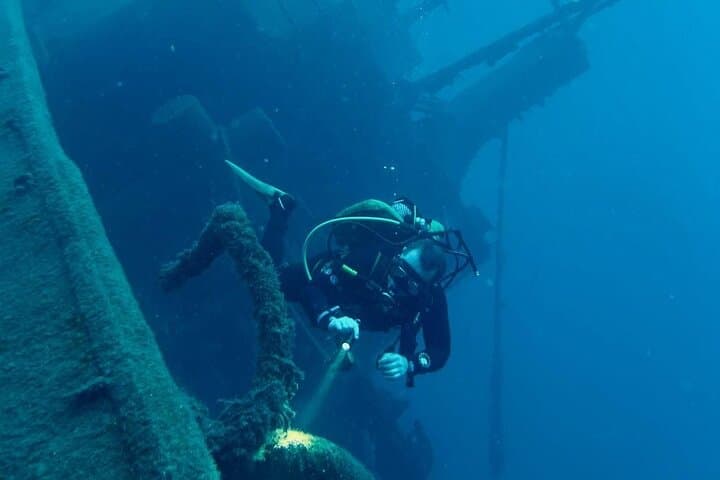
The course is built for certified Open Water divers looking to expand skills in a real wreck: buoyancy discipline, reel work, and situational awareness are practiced at depths down to about 30 m (100 ft). Marine life cushions the structure — groupers and parrotfish graze the beams while moray eels tuck into cavities.
Practically, plan a half-day: arrive early for briefing and kit fit, allow surface intervals if you make two dives, and carry certification and logbook. Wetsuits (5–7 mm) are common year-round; a dive computer, SMB, and reel are essential for wreck work. Keep movements controlled, respect marked lines, and listen to your guide — the wreck rewards measured exploration but punishes haste.
challenging.
5 hours.
Moderate; divers should be comfortable with repetitive movements, carrying kit, and performing safety drills.
Yes — Open Water certification is the minimum; specialized wreck penetration practice assumes certified-level skills.
The wreck rests around 30 meters (100 feet); instructors plan dives to stay within certified limits and no-decompression profiles.
Basic scuba gear is provided, but many divers bring personal masks, computers, and cutting tools for familiarity and fit.
Beginners can join surface-level exploration and limited overhangs, but full penetration requires additional training and demonstrated buoyancy control.
El Peñón was intentionally sunk in 2006 as an artificial reef and training site; it now serves both conservation and recreational diving purposes.
Divers are encouraged to use reef-safe sunscreen, avoid contact with the wreck, and follow guide instructions to minimize disturbance to growing marine communities.
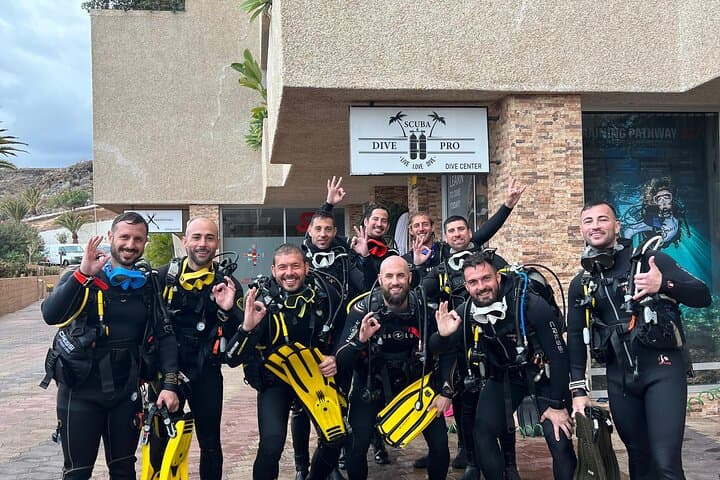
Scubadivepro Tenerife operates guided outdoor trips and adventures with an emphasis on safety, stewardship, and memorable experiences.
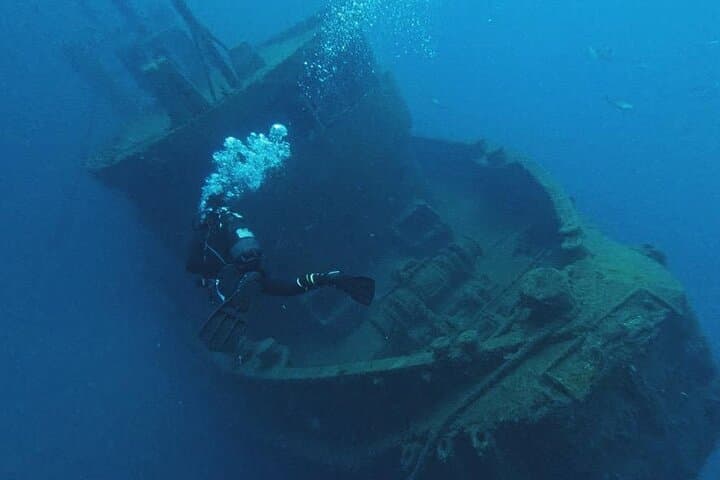
You push off from the little harbor at Tabaiba as the Atlantic draws a cool line along the hull. Salt and diesel, a chorus of gulls and the muffled thud of kit being checked — then the boat slips over blue that quickly deepens. Below, the stricken silhouette of Pecio el Peñón waits: a tugboat laid intentionally on the seabed that now hosts encrusting life and narrow corridors to explore.
You push off from the little harbor at Tabaiba as the Atlantic draws a cool line along the hull. Salt and diesel, a chorus of gulls and the muffled thud of kit being checked — then the boat slips over blue that quickly deepens. Below, the stricken silhouette of Pecio el Peñón waits: a tugboat laid intentionally on the seabed that now hosts encrusting life and narrow corridors to explore.
The wreck was sunk in 2006 to create habitat and training ground; decades of volcanic geology around Tenerife mean steep drop-offs and clear water that reveal basalt benches and sand channels. Local diving culture here mixes Mediterranean-style club diving with international technical training — expect instructors fluent in wreck procedures and a focus on safe penetration techniques.
The course is built for certified Open Water divers looking to expand skills in a real wreck: buoyancy discipline, reel work, and situational awareness are practiced at depths down to about 30 m (100 ft). Marine life cushions the structure — groupers and parrotfish graze the beams while moray eels tuck into cavities.
Practically, plan a half-day: arrive early for briefing and kit fit, allow surface intervals if you make two dives, and carry certification and logbook. Wetsuits (5–7 mm) are common year-round; a dive computer, SMB, and reel are essential for wreck work. Keep movements controlled, respect marked lines, and listen to your guide — the wreck rewards measured exploration but punishes haste.