THE ADVENTURE COLLECTIVE® · Independent discovery and booking for outdoor travel

Take a single guided dive into the Capo Carbonara Marine Protected Area off Villasimius to explore Posidonia meadows, rocky pinnacles and the islets of Isola dei Cavoli and Serpentara. This 4‑hour boat operation suits certified divers seeking clear water and abundant marine life.
Take a single guided dive into the Capo Carbonara Marine Protected Area off Villasimius to explore Posidonia meadows, rocky pinnacles and the islets of Isola dei Cavoli and Serpentara. This 4‑hour boat operation suits certified divers seeking clear water and abundant marine life.
A breeze off the Mediterranean lifts spray as a small inflatable slips away from Villasimius harbor and the cliffs of Capo Carbonara shrink to a green-brown ribbon. You stand on a rubber deck with tank straps and a guide briefing the drop: beneath, Posidonia meadows roll like underwater grasslands and rocky pinnacles plunge into blue clarity.
Verified experiences and guided adventures in the surrounding area.
Operated by SubAquaDive Service · Villasimius, Sardinia
A breeze off the Mediterranean lifts spray as a small inflatable slips away from Villasimius harbor and the cliffs of Capo Carbonara shrink to a green-brown ribbon. You stand on a rubber deck with tank straps and a guide briefing the drop: beneath, Posidonia meadows roll like underwater grasslands and rocky pinnacles plunge into blue clarity.
The Capo Carbonara Marine Protected Area was created in the late 1990s to protect reefs, seagrass and spawning grounds around Isola dei Cavoli and Serpentara. Geologically the coast alternates granite headlands and submerged limestone shelves, shaping dive sites that range from shallow seagrass flats to dramatic walls. Locally, Villasimius remains a working fishing town; the area’s culture still orients around sea seasons, livelihoods and small family-run dive centers.
Expect a guided shore-to-boat operation: a 4-hour outing that includes transit, surface checks, briefing and a single guided scuba dive. Visibility is typically best in summer; spring and fall can offer cooler water and fewer boats. Nitrox options are sometimes available for certified divers; rental gear is usually offered for a modest fee.
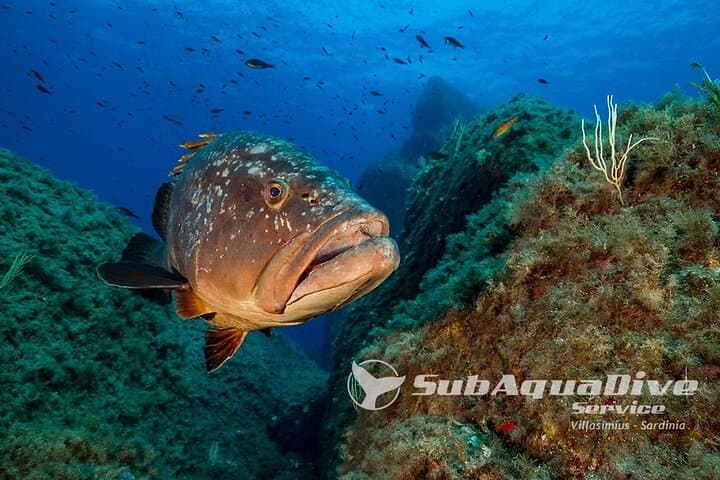
Practical essentials: present your Open Water certification and logbook, arrive with sun protection and a warm layer for post-dive wind, and follow guide instructions to avoid fragile Posidonia and sessile fauna. The experience pairs straightforward procedures with rich marine life — groupers, morays and dense seagrass communities — making a single guided dive here a compact, high-value window into Sardinia’s protected underwater world.
moderate.
4 hours.
Suitable for certified divers in good general health with basic swimming ability; able to manage gear and surface swims.
Yes — this trip is for certified divers (Open Water or equivalent); operators will request certification and recent dive logs.
Basic rentals (regulator, BCD, wetsuit, mask, fins) are usually available for an extra fee—confirm rates in advance; the listing noted a €20 rental option for equipment sets.
Nitrox is sometimes provided for certified divers; confirm with the operator when booking to reserve fills and verify surcharge or inclusions.
Standard policy allows a full refund if canceled at least 24 hours before departure; check the operator’s specific terms when booking.
The marine protected area was established in the late 1990s to conserve seagrass meadows and reef habitats around Capo Carbonara, Isola dei Cavoli and Serpentara.
Respect zoning rules inside the MPA: avoid anchoring on Posidonia, do not collect marine life, and follow guides to minimize impact.
SubAquaDive Service operates guided outdoor trips and adventures with an emphasis on safety, stewardship, and memorable experiences.
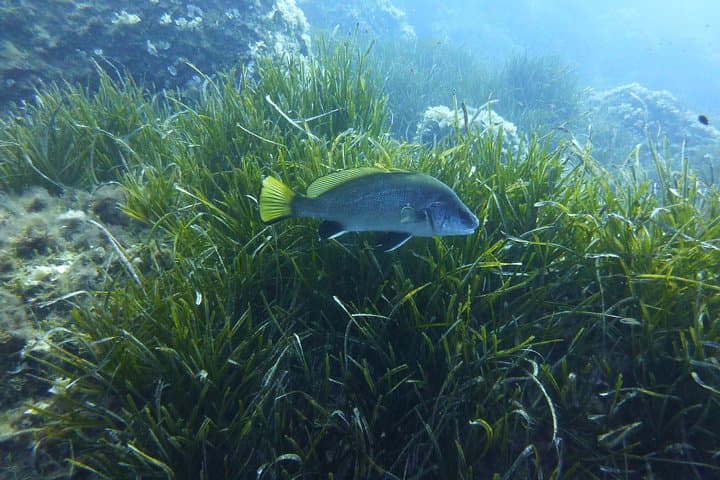
A breeze off the Mediterranean lifts spray as a small inflatable slips away from Villasimius harbor and the cliffs of Capo Carbonara shrink to a green-brown ribbon. You stand on a rubber deck with tank straps and a guide briefing the drop: beneath, Posidonia meadows roll like underwater grasslands and rocky pinnacles plunge into blue clarity.
A breeze off the Mediterranean lifts spray as a small inflatable slips away from Villasimius harbor and the cliffs of Capo Carbonara shrink to a green-brown ribbon. You stand on a rubber deck with tank straps and a guide briefing the drop: beneath, Posidonia meadows roll like underwater grasslands and rocky pinnacles plunge into blue clarity.
The Capo Carbonara Marine Protected Area was created in the late 1990s to protect reefs, seagrass and spawning grounds around Isola dei Cavoli and Serpentara. Geologically the coast alternates granite headlands and submerged limestone shelves, shaping dive sites that range from shallow seagrass flats to dramatic walls. Locally, Villasimius remains a working fishing town; the area’s culture still orients around sea seasons, livelihoods and small family-run dive centers.
Expect a guided shore-to-boat operation: a 4-hour outing that includes transit, surface checks, briefing and a single guided scuba dive. Visibility is typically best in summer; spring and fall can offer cooler water and fewer boats. Nitrox options are sometimes available for certified divers; rental gear is usually offered for a modest fee.
Practical essentials: present your Open Water certification and logbook, arrive with sun protection and a warm layer for post-dive wind, and follow guide instructions to avoid fragile Posidonia and sessile fauna. The experience pairs straightforward procedures with rich marine life — groupers, morays and dense seagrass communities — making a single guided dive here a compact, high-value window into Sardinia’s protected underwater world.