THE ADVENTURE COLLECTIVE® · Independent discovery and booking for outdoor travel

Explore two contrasting cenotes on a half‑day dive from Playa del Carmen: the light-filled mangrove passages of Casa Cenote and the deep, surreal sulfide cloud at Angelita. Advanced certification and precise buoyancy make this a technical, unforgettable underwater experience.
Explore two contrasting cenotes on a half‑day dive from Playa del Carmen: the light-filled mangrove passages of Casa Cenote and the deep, surreal sulfide cloud at Angelita. Advanced certification and precise buoyancy make this a technical, unforgettable underwater experience.
A heavy, humid morning at Playa del Carmen yields to the hush of underground water as the van slides off the highway and into low mangrove light. Divers kit up on the limestone rim, sunlight slicing green through mangrove roots; beneath the surface, a sulfur cloud waits like a suspended weather front at 27 metres, separating bright, root-lined shallows from a silent, blackened depth.
Verified experiences and guided adventures in the surrounding area.
Operated by Diversland Mexico · Playa del Carmen, Quintana Roo
A heavy, humid morning at Playa del Carmen yields to the hush of underground water as the van slides off the highway and into low mangrove light. Divers kit up on the limestone rim, sunlight slicing green through mangrove roots; beneath the surface, a sulfur cloud waits like a suspended weather front at 27 metres, separating bright, root-lined shallows from a silent, blackened depth.
These dives pair Casa Cenote — an open, mangrove-cut cenote with rich light and seagrass — with Angelita, one of the Yucatán’s deepest sinkholes (around 60 m). Geologically, the cenotes are collapse features in porous limestone atop a vast freshwater lens; chemically, Angelita’s hydrogen‑sulfide layer creates the surreal halocline and that otherworldly “island” of floating vegetation. Culturally, cenotes were freshwater lifelines and ritual sites for the Maya; modern dive operations now manage access while sharing that heritage.
Practically, this is a two‑dive half‑day excursion (≈5 hours) that includes hotel pickup, tanks, weights and a bilingual guide. Advanced Open Water certification (or equivalent) is required and strong buoyancy control is essential for passing the sulfide interface safely. Expect limited light below the cloud and tight ascent discipline; the guide manages line and profile. Bring a dive computer, torch, and your certification card; plan no flights for 24 hours after diving. For photographers, keep strobes ready in Casa’s clear shallows but respect the fragile roots and silt. The trip is technical enough to thrill experienced divers and structured to prioritize safety and conservation.
challenging.
5 hours.
Comfortable swimming skills and good cardiovascular fitness; ability to handle moderate physical activity and gear handling.
Advanced Open Water Diver (PADI or equivalent) is required; experience with deeper dives and strong buoyancy control is recommended.
Angelita reaches approximately 60 m; a hydrogen‑sulfide cloud forms near ~27 m and creates a distinct halocline—do not penetrate without proper training and guide supervision.
Underwater cameras are allowed; use strobes in clear areas like Casa, avoid disturbing roots or silt, and follow guide instructions to protect fragile features.
Yes—hotel pickup and drop‑off within the Riviera Maya zone is typically included, along with tanks, weights and bottled water.
Cenotes were vital freshwater sources and ritual sites for the pre‑Columbian Maya; many were integrated into local trade routes and mythology.
Operators now limit group sizes and enforce no‑touch rules to protect delicate speleothems and root systems; avoid sunscreen or use biodegradable formulas to reduce contamination.
Diversland Mexico operates guided outdoor trips and adventures with an emphasis on safety, stewardship, and memorable experiences.
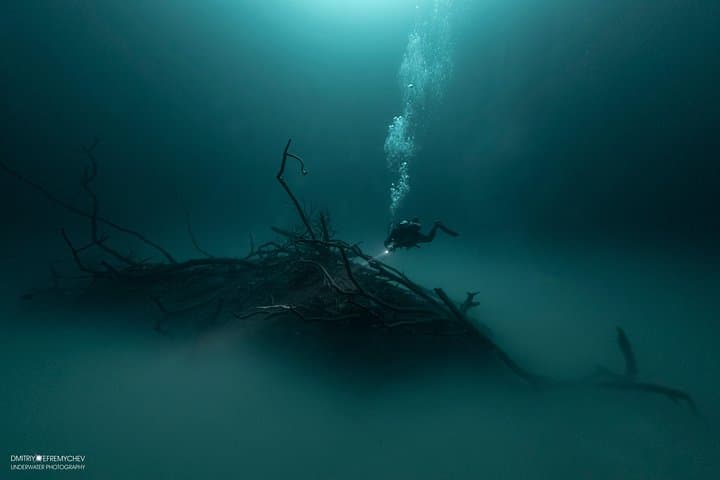
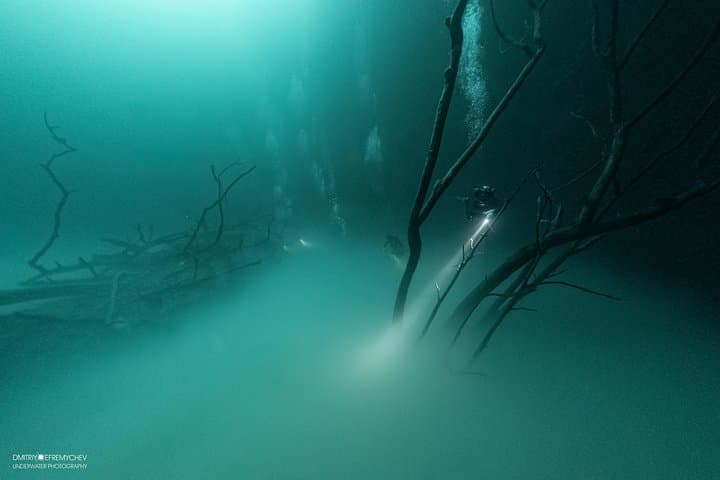
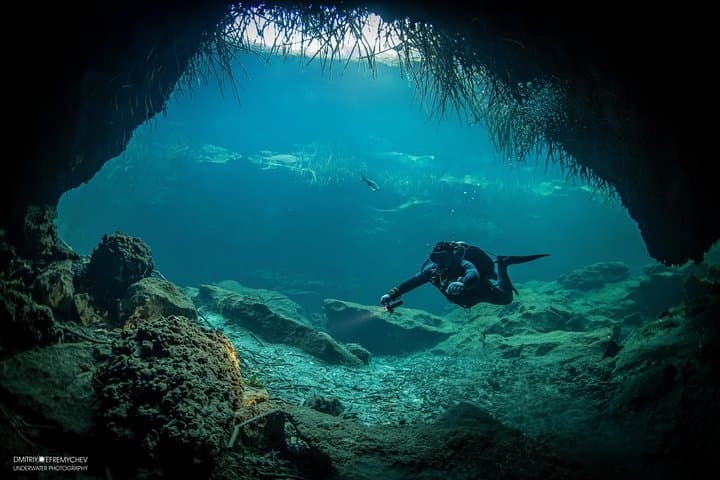
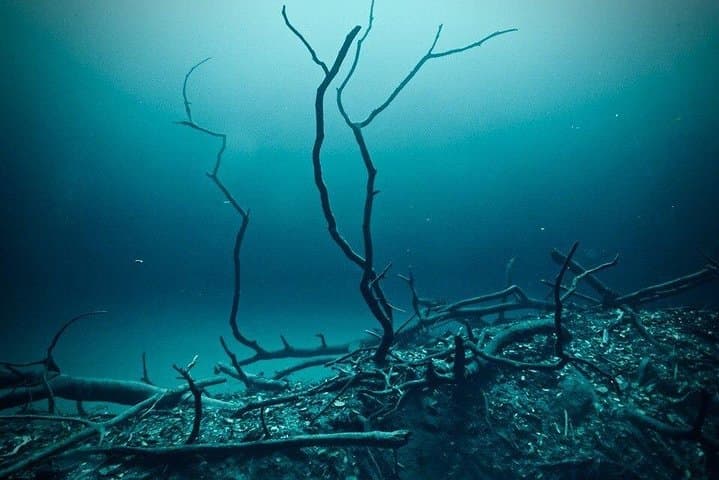
A heavy, humid morning at Playa del Carmen yields to the hush of underground water as the van slides off the highway and into low mangrove light. Divers kit up on the limestone rim, sunlight slicing green through mangrove roots; beneath the surface, a sulfur cloud waits like a suspended weather front at 27 metres, separating bright, root-lined shallows from a silent, blackened depth.
A heavy, humid morning at Playa del Carmen yields to the hush of underground water as the van slides off the highway and into low mangrove light. Divers kit up on the limestone rim, sunlight slicing green through mangrove roots; beneath the surface, a sulfur cloud waits like a suspended weather front at 27 metres, separating bright, root-lined shallows from a silent, blackened depth.
These dives pair Casa Cenote — an open, mangrove-cut cenote with rich light and seagrass — with Angelita, one of the Yucatán’s deepest sinkholes (around 60 m). Geologically, the cenotes are collapse features in porous limestone atop a vast freshwater lens; chemically, Angelita’s hydrogen‑sulfide layer creates the surreal halocline and that otherworldly “island” of floating vegetation. Culturally, cenotes were freshwater lifelines and ritual sites for the Maya; modern dive operations now manage access while sharing that heritage.
Practically, this is a two‑dive half‑day excursion (≈5 hours) that includes hotel pickup, tanks, weights and a bilingual guide. Advanced Open Water certification (or equivalent) is required and strong buoyancy control is essential for passing the sulfide interface safely. Expect limited light below the cloud and tight ascent discipline; the guide manages line and profile. Bring a dive computer, torch, and your certification card; plan no flights for 24 hours after diving. For photographers, keep strobes ready in Casa’s clear shallows but respect the fragile roots and silt. The trip is technical enough to thrill experienced divers and structured to prioritize safety and conservation.