THE ADVENTURE COLLECTIVE® · Independent discovery and booking for outdoor travel

Walk the streets of District Six with local guides who connect personal stories to the area’s difficult past. This four-hour tour blends museum context, conversations with community entrepreneurs, and on-foot exploration of Cape Town’s historic township.
Walk the streets of District Six with local guides who connect personal stories to the area’s difficult past. This four-hour tour blends museum context, conversations with community entrepreneurs, and on-foot exploration of Cape Town’s historic township.
You step off the air-conditioned vehicle and into a neighborhood where the street corners keep their own archive of conversations—painted walls, hand-lettered signs, and a museum that keeps names alive.
Verified experiences and guided adventures in the surrounding area.
Operated by Africa Afrika Travel · Cape Town, Western Cape
You step off the air-conditioned vehicle and into a neighborhood where the street corners keep their own archive of conversations—painted walls, hand-lettered signs, and a museum that keeps names alive.
The District Six Township Tour centers on the District Six Museum and the surrounding streets of Cape Town where, in the 1960s and ’70s, more than 60,000 residents were declared “white only” under apartheid and forcibly removed. The museum is a compact, powerful introduction: maps, household items and oral histories that anchor the story to specific houses and people. Geologically, the tour occurs on flat, urban terrain between the slopes of Signal Hill and the harbor; the neighborhood was originally shaped by canals and tidal flats, which informed its early layout and mixed-use character.
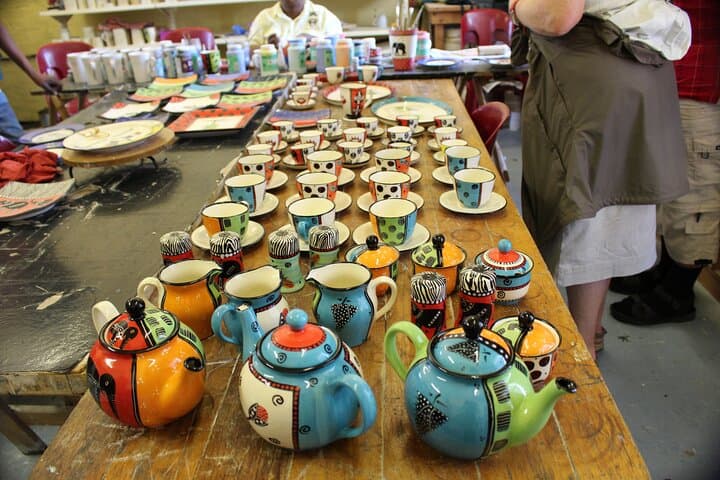
Culturally, the walk is about conversations—meet local entrepreneurs, visit small cafes and community art spaces, and notice plaques and murals that mark former homes. Guides typically foreground personal recollections and contemporary resilience, linking past displacement to present-day local enterprise.
Practical guidance: the tour is roughly four hours, mostly standing and short urban walks on paved streets. Bring comfortable walking shoes, sun protection, and small change for local purchases. Photography is common but ask before photographing people or private properties. Transport is provided and the District Six Museum’s entry is usually included; plan for an accessible pace if you have mobility concerns.
This is a listening walk as much as a sightseeing one—expect to leave with specific names, stories and a clearer sense of why this corner of Cape Town matters.
easy.
4 hours.
Suitable for people with basic mobility who can stand and walk short distances over paved streets.
Most departures are from central Cape Town pickup points with private transport provided; the tour centers on the District Six Museum and surrounding streets and typically returns to the pickup area.
Yes; the itinerary notes stroller access and infant seats, but uneven sidewalks may require assistance in places.
The tour usually includes admission to the District Six Museum; confirm with the operator for any additional sites.
Guided visits are designed to be safe and informative—follow your guide’s directions, avoid displaying valuables, and stay with the group.
District Six was declared a ‘white’ area under apartheid and more than 60,000 residents were forcibly removed between the 1960s and 1980s; the museum preserves their stories.
Support local businesses and guided community projects; ask before photographing residents and follow leave-no-trace principles for urban tourism.
Africa Afrika Travel operates guided outdoor trips and adventures with an emphasis on safety, stewardship, and memorable experiences.

You step off the air-conditioned vehicle and into a neighborhood where the street corners keep their own archive of conversations—painted walls, hand-lettered signs, and a museum that keeps names alive.
You step off the air-conditioned vehicle and into a neighborhood where the street corners keep their own archive of conversations—painted walls, hand-lettered signs, and a museum that keeps names alive.
The District Six Township Tour centers on the District Six Museum and the surrounding streets of Cape Town where, in the 1960s and ’70s, more than 60,000 residents were declared “white only” under apartheid and forcibly removed. The museum is a compact, powerful introduction: maps, household items and oral histories that anchor the story to specific houses and people. Geologically, the tour occurs on flat, urban terrain between the slopes of Signal Hill and the harbor; the neighborhood was originally shaped by canals and tidal flats, which informed its early layout and mixed-use character.
Culturally, the walk is about conversations—meet local entrepreneurs, visit small cafes and community art spaces, and notice plaques and murals that mark former homes. Guides typically foreground personal recollections and contemporary resilience, linking past displacement to present-day local enterprise.
Practical guidance: the tour is roughly four hours, mostly standing and short urban walks on paved streets. Bring comfortable walking shoes, sun protection, and small change for local purchases. Photography is common but ask before photographing people or private properties. Transport is provided and the District Six Museum’s entry is usually included; plan for an accessible pace if you have mobility concerns.
This is a listening walk as much as a sightseeing one—expect to leave with specific names, stories and a clearer sense of why this corner of Cape Town matters.