THE ADVENTURE COLLECTIVE® · Independent discovery and booking for outdoor travel

Move from misted hill gardens to limestone ruins and coral reefs on an 11-day private circuit across Sri Lanka. This itinerary stitches UNESCO sites, spice groves, elephant-fed savannas and eastern beaches into a practical cultural odyssey.
Move from misted hill gardens to limestone ruins and coral reefs on an 11-day private circuit across Sri Lanka. This itinerary stitches UNESCO sites, spice groves, elephant-fed savannas and eastern beaches into a practical cultural odyssey.
The bus eases out of Bandaranaike's wide shadow before dawn and the island unfurls: tea-clad hills darken into a green swell, ancient stones catch the sun like coins, and the ocean ahead promises heat and coral. On this 11-day private circuit travelers move from the cool air of Kandy’s highlands to the bronze ruins of Anuradhapura, up to the palatial scars of Sigiriya, and then across the northern peninsula to the eastern bays of Trincomalee where waves insist you put a mask on and look beneath.
Verified experiences and guided adventures in the surrounding area.
Operated by Lakpura LLC · Negombo, Western Province
The bus eases out of Bandaranaike's wide shadow before dawn and the island unfurls: tea-clad hills darken into a green swell, ancient stones catch the sun like coins, and the ocean ahead promises heat and coral. On this 11-day private circuit travelers move from the cool air of Kandy’s highlands to the bronze ruins of Anuradhapura, up to the palatial scars of Sigiriya, and then across the northern peninsula to the eastern bays of Trincomalee where waves insist you put a mask on and look beneath.
This is a route through Sri Lanka’s history as much as its landscape. Polonnaruwa and Anuradhapura were imperial capitals between the 1st and 13th centuries AD; their brick stupas and carved Buddhas mark engineering ambitions born of monastic life and irrigation systems that fed whole kingdoms. Sigiriya’s Lion Rock rises roughly 200 meters above the plains and preserves 5th-century frescoes and terraced water gardens—early landscape engineering that still channels rain into cisterns. Kandy sits higher, its Royal Botanical Garden at Peradeniya holding more than 4,000 plant species and long avenues of shade trees that temper the tropics.
Geology and coast meet here: the Cultural Triangle’s laterite soil and granite outcrops give way northward to sandy spits and coral shelves around Pigeon Island, where reef-building corals create a living mosaic and green turtles pick at seagrass. Minneriya National Park’s scrublands and reservoirs are magnets for elephant herds, especially during the dry-season gatherings between June and September—when water and forage concentrate wildlife around shrinking lakes.
Culturally, expect layered influences: Buddhist monasteries and Hindu temples stand within sight of colonial forts and Dutch-era stonework; cuisine reflects coastal spice routes and inland rice fields—spice gardens in Matale offer a hands-on primer in cinnamon, cardamom and Ayurvedic herbs.
Practical guidance: the tour runs in a private, air-conditioned vehicle with an English-speaking chauffeur guide, and includes two 500ml water bottles per person per day; entrance fees are not included. Many days require early starts—Sigiriya climbs are best at first light to avoid heat and crowds, and Minneriya safaris are most active late afternoon. Wear sturdy shoes for archaeological sites that involve staircases and uneven rock; reef shoes and a mask matter for Pigeon Island snorkeling.
Health and safety: moderate fitness is enough, but note long transfers across the island may test those with cardiovascular concerns. Bring reef-safe sunscreen, insect repellent, a lightweight rain layer for sudden tropical showers, and photocopies of documents. Finally, practice responsible viewing—do not feed or approach wildlife, and use established boat operators for reef visits to minimize anchor damage. The island rewards attention: quiet temples, abrupt rock faces, and an ocean that keeps asking to be explored.
moderate.
11 days.
Comfortable mobility for daily walks, some steep climbs (Sigiriya) and multi-hour vehicle transfers; suitable for travelers in good general health
No — entrance tickets to archaeological sites and national parks are not included and are paid locally; your guide will advise on current fees.
For dry conditions and the Minneriya elephant gatherings, May–September is ideal; note the northeast monsoon (Dec–Feb) brings rains to the north and east.
Expect moderate walking and stair climbs—Sigiriya involves a steep ascent (~200m), while other sites like Anuradhapura have uneven ruins and short walks.
Yes — infant seats are available and the private vehicle helps with logistics, but check specific activity suitability for very young children.
You have a strong chance of seeing elephants, water buffalo and many birds; sightings can’t be guaranteed but late-afternoon safaris are most active.
This tour includes an English-speaking chauffeur guide; request other language support when booking and the supplier may accommodate.
The route threads Sri Lanka’s ancient capitals—Anuradhapura and Polonnaruwa—whose stupas, irrigation works and carved Buddhas document a millennium of Sinhalese statecraft and Buddhist patronage.
Minneriya’s elephant gatherings depend on seasonal water distribution, while Pigeon Island’s reef health relies on low-impact snorkeling practices and regulated boat anchoring.
Lakpura LLC operates guided outdoor trips and adventures with an emphasis on safety, stewardship, and memorable experiences.

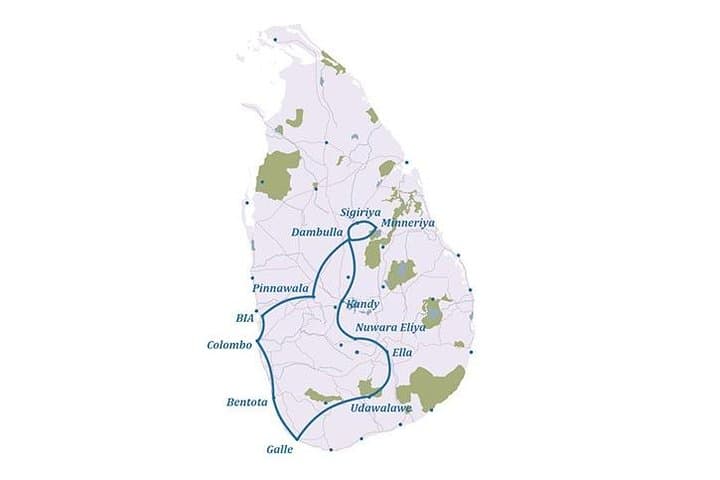
The bus eases out of Bandaranaike's wide shadow before dawn and the island unfurls: tea-clad hills darken into a green swell, ancient stones catch the sun like coins, and the ocean ahead promises heat and coral. On this 11-day private circuit travelers move from the cool air of Kandy’s highlands to the bronze ruins of Anuradhapura, up to the palatial scars of Sigiriya, and then across the northern peninsula to the eastern bays of Trincomalee where waves insist you put a mask on and look beneath.
The bus eases out of Bandaranaike's wide shadow before dawn and the island unfurls: tea-clad hills darken into a green swell, ancient stones catch the sun like coins, and the ocean ahead promises heat and coral. On this 11-day private circuit travelers move from the cool air of Kandy’s highlands to the bronze ruins of Anuradhapura, up to the palatial scars of Sigiriya, and then across the northern peninsula to the eastern bays of Trincomalee where waves insist you put a mask on and look beneath.
This is a route through Sri Lanka’s history as much as its landscape. Polonnaruwa and Anuradhapura were imperial capitals between the 1st and 13th centuries AD; their brick stupas and carved Buddhas mark engineering ambitions born of monastic life and irrigation systems that fed whole kingdoms. Sigiriya’s Lion Rock rises roughly 200 meters above the plains and preserves 5th-century frescoes and terraced water gardens—early landscape engineering that still channels rain into cisterns. Kandy sits higher, its Royal Botanical Garden at Peradeniya holding more than 4,000 plant species and long avenues of shade trees that temper the tropics.
Geology and coast meet here: the Cultural Triangle’s laterite soil and granite outcrops give way northward to sandy spits and coral shelves around Pigeon Island, where reef-building corals create a living mosaic and green turtles pick at seagrass. Minneriya National Park’s scrublands and reservoirs are magnets for elephant herds, especially during the dry-season gatherings between June and September—when water and forage concentrate wildlife around shrinking lakes.
Culturally, expect layered influences: Buddhist monasteries and Hindu temples stand within sight of colonial forts and Dutch-era stonework; cuisine reflects coastal spice routes and inland rice fields—spice gardens in Matale offer a hands-on primer in cinnamon, cardamom and Ayurvedic herbs.
Practical guidance: the tour runs in a private, air-conditioned vehicle with an English-speaking chauffeur guide, and includes two 500ml water bottles per person per day; entrance fees are not included. Many days require early starts—Sigiriya climbs are best at first light to avoid heat and crowds, and Minneriya safaris are most active late afternoon. Wear sturdy shoes for archaeological sites that involve staircases and uneven rock; reef shoes and a mask matter for Pigeon Island snorkeling.
Health and safety: moderate fitness is enough, but note long transfers across the island may test those with cardiovascular concerns. Bring reef-safe sunscreen, insect repellent, a lightweight rain layer for sudden tropical showers, and photocopies of documents. Finally, practice responsible viewing—do not feed or approach wildlife, and use established boat operators for reef visits to minimize anchor damage. The island rewards attention: quiet temples, abrupt rock faces, and an ocean that keeps asking to be explored.