THE ADVENTURE COLLECTIVE® · Independent discovery and booking for outdoor travel

Spend four hours moving from shaded souqs and a compact palace museum up into the Sarawat foothills to see Al Hada’s cable car, rose farms and Shafa viewpoints. This private tour pairs city culture with short mountain stops—ideal for a single-day introduction to Taif.
Spend four hours moving from shaded souqs and a compact palace museum up into the Sarawat foothills to see Al Hada’s cable car, rose farms and Shafa viewpoints. This private tour pairs city culture with short mountain stops—ideal for a single-day introduction to Taif.
Morning light carves the terraces above Taif and the air tastes faintly of rosewater and mountain dust.
You leave the low plains behind and climb into the Sarawat foothills where the city sits at roughly 1,700–1,900 m elevation; the road bends, the views open, and the landscape shifts from cultivated orchards to craggy ridgelines.
Verified experiences and guided adventures in the surrounding area.
Operated by TOURIST GUIDE AHMAD ALJUAED · Taif, Makkah Province
Morning light carves the terraces above Taif and the air tastes faintly of rosewater and mountain dust.
You leave the low plains behind and climb into the Sarawat foothills where the city sits at roughly 1,700–1,900 m elevation; the road bends, the views open, and the landscape shifts from cultivated orchards to craggy ridgelines.
Start with Shubra Palace’s compact museum and the busy old souq where spices, dried fruit and rose products crowd narrow alleys—Taif’s market culture has fed pilgrims and traders for generations and rose cultivation has shaped the economy and identity here.
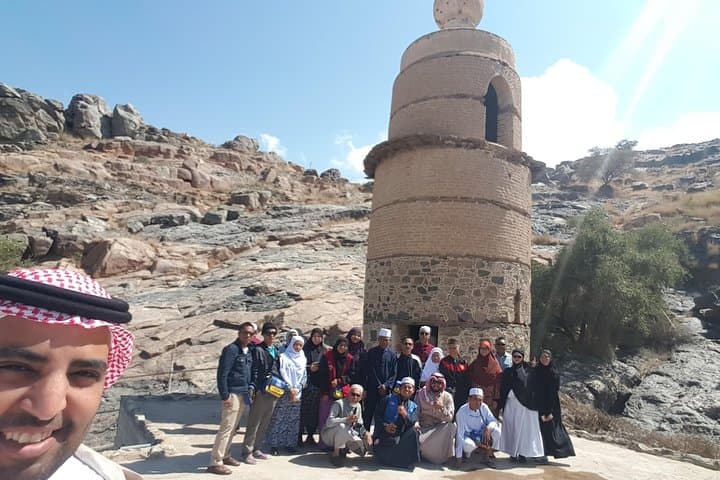
Geologically the area is part of the western escarpment of the Arabian Shield: volcanic rock outcrops, wadis cut into steep slopes and weathered sandstone that frames Rudaf Park’s sculpted boulders.
Al Hada’s cable car and winding mountain road give you a literal sense of elevation gain—the drive is steep with hairpin turns and overlooks—while Shafa mountain offers short, rocky viewpoints above the city for panoramic photos.
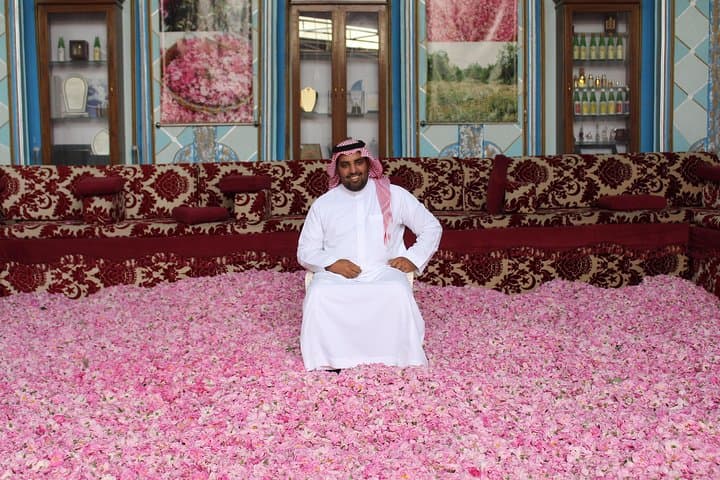
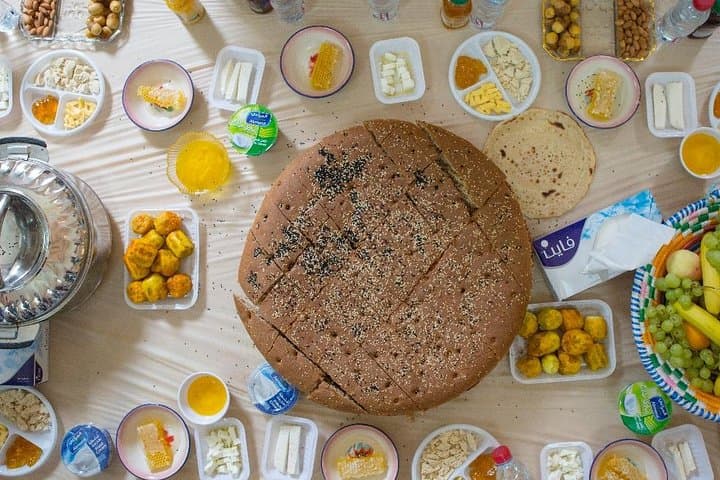
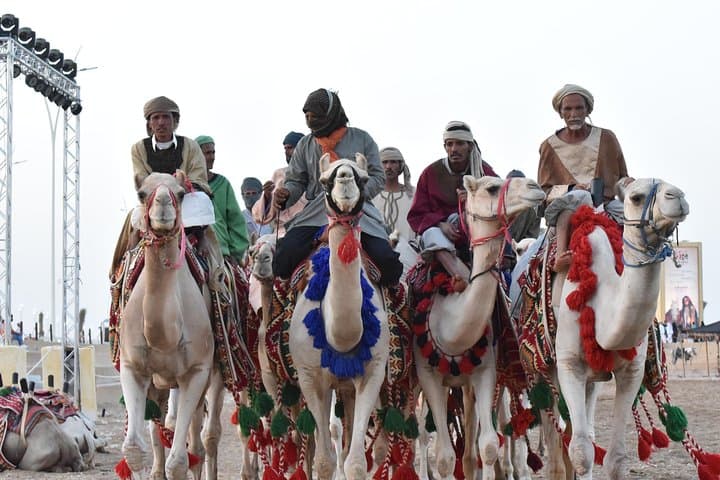
Culturally, expect strong local hospitality, markets selling rosewater, honey and grilled fare, and easy access to rose farms in spring when blooms peak.
Practical guidance: this private, four-hour tour is largely drive-and-walk; bring sun protection and a light jacket for higher elevations, carry 1–2 liters of water, and wear sturdy shoes for cobbled souqs and short rocky viewpoints. Expect modest admissions at some sites and plan pickup from central Taif lodgings.
This private tour typically does not include admissions; check with the operator in advance to confirm which tickets are provided or payable on-site.
The itinerary notes wheelchair and stroller accessibility for many areas and is suitable for most ages, but check specific location steps—some viewpoints have uneven terrain.
Rose season usually peaks in late March to April; that’s when rose farms and distilleries are most active and visually striking.
The tour provides private transportation—confirm your pickup point in Taif when booking (hotel or central meeting location works best).
TOURIST GUIDE AHMAD ALJUAED operates guided outdoor trips and adventures with an emphasis on safety, stewardship, and memorable experiences.
Morning light carves the terraces above Taif and the air tastes faintly of rosewater and mountain dust.
You leave the low plains behind and climb into the Sarawat foothills where the city sits at roughly 1,700–1,900 m elevation; the road bends, the views open, and the landscape shifts from cultivated orchards to craggy ridgelines.
Start with Shubra Palace’s compact museum and the busy old souq where spices, dried fruit and rose products crowd narrow alleys—Taif’s market culture has fed pilgrims and traders for generations and rose cultivation has shaped the economy and identity here.
Geologically the area is part of the western escarpment of the Arabian Shield: volcanic rock outcrops, wadis cut into steep slopes and weathered sandstone that frames Rudaf Park’s sculpted boulders.
Al Hada’s cable car and winding mountain road give you a literal sense of elevation gain—the drive is steep with hairpin turns and overlooks—while Shafa mountain offers short, rocky viewpoints above the city for panoramic photos.
Culturally, expect strong local hospitality, markets selling rosewater, honey and grilled fare, and easy access to rose farms in spring when blooms peak.
Practical guidance: this private, four-hour tour is largely drive-and-walk; bring sun protection and a light jacket for higher elevations, carry 1–2 liters of water, and wear sturdy shoes for cobbled souqs and short rocky viewpoints. Expect modest admissions at some sites and plan pickup from central Taif lodgings.