THE ADVENTURE COLLECTIVE® · Independent discovery and booking for outdoor travel

Drive into Georgia’s high Caucasus on a private 3-day loop through Mestia and Ushguli. Expect medieval stone towers, panoramic cable-car views of Ushba, and a blend of cultural sites and alpine terrain suited to travelers who prefer immersive, low-impact mountain travel.
Drive into Georgia’s high Caucasus on a private 3-day loop through Mestia and Ushguli. Expect medieval stone towers, panoramic cable-car views of Ushba, and a blend of cultural sites and alpine terrain suited to travelers who prefer immersive, low-impact mountain travel.
The road climbs out of green lowlands into a high, stone country where towers rise like deliberate answers to a harsh climate. You arrive into Mestia with the hush of glaciers above you and the Enguri river daring the valley to keep up. Cable cars slice the sky at Hatsvali, offering a direct line to Ushba’s jagged silhouette; further still, Ushguli sits like a small fortress of stacked history beneath permanent snow.
Verified experiences and guided adventures in the surrounding area.
Operated by Tripify · Mestia, Svaneti
The road climbs out of green lowlands into a high, stone country where towers rise like deliberate answers to a harsh climate. You arrive into Mestia with the hush of glaciers above you and the Enguri river daring the valley to keep up. Cable cars slice the sky at Hatsvali, offering a direct line to Ushba’s jagged silhouette; further still, Ushguli sits like a small fortress of stacked history beneath permanent snow.
Svaneti’s story is written in rock and masonry: medieval defensive towers, churches with frescoes from the Georgian Golden Age, and trade routes that linked the Caucasus to the Black Sea. Geologically the region is young and rugged—granite peaks, narrow gorges and glacial cirques—shaping a mountaineering culture embodied by local climbers and the Khergiani museum in Mestia. The Dadiani Palace and the Enguri Dam add industrial and aristocratic chapters to the landscape’s narrative.
On a three-day private circuit you’ll combine scenic drives on high-mountain roads with short walks around UNESCO-listed settlements. Expect gravel and tarmac, short steep sections in and between villages, and altitude between 1,500–2,100 m. Local homestays serve stews and salty cheese; Svans are reserved but generous—ask before photographing people and farmsteads.
Practical points: travel slowly to acclimatize, pack a warm layer for mountain evenings, and allow extra time for unpaved roads. The best season for clear views is late summer; winters are for experienced winter-sports travelers. This is compact, cultural mountain travel—steady, scenic and quietly demanding.
easy.
3 days.
Suitable for most fitness levels; requires ability to walk on uneven ground at moderate altitude and manage short uphill sections.
Ushguli is at high elevation and connected by unpaved roads; 4x4 access is common and private transfers usually handle the route—expect slower travel times than maps suggest.
This is a private guided tour—local guides provide history, handle logistics and navigate mountain roads, which is recommended for safety and cultural context.
No technical fitness is required; participants should be comfortable walking on uneven terrain for short periods and managing altitude-related fatigue.
Late June through September offers the most reliable road access and clear mountain views; winter is snowy and better suited to experienced winter-sports travelers.
Svaneti developed as a semi-autonomous highland culture; its stone defensive towers and hilltop churches reflect centuries of local clan-based defense and medieval Christianity.
Tourism is concentrated in a few villages—minimize impact by staying in registered guesthouses, avoiding off-trail walks, and using local guides who support community incomes.
Tripify operates guided outdoor trips and adventures with an emphasis on safety, stewardship, and memorable experiences.
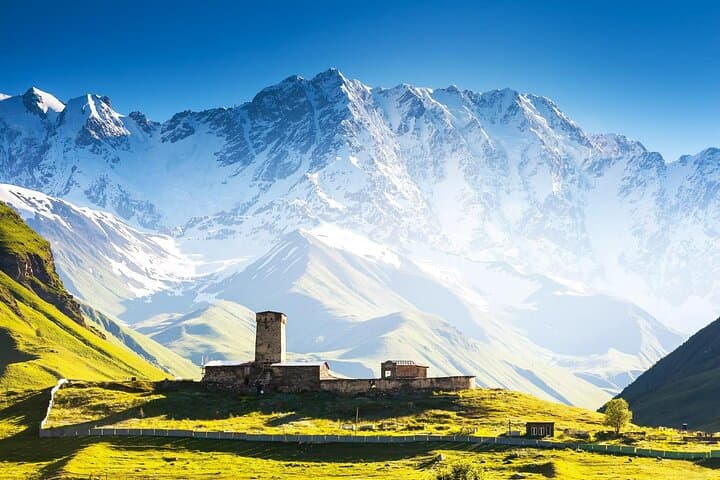

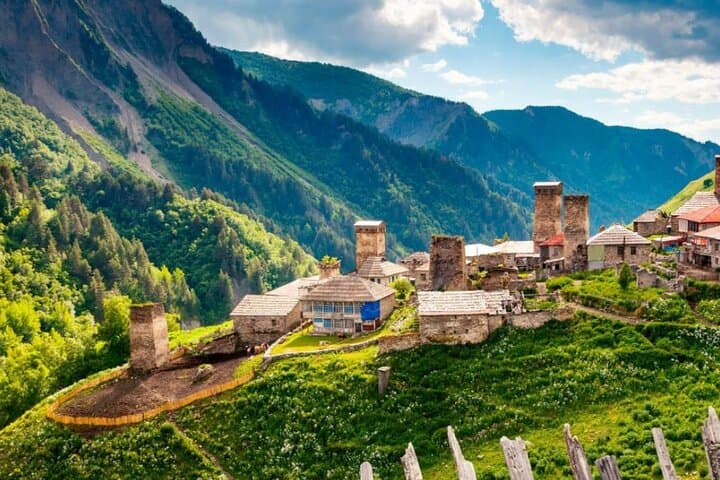

The road climbs out of green lowlands into a high, stone country where towers rise like deliberate answers to a harsh climate. You arrive into Mestia with the hush of glaciers above you and the Enguri river daring the valley to keep up. Cable cars slice the sky at Hatsvali, offering a direct line to Ushba’s jagged silhouette; further still, Ushguli sits like a small fortress of stacked history beneath permanent snow.
The road climbs out of green lowlands into a high, stone country where towers rise like deliberate answers to a harsh climate. You arrive into Mestia with the hush of glaciers above you and the Enguri river daring the valley to keep up. Cable cars slice the sky at Hatsvali, offering a direct line to Ushba’s jagged silhouette; further still, Ushguli sits like a small fortress of stacked history beneath permanent snow.
Svaneti’s story is written in rock and masonry: medieval defensive towers, churches with frescoes from the Georgian Golden Age, and trade routes that linked the Caucasus to the Black Sea. Geologically the region is young and rugged—granite peaks, narrow gorges and glacial cirques—shaping a mountaineering culture embodied by local climbers and the Khergiani museum in Mestia. The Dadiani Palace and the Enguri Dam add industrial and aristocratic chapters to the landscape’s narrative.
On a three-day private circuit you’ll combine scenic drives on high-mountain roads with short walks around UNESCO-listed settlements. Expect gravel and tarmac, short steep sections in and between villages, and altitude between 1,500–2,100 m. Local homestays serve stews and salty cheese; Svans are reserved but generous—ask before photographing people and farmsteads.
Practical points: travel slowly to acclimatize, pack a warm layer for mountain evenings, and allow extra time for unpaved roads. The best season for clear views is late summer; winters are for experienced winter-sports travelers. This is compact, cultural mountain travel—steady, scenic and quietly demanding.