THE ADVENTURE COLLECTIVE® · Independent discovery and booking for outdoor travel

Drive from Tabuk across rust-colored desert to visit Moses' Altar, the Split Rock of Horeb, and Jethro's well on a private full-day tour. Expect easy walks, vivid sandstone geology, and local food at a mid-day restaurant stop.
Drive from Tabuk across rust-colored desert to visit Moses' Altar, the Split Rock of Horeb, and Jethro's well on a private full-day tour. Expect easy walks, vivid sandstone geology, and local food at a mid-day restaurant stop.
The day opens on the asphalt leaving Tabuk behind; an air-conditioned vehicle hums as ochre sandstone and scrubby desert slide past like pages in a geologic book. By midmorning the road narrows, dunes and ridgelines rising into sculpted forms—rock faces that seem to have been scored by wind and time, daring visitors to read their layers.
Verified experiences and guided adventures in the surrounding area.
Operated by ADEL · Tabuk City, Tabuk
The day opens on the asphalt leaving Tabuk behind; an air-conditioned vehicle hums as ochre sandstone and scrubby desert slide past like pages in a geologic book. By midmorning the road narrows, dunes and ridgelines rising into sculpted forms—rock faces that seem to have been scored by wind and time, daring visitors to read their layers.
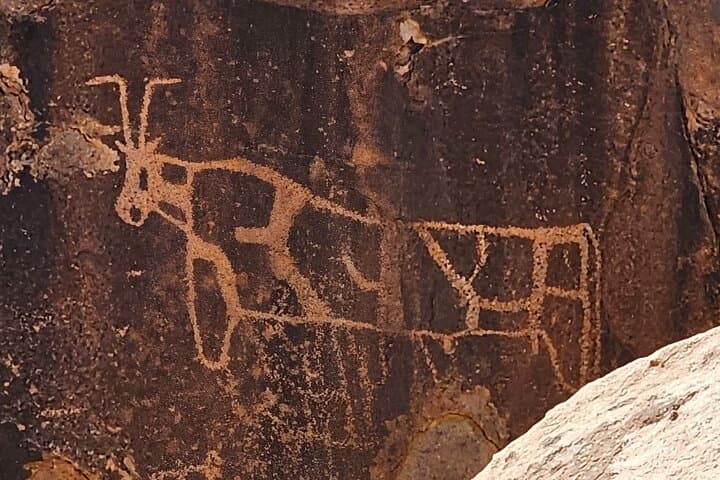
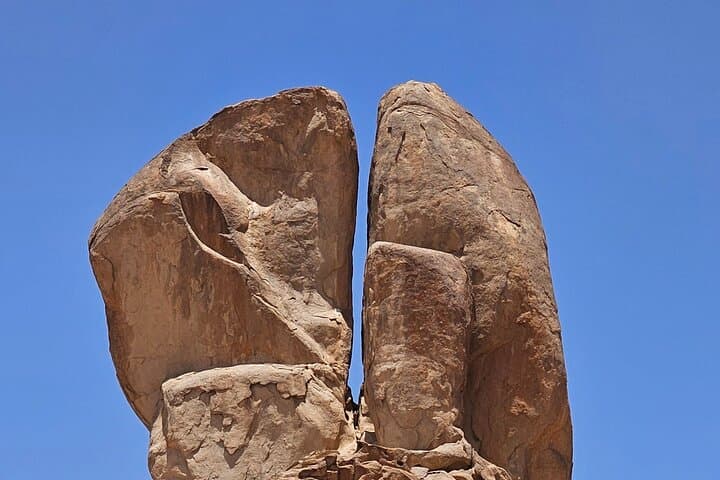
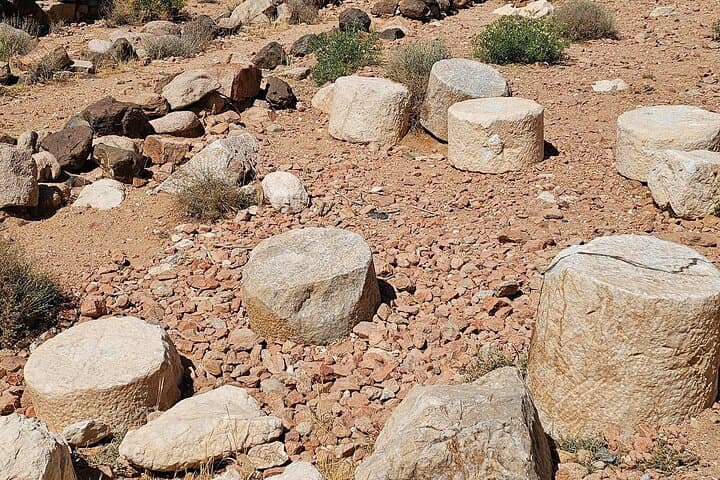
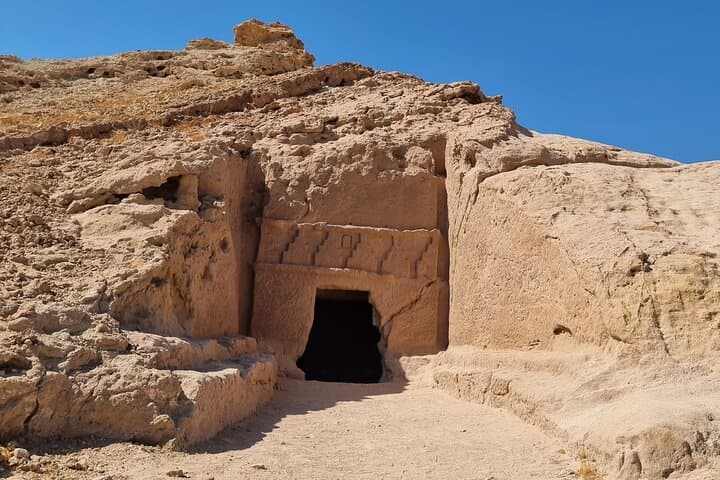
This full-day private tour follows routes tied to ancient trade and biblical memory. The stops—Moses' Altar, the Golden Calf Altar, the Split Rock of Horeb, and Jethro's well—sit within a landscape shaped by sandstone erosion and episodic flash floods. The Split Rock itself is a study in fracture and weathering: a boulder split cleanly, its interior revealing grain and mineral streaks that hint at ancient seas and later tectonic uplift. Cultural echoes are constant: Nabataean inscriptions, caravan roads, and stories passed down in local Bedouin tradition.
Expect easy walking on mostly flat, sandy surfaces with short climbs to viewpoints; restroom stops are available en route, and a local restaurant break provides a chance to taste regional dishes. Guides often frame sites in both archaeological and scriptural context, giving practical interpretation rather than mythic embellishment.
Practical guidance: bring sun protection, at least 2 liters of water, sturdy shoes for uneven rock, and layered clothing—the desert can be hot in the sun and brisk in the shade. Timing matters: start early to avoid peak heat, carry a charged phone and a small first-aid kit, and respect fragile rock writings and wells as cultural heritage.
easy.
10 hours.
Light fitness required—able to walk short distances on uneven, sandy terrain and climb low rock steps.
The roundtrip includes roughly three hours each way of driving; the full experience is a 10-hour day including stops and lunch.
Yes—restrooms are available at designated stops along the route and at the lunch restaurant.
Yes; the tour is rated easy and suitable for most fitness levels, but it is not recommended for people with serious spinal or cardiovascular issues.
Admission is not listed as required for these stops; the tour covers local fees and taxes as noted in inclusions.
This region has long been a crossroads—Midianite and Nabataean presences left rock inscriptions, and local tradition connects several sites to Moses and Jethro from biblical accounts.
Visitors should stick to established paths and avoid touching inscriptions; reducing plastic waste and staying on vehicle tracks helps protect fragile desert soils and archaeological deposits.
ADEL operates guided outdoor trips and adventures with an emphasis on safety, stewardship, and memorable experiences.
The day opens on the asphalt leaving Tabuk behind; an air-conditioned vehicle hums as ochre sandstone and scrubby desert slide past like pages in a geologic book. By midmorning the road narrows, dunes and ridgelines rising into sculpted forms—rock faces that seem to have been scored by wind and time, daring visitors to read their layers.
The day opens on the asphalt leaving Tabuk behind; an air-conditioned vehicle hums as ochre sandstone and scrubby desert slide past like pages in a geologic book. By midmorning the road narrows, dunes and ridgelines rising into sculpted forms—rock faces that seem to have been scored by wind and time, daring visitors to read their layers.
This full-day private tour follows routes tied to ancient trade and biblical memory. The stops—Moses' Altar, the Golden Calf Altar, the Split Rock of Horeb, and Jethro's well—sit within a landscape shaped by sandstone erosion and episodic flash floods. The Split Rock itself is a study in fracture and weathering: a boulder split cleanly, its interior revealing grain and mineral streaks that hint at ancient seas and later tectonic uplift. Cultural echoes are constant: Nabataean inscriptions, caravan roads, and stories passed down in local Bedouin tradition.
Expect easy walking on mostly flat, sandy surfaces with short climbs to viewpoints; restroom stops are available en route, and a local restaurant break provides a chance to taste regional dishes. Guides often frame sites in both archaeological and scriptural context, giving practical interpretation rather than mythic embellishment.
Practical guidance: bring sun protection, at least 2 liters of water, sturdy shoes for uneven rock, and layered clothing—the desert can be hot in the sun and brisk in the shade. Timing matters: start early to avoid peak heat, carry a charged phone and a small first-aid kit, and respect fragile rock writings and wells as cultural heritage.