THE ADVENTURE COLLECTIVE® · Independent discovery and booking for outdoor travel

Step beneath Tulum’s mangrove-fringed cenote for your first scuba dive: a compact, instructor-led introduction combining brief theory, in-water practice, and a guided 30–40 minute dive in crystal-clear water. Ideal for beginners looking for a safe, unforgettable underwater start.
Step beneath Tulum’s mangrove-fringed cenote for your first scuba dive: a compact, instructor-led introduction combining brief theory, in-water practice, and a guided 30–40 minute dive in crystal-clear water. Ideal for beginners looking for a safe, unforgettable underwater start.
The water holds its breath as you step from the shaded mangrove rim into a bowl of transparent blue. Light shafts pierce the cenote’s skin, carving fingers of brightness through the calm; beneath, a quiet world waits—arched rock, curious fish, the slow drift of silt that carpets the floor. For many first-time divers, this is where the ocean’s roar fades into hush, and the breathing of the regulator becomes the most intimate sound you know.
Verified experiences and guided adventures in the surrounding area.
Operated by Agua Clara Diving Tulum · Tulum, Quintana Roo
The water holds its breath as you step from the shaded mangrove rim into a bowl of transparent blue. Light shafts pierce the cenote’s skin, carving fingers of brightness through the calm; beneath, a quiet world waits—arched rock, curious fish, the slow drift of silt that carpets the floor. For many first-time divers, this is where the ocean’s roar fades into hush, and the breathing of the regulator becomes the most intimate sound you know.
This experience begins at Mexidivers at Hotel Zamas, a short transfer from Tulum town. The course combines a succinct classroom briefing and in-water skills session with an instructor before a guided 30–40 minute dive in an open cenote lagoon ringed by mangroves. Cenotes are not only geological features—collapsed limestone revealing groundwater—they are cultural places. The Maya revered these sinkholes as fresh-water sources and portals; even today, cenotes are treated with respect and careful stewardship.
Geologically, cenotes are surface expressions of Yucatán’s karst: rainwater dissolves limestone over millennia, creating underground cavities and clear aquifers. That clarity makes them ideal for introductory scuba—visibility often far better than coastal reefs, and depths in this lagoon are beginner-friendly, typically limited to recreational training depths under instructor supervision.
Locals combine conservation with tourism here. Guides will remind you to skip non-biodegradable sunscreens and soaps; the karst aquifer is vulnerable to contaminants. You’ll also feel the human rhythm of Tulum—relaxed, service-focused, and protective of its natural assets.
Practical guidance: expect a roughly 5-hour program from meet-up to return—classroom theory, gear fitting, surface practice, and the dive. Minimum age is 10. The operator accepts mobile tickets and caps groups at five, so you’ll get hands-on attention. Disclose any medical conditions—pregnancy and cardiovascular concerns are contraindications. Bring a towel, swimwear, and a light change of clothes; the operator supplies wetsuit, mask, regulator, and tank. If you’d like a second dive it’s offered, usually for an extra window of time in the same lagoon.
Timing matters: morning slots catch softer light and calmer water, while afternoons fill with small groups. Stay hydrated and avoid alcohol the night before. If you’re new to diving, focus on steady breathing and trusting your instructor—the slow cadence is part of the point.
By the time you climb back onto the mangrove bank the world feels a little larger: the cenote returns you to a vital freshwater core of the Yucatán, and your first breaths underwater become a quiet passport into more explorations.
moderate.
5 hours.
Basic swimming ability and comfort in open water; no advanced fitness required but be comfortable moving in water.
No—this is an introductory program designed for first-time divers with a supervised skills session before the dive.
Minimum age is 10 years; minors must have guardian consent and meet health requirements.
The guided cenote dive is kept within beginner-friendly recreational limits under instructor supervision, typically within safe shallow training depths.
Not recommended for pregnant travelers or those with serious cardiovascular or respiratory conditions; disclose any medical history on booking forms.
Small waterproof cameras or housings are usually fine if approved by your instructor; avoid bringing loose gear that could be lost.
Full refund if you cancel at least 24 hours before the scheduled departure; operators may cancel for bad weather.
Cenotes were vital freshwater sources for the Maya and frequently held ritual significance; many local communities continue to protect them.
The Yucatán’s karst aquifer is sensitive—use biodegradable products, avoid disturbing sediments, and follow guide instructions to minimize impact.
Agua Clara Diving Tulum operates guided outdoor trips and adventures with an emphasis on safety, stewardship, and memorable experiences.
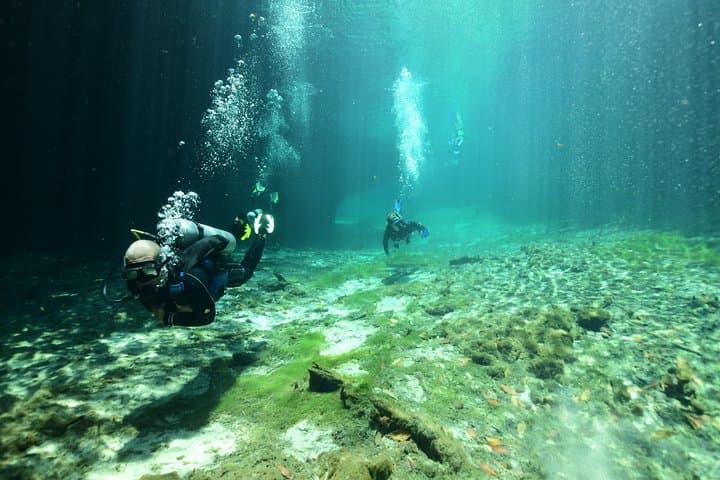
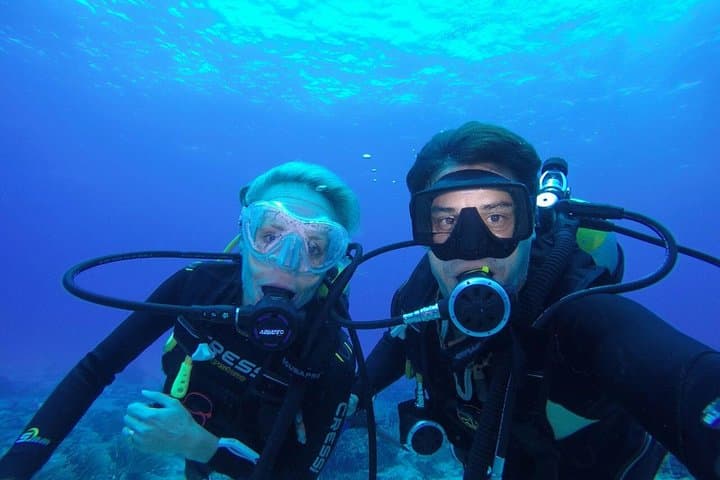
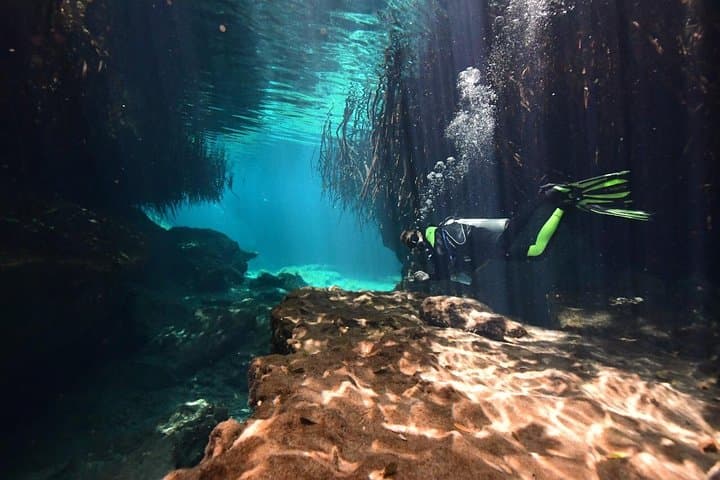
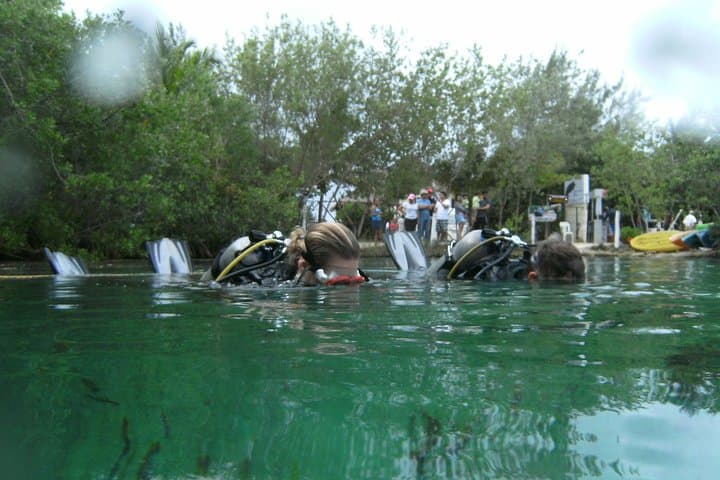
The water holds its breath as you step from the shaded mangrove rim into a bowl of transparent blue. Light shafts pierce the cenote’s skin, carving fingers of brightness through the calm; beneath, a quiet world waits—arched rock, curious fish, the slow drift of silt that carpets the floor. For many first-time divers, this is where the ocean’s roar fades into hush, and the breathing of the regulator becomes the most intimate sound you know.
The water holds its breath as you step from the shaded mangrove rim into a bowl of transparent blue. Light shafts pierce the cenote’s skin, carving fingers of brightness through the calm; beneath, a quiet world waits—arched rock, curious fish, the slow drift of silt that carpets the floor. For many first-time divers, this is where the ocean’s roar fades into hush, and the breathing of the regulator becomes the most intimate sound you know.
This experience begins at Mexidivers at Hotel Zamas, a short transfer from Tulum town. The course combines a succinct classroom briefing and in-water skills session with an instructor before a guided 30–40 minute dive in an open cenote lagoon ringed by mangroves. Cenotes are not only geological features—collapsed limestone revealing groundwater—they are cultural places. The Maya revered these sinkholes as fresh-water sources and portals; even today, cenotes are treated with respect and careful stewardship.
Geologically, cenotes are surface expressions of Yucatán’s karst: rainwater dissolves limestone over millennia, creating underground cavities and clear aquifers. That clarity makes them ideal for introductory scuba—visibility often far better than coastal reefs, and depths in this lagoon are beginner-friendly, typically limited to recreational training depths under instructor supervision.
Locals combine conservation with tourism here. Guides will remind you to skip non-biodegradable sunscreens and soaps; the karst aquifer is vulnerable to contaminants. You’ll also feel the human rhythm of Tulum—relaxed, service-focused, and protective of its natural assets.
Practical guidance: expect a roughly 5-hour program from meet-up to return—classroom theory, gear fitting, surface practice, and the dive. Minimum age is 10. The operator accepts mobile tickets and caps groups at five, so you’ll get hands-on attention. Disclose any medical conditions—pregnancy and cardiovascular concerns are contraindications. Bring a towel, swimwear, and a light change of clothes; the operator supplies wetsuit, mask, regulator, and tank. If you’d like a second dive it’s offered, usually for an extra window of time in the same lagoon.
Timing matters: morning slots catch softer light and calmer water, while afternoons fill with small groups. Stay hydrated and avoid alcohol the night before. If you’re new to diving, focus on steady breathing and trusting your instructor—the slow cadence is part of the point.
By the time you climb back onto the mangrove bank the world feels a little larger: the cenote returns you to a vital freshwater core of the Yucatán, and your first breaths underwater become a quiet passport into more explorations.