THE ADVENTURE COLLECTIVE® · Independent discovery and booking for outdoor travel

Breathe underwater for the first time off Malta’s coast with guided shore dives that pair focused instruction and clear Mediterranean water. Small groups and online theory mean you spend more time practicing skills and exploring shallow reefs.
Breathe underwater for the first time off Malta’s coast with guided shore dives that pair focused instruction and clear Mediterranean water. Small groups and online theory mean you spend more time practicing skills and exploring shallow reefs.
A pale morning light breaks over the Mediterranean as a compact group meets on a pebble shore near St. Julian's. Instructors check gear with steady hands, voices low against a wash of small waves; the sea smells faintly of salt and limestone. Participants—some nervous, some eager—complete a last-minute skills run-through on the sand before slipping beneath a surface that quickly quiets the world above.
Verified experiences and guided adventures in the surrounding area.
Operated by Aquatica Diving Centre · St. Julian's, Malta
A pale morning light breaks over the Mediterranean as a compact group meets on a pebble shore near St. Julian's. Instructors check gear with steady hands, voices low against a wash of small waves; the sea smells faintly of salt and limestone. Participants—some nervous, some eager—complete a last-minute skills run-through on the sand before slipping beneath a surface that quickly quiets the world above.
Malta's coastline is carved from Miocene limestone, creating cliffs, caves and shallow reefs that make it an ideal classroom for first dives. The islands' strategic position in the central Mediterranean has shaped a layered history of Phoenician, Norman and Knights of St. John influence—many coastal villages still maintain small-scale fishing and a practical seaside culture that welcomes visitors.
On a typical beginner shore dive here, visibility often ranges from 10–30 meters depending on season and swells, with maximum guided depths around 5 meters for training dives. Expect rocky reef structure, pockets of Posidonia seagrass, and occasional wreck fragments—noted as habitat for wrasse, damselfish and octopus.
Practicalities matter: complete the provider’s online theory before arrival, bring swimwear and a warm top for after the water, and follow medical guidance—diving is not recommended for certain heart, respiratory or recent-surgery conditions. Minors can join from age 10 with parental consent. Allow a minimum of 12 hours (recommended 24) before flying post-dive. Groups are small, instruction is hands-on, and the session typically lasts about 2½ hours—enough to learn basic skills then explore a shallow dive site under close supervision.
moderate.
2–3 hours.
Participants should have moderate fitness and be comfortable swimming in open water.
No—this program is designed for beginners and includes an online theory session plus guided in-water training dives, but it does not issue an internationally recognized certification.
Minimum age is 10 with parental consent; certain medical conditions (heart, respiratory, recent surgeries) require written approval from a physician before participating.
Training dives are shallow—around 5 meters maximum—and the guided portion typically lasts long enough to practice skills then explore, with total activity time about 2½ hours.
Wait a minimum of 12 hours after a single shallow dive, with 24 hours recommended to reduce decompression risk; follow the operator’s specific guidance.
Malta’s coastal shelves and caves have sheltered seafarers for millennia; many dive sites lie near wartime wrecks and ancient anchorages that reflect the islands’ strategic Mediterranean role.
Operators often emphasize responsible buoyancy to avoid touching seagrass and coral; look for providers who follow local marine protection guidelines and limit group sizes.
Aquatica Diving Centre operates guided outdoor trips and adventures with an emphasis on safety, stewardship, and memorable experiences.
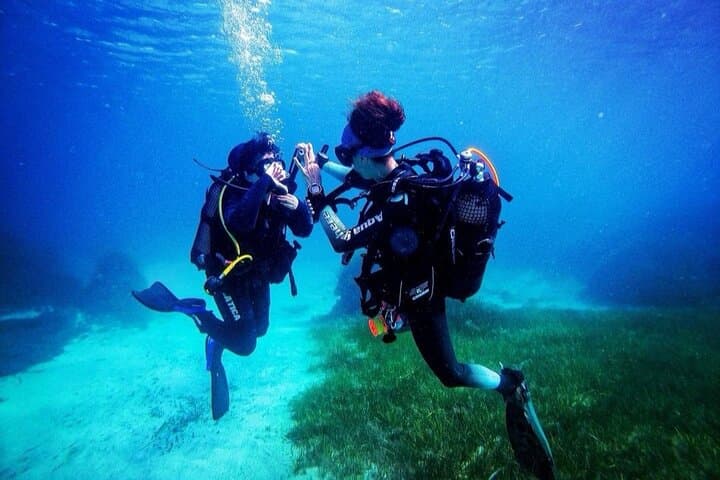
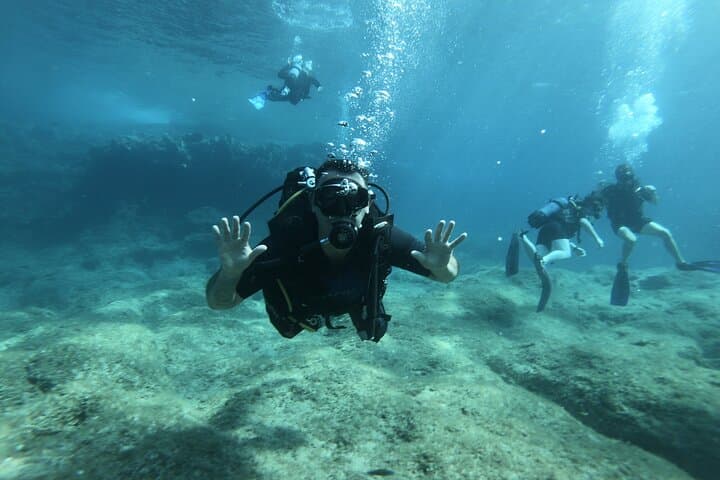
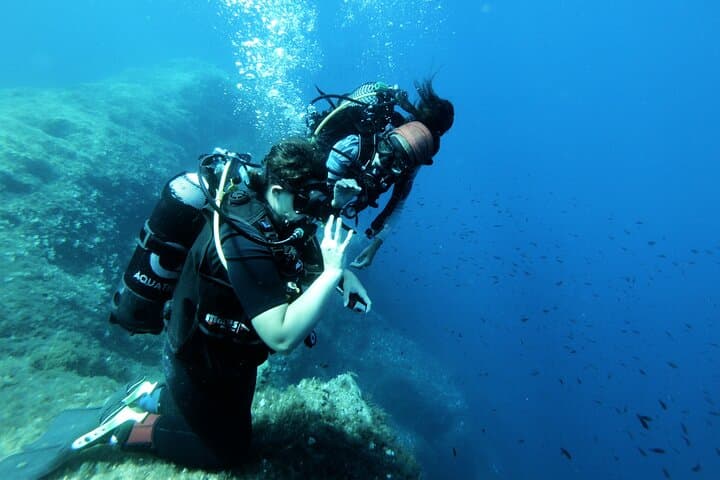
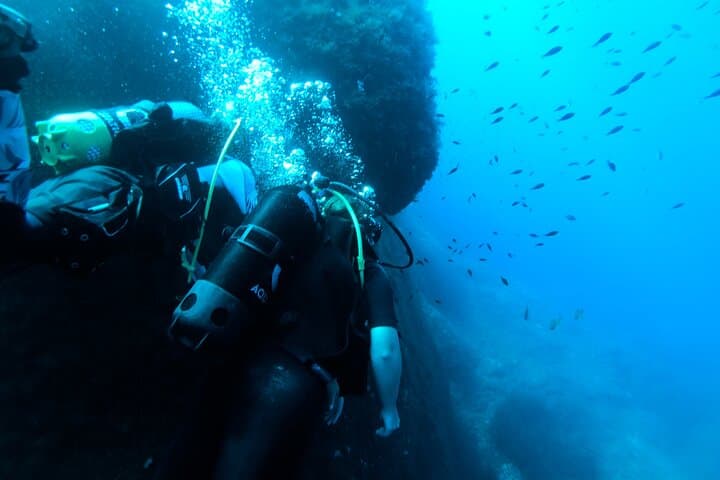
A pale morning light breaks over the Mediterranean as a compact group meets on a pebble shore near St. Julian's. Instructors check gear with steady hands, voices low against a wash of small waves; the sea smells faintly of salt and limestone. Participants—some nervous, some eager—complete a last-minute skills run-through on the sand before slipping beneath a surface that quickly quiets the world above.
A pale morning light breaks over the Mediterranean as a compact group meets on a pebble shore near St. Julian's. Instructors check gear with steady hands, voices low against a wash of small waves; the sea smells faintly of salt and limestone. Participants—some nervous, some eager—complete a last-minute skills run-through on the sand before slipping beneath a surface that quickly quiets the world above.
Malta's coastline is carved from Miocene limestone, creating cliffs, caves and shallow reefs that make it an ideal classroom for first dives. The islands' strategic position in the central Mediterranean has shaped a layered history of Phoenician, Norman and Knights of St. John influence—many coastal villages still maintain small-scale fishing and a practical seaside culture that welcomes visitors.
On a typical beginner shore dive here, visibility often ranges from 10–30 meters depending on season and swells, with maximum guided depths around 5 meters for training dives. Expect rocky reef structure, pockets of Posidonia seagrass, and occasional wreck fragments—noted as habitat for wrasse, damselfish and octopus.
Practicalities matter: complete the provider’s online theory before arrival, bring swimwear and a warm top for after the water, and follow medical guidance—diving is not recommended for certain heart, respiratory or recent-surgery conditions. Minors can join from age 10 with parental consent. Allow a minimum of 12 hours (recommended 24) before flying post-dive. Groups are small, instruction is hands-on, and the session typically lasts about 2½ hours—enough to learn basic skills then explore a shallow dive site under close supervision.