THE ADVENTURE COLLECTIVE® · Independent discovery and booking for outdoor travel

Introductory PADI dives launch from Koh Touch beach and pair confined-water training with one or two supervised open-water dives at nearby reefs like Koh Toch and Koh Koun. Morning sessions usually bring calmer seas and the best visibility for first-timers.
Introductory PADI dives launch from Koh Touch beach and pair confined-water training with one or two supervised open-water dives at nearby reefs like Koh Toch and Koh Koun. Morning sessions usually bring calmer seas and the best visibility for first-timers.
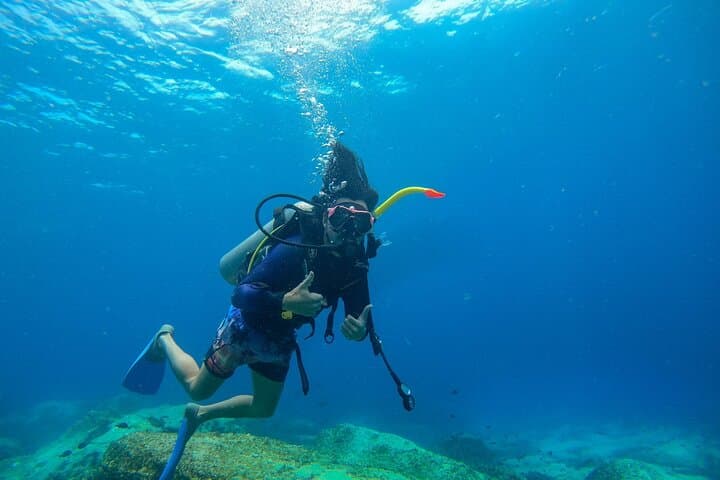
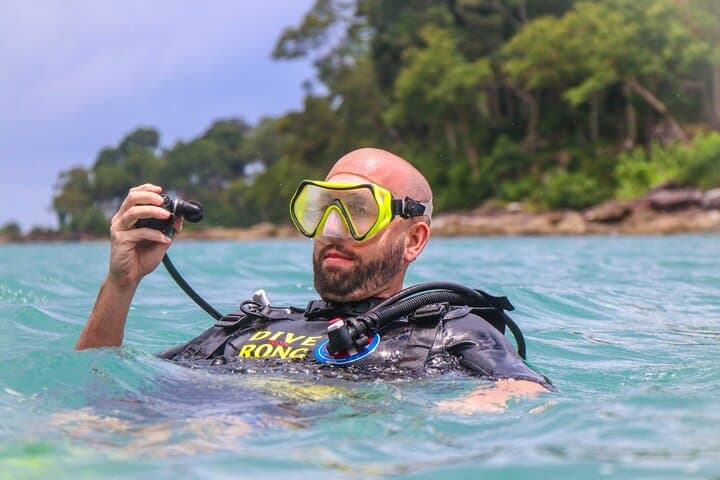
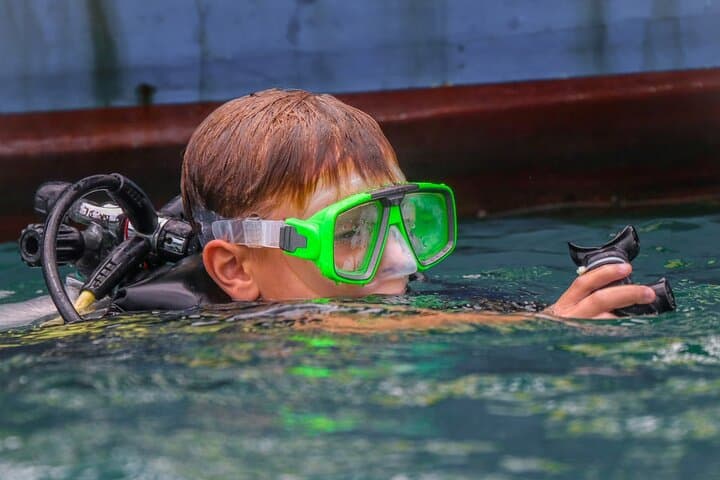
You step off the white sand of Koh Touch with salt on your lips and instructors calling over the surf; the sea ahead is a broad, pale green that darkens as it drops away. After a short confined-water lesson near the shallows, you feel the regulator in your mouth and the weight of the tank settle against your back. The first descent is a quiet negotiation with buoyancy as the reef rises into view and small fish thread through the coral like punctuation.
Verified experiences and guided adventures in the surrounding area.
Operated by Koh Rong Watersports · Koh Rong, Sihanoukville Province
You step off the white sand of Koh Touch with salt on your lips and instructors calling over the surf; the sea ahead is a broad, pale green that darkens as it drops away. After a short confined-water lesson near the shallows, you feel the regulator in your mouth and the weight of the tank settle against your back. The first descent is a quiet negotiation with buoyancy as the reef rises into view and small fish thread through the coral like punctuation.
Koh Rong’s coastline is geologically young—sandy beaches backed by lateritic hills—and the reefs around Koh Toch and Koh Koun are still relatively undisturbed compared with busier Cambodian sites. Historically a string of fishing settlements, the island’s dive culture is recent, shaped in the last decade by guesthouses and small dive operators catering to beginners and independent travelers.
Expect practical, hands-on training: basic theory on land, confined practice in shallow water, then one or two supervised open-water dives depending on conditions. Morning sessions often offer calmer seas and clearer visibility; afternoon dives can be warmer but windier. Instructors lead groups from Koh Touch; boats return to the same beach.
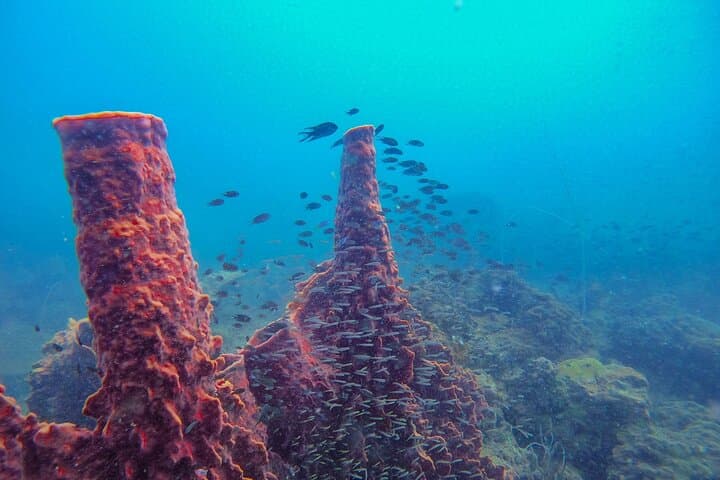
Bring your swim confidence, a medical declaration if required, and a willingness to move slowly—currents and tides demand attention. Hydrate before you dive, protect against the sun with reef-safe sunscreen, and avoid touching coral. For many first-timers, Koh Rong delivers accessible, rewarding exposures to reef life—colorful reef fish, spur-and-groove formations, and the soft hush of being underwater.
moderate.
4–5 hours.
Suitable for people in reasonable health who are comfortable swimming and able to follow instructions; not suited for serious respiratory or cardiac conditions.
No — Discover Scuba programs are designed for beginners and include confined-water training before any open-water dive.
The program offers either one or two dives depending on the option booked and sea conditions; expect a single supervised open-water dive as the baseline.
Participants must be in reasonable physical health, typically over age 10–12 depending on operator policy; you’ll complete a medical declaration and should disclose any conditions like asthma or heart disease.
Morning sessions usually have calmer seas and better visibility; operators may schedule afternoon dives when winds are lighter in certain seasons.
Koh Rong was primarily a cluster of fishing villages until tourism expanded in the 2010s, bringing small-scale dive operations focused on entry-level experiences.
Reefs near Koh Rong face pressures from anchors, coastal development, and occasional blast fishing—choose operators that use moorings and practice no-touch policies and reef-safe products.
Koh Rong Watersports operates guided outdoor trips and adventures with an emphasis on safety, stewardship, and memorable experiences.
You step off the white sand of Koh Touch with salt on your lips and instructors calling over the surf; the sea ahead is a broad, pale green that darkens as it drops away. After a short confined-water lesson near the shallows, you feel the regulator in your mouth and the weight of the tank settle against your back. The first descent is a quiet negotiation with buoyancy as the reef rises into view and small fish thread through the coral like punctuation.
You step off the white sand of Koh Touch with salt on your lips and instructors calling over the surf; the sea ahead is a broad, pale green that darkens as it drops away. After a short confined-water lesson near the shallows, you feel the regulator in your mouth and the weight of the tank settle against your back. The first descent is a quiet negotiation with buoyancy as the reef rises into view and small fish thread through the coral like punctuation.
Koh Rong’s coastline is geologically young—sandy beaches backed by lateritic hills—and the reefs around Koh Toch and Koh Koun are still relatively undisturbed compared with busier Cambodian sites. Historically a string of fishing settlements, the island’s dive culture is recent, shaped in the last decade by guesthouses and small dive operators catering to beginners and independent travelers.
Expect practical, hands-on training: basic theory on land, confined practice in shallow water, then one or two supervised open-water dives depending on conditions. Morning sessions often offer calmer seas and clearer visibility; afternoon dives can be warmer but windier. Instructors lead groups from Koh Touch; boats return to the same beach.
Bring your swim confidence, a medical declaration if required, and a willingness to move slowly—currents and tides demand attention. Hydrate before you dive, protect against the sun with reef-safe sunscreen, and avoid touching coral. For many first-timers, Koh Rong delivers accessible, rewarding exposures to reef life—colorful reef fish, spur-and-groove formations, and the soft hush of being underwater.