THE ADVENTURE COLLECTIVE® · Independent discovery and booking for outdoor travel

Spend a day learning to breathe underwater off Phu Quoc’s sheltered southern islets—two guided discovery dives, lunch on the boat, and hotel transfers included. Ideal for first-time divers seeking shallow reefs, nudibranchs and small reef fish.
Spend a day learning to breathe underwater off Phu Quoc’s sheltered southern islets—two guided discovery dives, lunch on the boat, and hotel transfers included. Ideal for first-time divers seeking shallow reefs, nudibranchs and small reef fish.
You step off an air-conditioned minivan as the boat rocks gently against a small pier; the sea smells of salt and sun-warmed plastic from the dive gear. By 10:00 the crew runs a concise briefing, sorts masks and tanks, and the boat slides away from shore toward a cluster of rocky islets where shallow blue water opens into reef.
Verified experiences and guided adventures in the surrounding area.
Operated by Grace’s tour · Duong Dong, Kien Giang
You step off an air-conditioned minivan as the boat rocks gently against a small pier; the sea smells of salt and sun-warmed plastic from the dive gear. By 10:00 the crew runs a concise briefing, sorts masks and tanks, and the boat slides away from shore toward a cluster of rocky islets where shallow blue water opens into reef.
Phu Quoc’s southern coast sits on the edge of the Gulf of Thailand. The archipelago’s volcanic and sedimentary history produced outcrops and reefs with two clear bands: hard corals in the sunlit shallows and softer growth beginning below roughly 7 m. Local fishing villages on the island have long tied livelihoods to these reefs; recent years have seen growing tourism focused on low-impact diving and reef restoration.
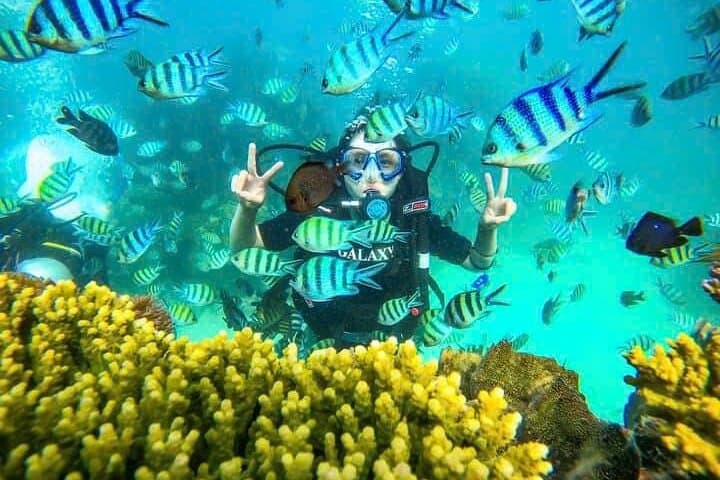
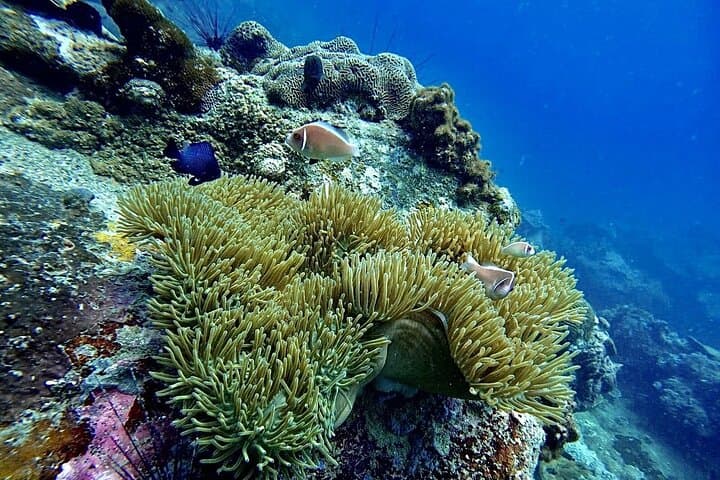
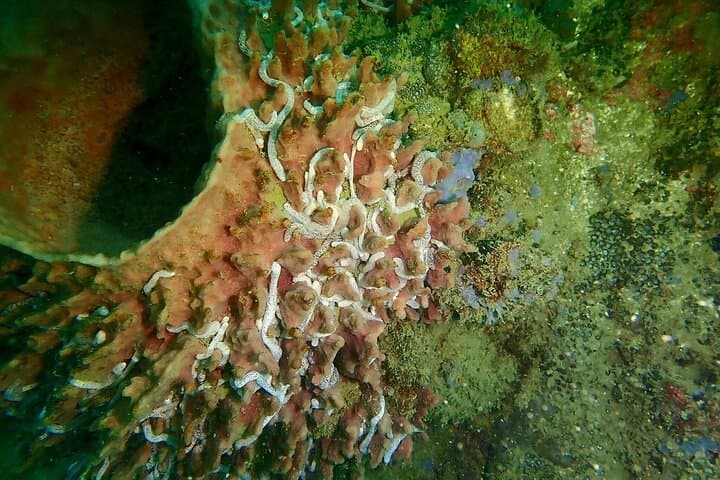
Expect calm, sheltered anchorage for two guided discovery dives—first around 10:00, second near 11:40—at sites selected by conditions. Typical dive depths range from 5–12 m for beginners (sites may reach 35 m at deeper walls) and visibility depends on season. Marine life is intimate: small reef fish, nudibranchs, crabs and the occasional larger visitor like groupers. The crew serves lunch aboard around 13:00 while the boat heads back; pickups and drop-offs span 14:00–17:00 depending on hotel location.
Practical guidance: be ready for surface intervals on a small boat, hydrate before boarding, and listen closely during the skills check—discover dives require no certification but do require basic swimming comfort. Morning departures mean calmer seas and better light for viewing corals; if you want clearer visibility target the drier months.
easy.
7 hours.
Suitable for participants comfortable in water and able to swim short distances; minimal exertion required for entry and surface swims.
No—this is a Discover Scuba format designed for beginners; you will receive a shore/boat briefing and shallow guided dives under instructor supervision.
Discovery dives for beginners typically stay in the 5–12 m range, but the area includes sites down to 35 m; instructors choose appropriate depths for participants.
Inclusions commonly cover hotel pickup, transfers, boat, use of scuba equipment, bottled water, lunch and a dive guide or instructor.
This activity is not recommended for travelers with serious spinal, cardiovascular conditions, or pregnancy—consult your doctor and disclose health concerns to the operator.
Fishing and pearl-collecting communities have used these waters for generations; modern dive tourism has grown alongside efforts to protect reef health.
Operators increasingly use reef-safe sunscreen guidance and encourage no-touch policies; avoid anchoring on live coral and support operators that participate in reef monitoring.
Grace’s tour operates guided outdoor trips and adventures with an emphasis on safety, stewardship, and memorable experiences.
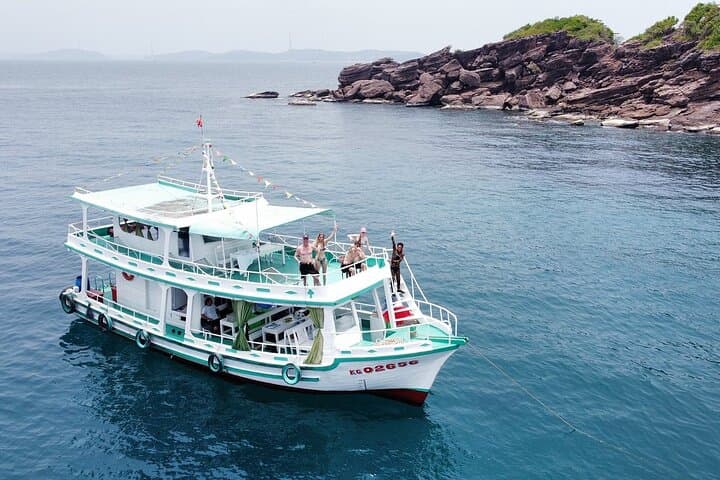
You step off an air-conditioned minivan as the boat rocks gently against a small pier; the sea smells of salt and sun-warmed plastic from the dive gear. By 10:00 the crew runs a concise briefing, sorts masks and tanks, and the boat slides away from shore toward a cluster of rocky islets where shallow blue water opens into reef.
You step off an air-conditioned minivan as the boat rocks gently against a small pier; the sea smells of salt and sun-warmed plastic from the dive gear. By 10:00 the crew runs a concise briefing, sorts masks and tanks, and the boat slides away from shore toward a cluster of rocky islets where shallow blue water opens into reef.
Phu Quoc’s southern coast sits on the edge of the Gulf of Thailand. The archipelago’s volcanic and sedimentary history produced outcrops and reefs with two clear bands: hard corals in the sunlit shallows and softer growth beginning below roughly 7 m. Local fishing villages on the island have long tied livelihoods to these reefs; recent years have seen growing tourism focused on low-impact diving and reef restoration.
Expect calm, sheltered anchorage for two guided discovery dives—first around 10:00, second near 11:40—at sites selected by conditions. Typical dive depths range from 5–12 m for beginners (sites may reach 35 m at deeper walls) and visibility depends on season. Marine life is intimate: small reef fish, nudibranchs, crabs and the occasional larger visitor like groupers. The crew serves lunch aboard around 13:00 while the boat heads back; pickups and drop-offs span 14:00–17:00 depending on hotel location.
Practical guidance: be ready for surface intervals on a small boat, hydrate before boarding, and listen closely during the skills check—discover dives require no certification but do require basic swimming comfort. Morning departures mean calmer seas and better light for viewing corals; if you want clearer visibility target the drier months.