THE ADVENTURE COLLECTIVE® · Independent discovery and booking for outdoor travel

Step from a mangrove-shaded platform into the clear, green light of Casa Cenote. This half-day introductory scuba experience offers two guided dives, wildlife-rich brackish water, and an included underwater video—perfect for first-time divers or those looking to start Open Water certification.
Step from a mangrove-shaded platform into the clear, green light of Casa Cenote. This half-day introductory scuba experience offers two guided dives, wildlife-rich brackish water, and an included underwater video—perfect for first-time divers or those looking to start Open Water certification.
The light slants through a mangrove canopy and hits the water in green-gold shafts as you step onto the wooden platform above Casa Cenote. Salt and freshwater meet here; a shallow mouth opens into an underwater forest of roots and submerged limestone, and your guide gestures toward the surface where tarpon and snapper braid through the light.
Verified experiences and guided adventures in the surrounding area.
Operated by Diversland Mexico · Tulum, Quintana Roo
The light slants through a mangrove canopy and hits the water in green-gold shafts as you step onto the wooden platform above Casa Cenote. Salt and freshwater meet here; a shallow mouth opens into an underwater forest of roots and submerged limestone, and your guide gestures toward the surface where tarpon and snapper braid through the light.
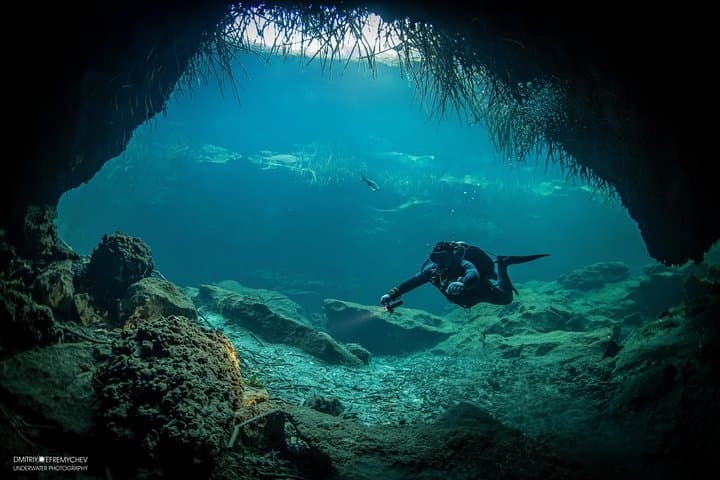
Casa Cenote sits on the Riviera Maya’s karst coastline—an outlet of the larger Aktun freshwater system—where collapsed limestone has created a wide, open cenote connected to mangroves. The site has long been part of coastal Mayan landscape and today mixes local fishing traditions with recreational diving. Geologically, the cavern edges are limestone and moss-carved rock; biologically, the halocline supports unusual species adapted to brackish water.
Practically, expect a half-day program: theory and equipment briefing, two guided shallow dives (intro depth up to ~18 m if continuing certification), and an underwater video included. The setting is sheltered: limited current, clear visibility in the pool sections, and easy entry from platforms. You’ll see moray eels, crabs, tarpon, and dense root systems; photography is straightforward with the included video.
Bring a swimsuit, quick-dry layers, and a light windbreaker for the transfer. Hydrate and avoid flying within 24 hours after diving. If you plan to continue training, these dives can be logged toward an Open Water certification. The experience balances calm, protected diving with wildlife-rich encounters—ideal for first-time divers who want a memorable, manageable intro to cavern diving.
moderate.
4–5 hours.
Basic swimming ability and comfort in water; light walking on uneven surfaces is required
No—this is an introductory program designed for beginners; certified divers can also participate and may log the dives.
Minimum age is 10 years; minors require guardian consent and must meet health screening requirements.
Yes—an underwater video is included and typically delivered digitally after the dive.
Yes—these two dives can be credited toward an Open Water course if you choose to continue training with the same operator.
Cenotes were freshwater sources and held cultural significance for the Maya; coastal cenotes like Casa connect inland aquifers with the Caribbean.
The cenote’s health depends on limiting runoff and using reef-safe products; operators typically encourage rinsing and using biodegradable sunscreen to protect fragile aquatic life.
Diversland Mexico operates guided outdoor trips and adventures with an emphasis on safety, stewardship, and memorable experiences.
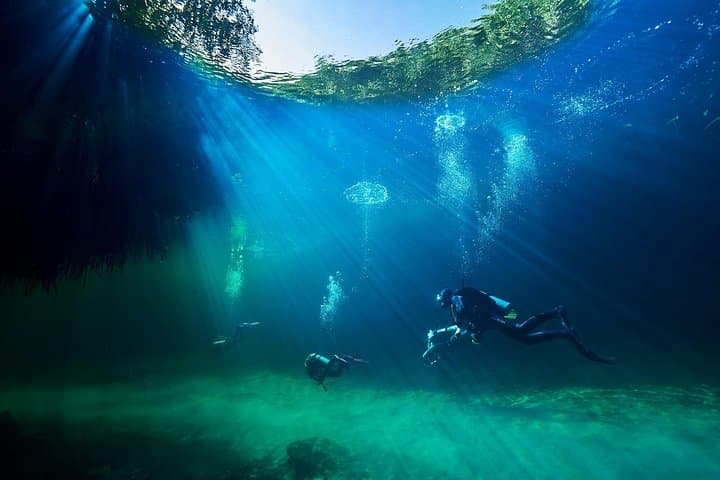


The light slants through a mangrove canopy and hits the water in green-gold shafts as you step onto the wooden platform above Casa Cenote. Salt and freshwater meet here; a shallow mouth opens into an underwater forest of roots and submerged limestone, and your guide gestures toward the surface where tarpon and snapper braid through the light.
The light slants through a mangrove canopy and hits the water in green-gold shafts as you step onto the wooden platform above Casa Cenote. Salt and freshwater meet here; a shallow mouth opens into an underwater forest of roots and submerged limestone, and your guide gestures toward the surface where tarpon and snapper braid through the light.
Casa Cenote sits on the Riviera Maya’s karst coastline—an outlet of the larger Aktun freshwater system—where collapsed limestone has created a wide, open cenote connected to mangroves. The site has long been part of coastal Mayan landscape and today mixes local fishing traditions with recreational diving. Geologically, the cavern edges are limestone and moss-carved rock; biologically, the halocline supports unusual species adapted to brackish water.
Practically, expect a half-day program: theory and equipment briefing, two guided shallow dives (intro depth up to ~18 m if continuing certification), and an underwater video included. The setting is sheltered: limited current, clear visibility in the pool sections, and easy entry from platforms. You’ll see moray eels, crabs, tarpon, and dense root systems; photography is straightforward with the included video.
Bring a swimsuit, quick-dry layers, and a light windbreaker for the transfer. Hydrate and avoid flying within 24 hours after diving. If you plan to continue training, these dives can be logged toward an Open Water certification. The experience balances calm, protected diving with wildlife-rich encounters—ideal for first-time divers who want a memorable, manageable intro to cavern diving.