THE ADVENTURE COLLECTIVE® · Independent discovery and booking for outdoor travel

A focused half-day course in central London that turns streets and riverlight into a hands-on camera classroom. Learn manual exposure, composition and lens choices with an award-winning instructor.
A focused half-day course in central London that turns streets and riverlight into a hands-on camera classroom. Learn manual exposure, composition and lens choices with an award-winning instructor.
You lift your camera in the drizzle-sweet air of central London, and for the next two-and-a-half hours the city becomes a live studio: Georgian facades frame your frame, riverlight on the Thames pulls color toward the lens, and the shuffle of commuters punctuates the lesson. The course puts you in an urban classroom where streets, parks and market stalls become deliberate compositions rather than background noise.
Verified experiences and guided adventures in the surrounding area.
Operated by Westland Place Studios · London, England
You lift your camera in the drizzle-sweet air of central London, and for the next two-and-a-half hours the city becomes a live studio: Georgian facades frame your frame, riverlight on the Thames pulls color toward the lens, and the shuffle of commuters punctuates the lesson. The course puts you in an urban classroom where streets, parks and market stalls become deliberate compositions rather than background noise.
Photography in London has deep roots—Victorian studios and early photographic societies helped formalize the craft here—and the city’s layered architecture and variable skies make it a practical place to learn exposure, depth of field and perspective. Geology is subtle: river terraces and London Clay influence where reflections and low-lying fog appear, while built heritage from the 18th–20th centuries supplies a range of textures and lines.
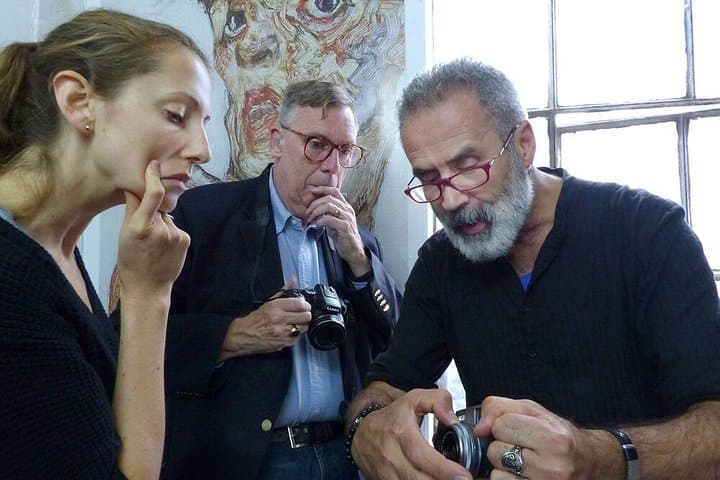
The instructor—a practicing, award-winning photographer—moves through aperture, shutter speed and ISO before guiding a hands-on exercise that emphasizes semi-automatic and full manual control, focal length choices and composition. Expect concentrated demonstrations, rapid feedback, and in-field practice rather than a lecture.
Practical guidance: arrive with a charged camera, at least one lens you know, and a comfortable strap. Golden hour and overcast afternoons are best for learning light; bring layers and compact rain protection. The course is paced for beginners: you’ll leave able to craft exposures intentionally and think like a photographer rather than just a camera operator.
easy.
2.5 hours.
Suitable for all fitness levels; expect short walks and standing while shooting
No—this course is designed for complete beginners who own a camera with manual settings and want hands-on instruction.
Any digital camera that allows manual control of aperture, shutter speed and ISO; advanced smartphones with manual apps may work but the course focuses on traditional camera controls.
Yes—the session uses outdoor locations around central London for practical exercises, so expect walking and variable weather conditions.
No—tripods and flashes are not required for this beginner half-day workshop and are generally not used during the practical exercises.
London was a key center for 19th‑century photographic practice and studios; the city’s streets and early photographic societies shaped how photography evolved in Britain.
Be mindful of busy public spaces—avoid blocking pathways and respect private property; use reusable water bottles and minimize single‑use plastics during outings.
Westland Place Studios operates guided outdoor trips and adventures with an emphasis on safety, stewardship, and memorable experiences.

You lift your camera in the drizzle-sweet air of central London, and for the next two-and-a-half hours the city becomes a live studio: Georgian facades frame your frame, riverlight on the Thames pulls color toward the lens, and the shuffle of commuters punctuates the lesson. The course puts you in an urban classroom where streets, parks and market stalls become deliberate compositions rather than background noise.
You lift your camera in the drizzle-sweet air of central London, and for the next two-and-a-half hours the city becomes a live studio: Georgian facades frame your frame, riverlight on the Thames pulls color toward the lens, and the shuffle of commuters punctuates the lesson. The course puts you in an urban classroom where streets, parks and market stalls become deliberate compositions rather than background noise.
Photography in London has deep roots—Victorian studios and early photographic societies helped formalize the craft here—and the city’s layered architecture and variable skies make it a practical place to learn exposure, depth of field and perspective. Geology is subtle: river terraces and London Clay influence where reflections and low-lying fog appear, while built heritage from the 18th–20th centuries supplies a range of textures and lines.
The instructor—a practicing, award-winning photographer—moves through aperture, shutter speed and ISO before guiding a hands-on exercise that emphasizes semi-automatic and full manual control, focal length choices and composition. Expect concentrated demonstrations, rapid feedback, and in-field practice rather than a lecture.
Practical guidance: arrive with a charged camera, at least one lens you know, and a comfortable strap. Golden hour and overcast afternoons are best for learning light; bring layers and compact rain protection. The course is paced for beginners: you’ll leave able to craft exposures intentionally and think like a photographer rather than just a camera operator.