THE ADVENTURE COLLECTIVE® · Independent discovery and booking for outdoor travel

Explore Phan Thiet’s cultural landmarks and natural heights on a half-day trip that pairs the ancient Poshanu Cham Tower and Van Thuy Tu Palace with a cable-car ascent to Ta Cu Mountain’s 49m reclining Buddha. Expect coastal views, temple lore, and a dragon-fruit farm visit.
Explore Phan Thiet’s cultural landmarks and natural heights on a half-day trip that pairs the ancient Poshanu Cham Tower and Van Thuy Tu Palace with a cable-car ascent to Ta Cu Mountain’s 49m reclining Buddha. Expect coastal views, temple lore, and a dragon-fruit farm visit.
A salt wind pushes up from the South China Sea as the minivan slips past fishing boats stacked like sleeping metal teeth along Phan Thiet harbour. You step out at Poshanu (Po Sah Inu) Cham Tower — red brick warmed by the sun, carved lintels holding stories of a maritime kingdom — and the present hum of market life fades into carved stone.
Verified experiences and guided adventures in the surrounding area.
Operated by Authentic HA GIANG · Phan Thiet, Binh Thuan
A salt wind pushes up from the South China Sea as the minivan slips past fishing boats stacked like sleeping metal teeth along Phan Thiet harbour. You step out at Poshanu (Po Sah Inu) Cham Tower — red brick warmed by the sun, carved lintels holding stories of a maritime kingdom — and the present hum of market life fades into carved stone.
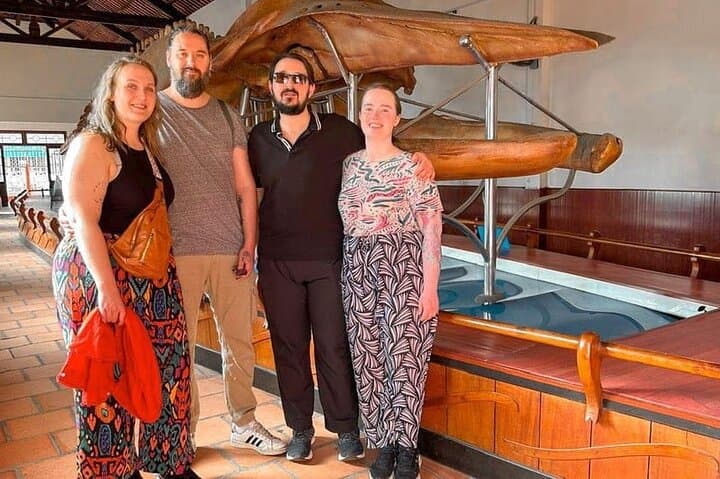
The region folds geology and history together: coastal plains give way to the granite ribs of Ta Cu Mountain, a local highpoint whose forested slopes preserve seasonal streams and a surprising collection of statues and shrines. Van Thuy Tu Palace sits by the port with the giant whale skeleton that anchors centuries of fishing traditions and the annual Nghinh Ong festival, when the sea is pleaded with and celebrated.
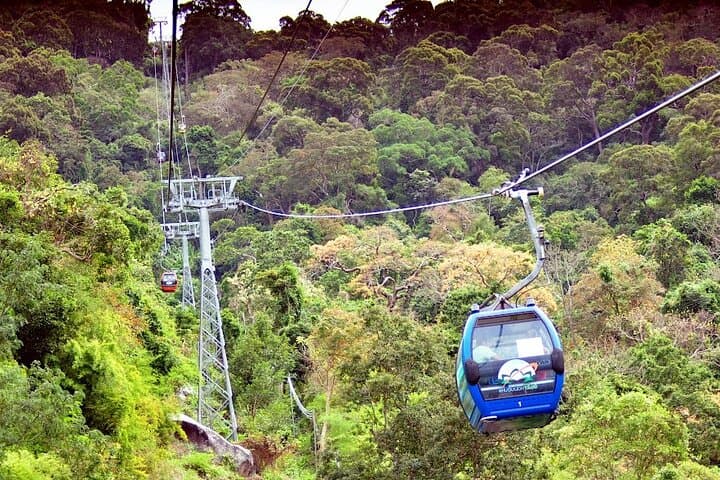
At Ta Cu the cable car lifts you through layers of green; at the top a 49-meter reclining Buddha commands the ridge, the statue’s quiet eyes framing a sweep of coastline and rice paddies below. A stop at a dragon fruit farm introduces the region’s signature crop — clipped vines that turn the scrubland fluorescent pink when fruiting.
Practical notes: this is a half-day, low-effort excursion best timed for morning light or late afternoon to avoid the heat. Wear sturdy sandals or low hikers for temple steps and the short climb at the summit; carry a hat, sunscreen, and refillable water. Respect temple etiquette, remove shoes where required, and stay on marked paths in the mountain forest to protect fragile flora and nesting birds.
easy.
4–5 hours.
Suitable for most fitness levels; involves short walks and a flight of ~100 temple steps to the reclining Buddha.
Yes, the tour includes a round-trip cable car ride to the Ta Cu summit as part of the itinerary.
Yes—private car pickup and drop-off at hotels in Mui Ne and Phan Thiet areas are provided.
After the cable car, expect roughly 100 steps to reach the 49-meter reclining Buddha at the highest viewpoint.
Entrance tickets and an English-speaking guide are included in the tour price.
Poshanu Cham Tower dates to the Champa kingdom and is a key remnant of Cham architecture; Van Thuy Tu Palace preserves the region’s whale-worship traditions tied to local fishing culture.
Tourism and coastal development pressure local habitats; stick to marked trails, avoid feeding wildlife, and minimise single-use plastics to reduce impact.
Authentic HA GIANG operates guided outdoor trips and adventures with an emphasis on safety, stewardship, and memorable experiences.
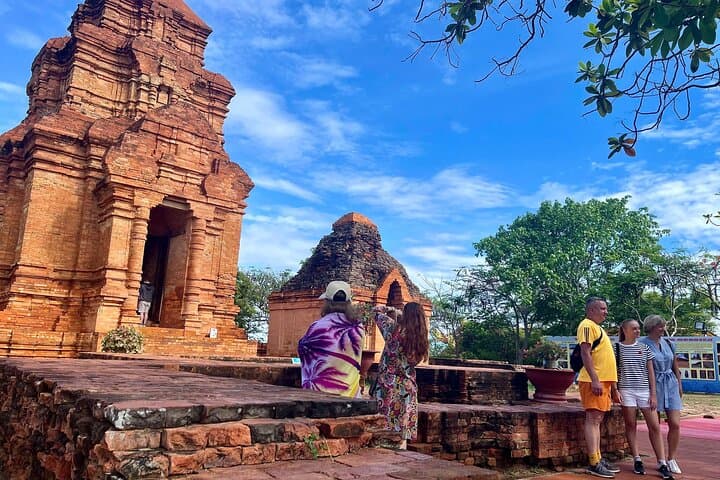
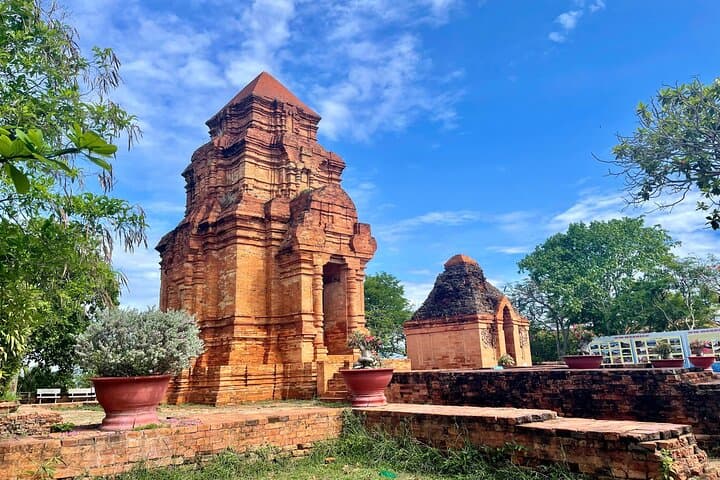
A salt wind pushes up from the South China Sea as the minivan slips past fishing boats stacked like sleeping metal teeth along Phan Thiet harbour. You step out at Poshanu (Po Sah Inu) Cham Tower — red brick warmed by the sun, carved lintels holding stories of a maritime kingdom — and the present hum of market life fades into carved stone.
A salt wind pushes up from the South China Sea as the minivan slips past fishing boats stacked like sleeping metal teeth along Phan Thiet harbour. You step out at Poshanu (Po Sah Inu) Cham Tower — red brick warmed by the sun, carved lintels holding stories of a maritime kingdom — and the present hum of market life fades into carved stone.
The region folds geology and history together: coastal plains give way to the granite ribs of Ta Cu Mountain, a local highpoint whose forested slopes preserve seasonal streams and a surprising collection of statues and shrines. Van Thuy Tu Palace sits by the port with the giant whale skeleton that anchors centuries of fishing traditions and the annual Nghinh Ong festival, when the sea is pleaded with and celebrated.
At Ta Cu the cable car lifts you through layers of green; at the top a 49-meter reclining Buddha commands the ridge, the statue’s quiet eyes framing a sweep of coastline and rice paddies below. A stop at a dragon fruit farm introduces the region’s signature crop — clipped vines that turn the scrubland fluorescent pink when fruiting.
Practical notes: this is a half-day, low-effort excursion best timed for morning light or late afternoon to avoid the heat. Wear sturdy sandals or low hikers for temple steps and the short climb at the summit; carry a hat, sunscreen, and refillable water. Respect temple etiquette, remove shoes where required, and stay on marked paths in the mountain forest to protect fragile flora and nesting birds.