THE ADVENTURE COLLECTIVE® · Independent discovery and booking for outdoor travel

Walk into Ohrid’s Old Town with a local guide who brings Byzantine churches, a cliffside fortress, and an ancient pearl-making craft to life. This 2–3 hour tour blends panoramic lake views with hidden historical details and practical tips for first-time visitors.
Walk into Ohrid’s Old Town with a local guide who brings Byzantine churches, a cliffside fortress, and an ancient pearl-making craft to life. This 2–3 hour tour blends panoramic lake views with hidden historical details and practical tips for first-time visitors.
Stone alleys funnel sunlight into courtyards as the guide points to a chipped fresco and the church bell marks the hour — this is Ohrid Old Town on foot. You arrive at narrow lanes where red-tiled roofs slope toward Lake Ohrid, and the guide unpacks stories that make the stones themselves feel like pages of a living book.
Verified experiences and guided adventures in the surrounding area.
Operated by Tours with Aleksandra-hidden gems of Ohrid and Macedonia · Ohrid, Ohrid Municipality
Stone alleys funnel sunlight into courtyards as the guide points to a chipped fresco and the church bell marks the hour — this is Ohrid Old Town on foot. You arrive at narrow lanes where red-tiled roofs slope toward Lake Ohrid, and the guide unpacks stories that make the stones themselves feel like pages of a living book.
Ohrid’s history stretches from Illyrian settlements through Byzantine rule to Ottoman influence; many monuments date to the early Christian and medieval periods. Geologically, the town sits on ancient lake terraces formed by tectonic movements that carved Lake Ohrid — one of Europe’s oldest and deepest lakes — supplying a unique freshwater ecosystem that shaped local crafts like the Ohrid pearl tradition.
Culturally, the walk highlights Orthodox churches (Hagia Sophia, St. John at Kaneo), Tsar Samoil’s Fortress, the amphitheater, and family merchant houses where woodcarving and pearl workshops persist. The guide’s local anecdotes illuminate the 365-church legend, the town’s role on Balkan trade routes, and contemporary life around lakeside cafés.
Practical guidance: expect 2–3 hours of mostly cobbled walking with short stair sections and optional climbs at the fortress; comfortable shoes and sun protection are smart. Bring cash for small-entry fees (many sites ~€3) and leave room for a coffee break with a lake view. Morning or late-afternoon departures avoid the midday crowd and offer better light for photos. The pace is flexible and suitable for most fitness levels, but the route rewards steady footing and curiosity — this is a tour designed to connect history, place, and the people who keep it alive.
easy.
2–3 hours.
Suitable for most fitness levels; requires steady mobility for cobbles and short stairs.
The exact meeting point is usually in the Old Town center; arrive 10–15 minutes early to check in and start on time.
Most entrances are optional and require a small fee (commonly around €3) paid on-site — check with your guide beforehand.
Yes — the pace is flexible and suitable for families and older adults, though some stair sections and short climbs may be strenuous for limited mobility.
The offering specifies a private tour with a licensed local guide; language is typically English but confirm at booking if you need another language.
Ohrid is one of Europe’s oldest human settlements with over 2,000 years of continuous history; its medieval churches and amphitheater reflect Byzantine and Slavic cultural layers.
Lake Ohrid is an ancient, biodiverse lake under ecological pressure from development and pollution — visitors are encouraged to minimize waste and respect protected shoreline areas.
Tours with Aleksandra-hidden gems of Ohrid and Macedonia operates guided outdoor trips and adventures with an emphasis on safety, stewardship, and memorable experiences.
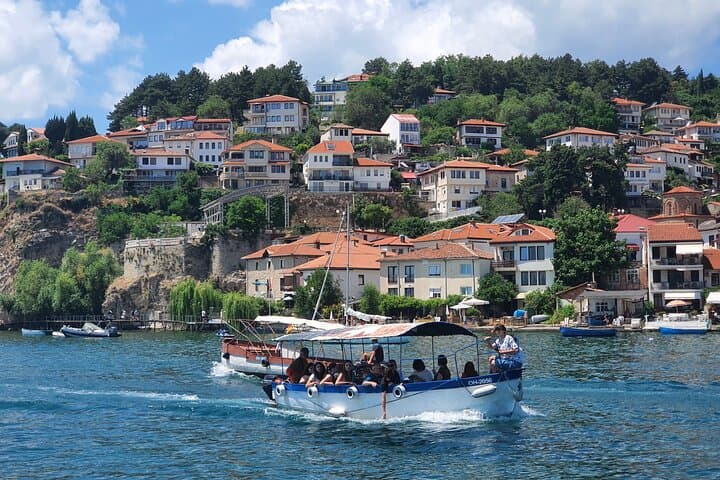

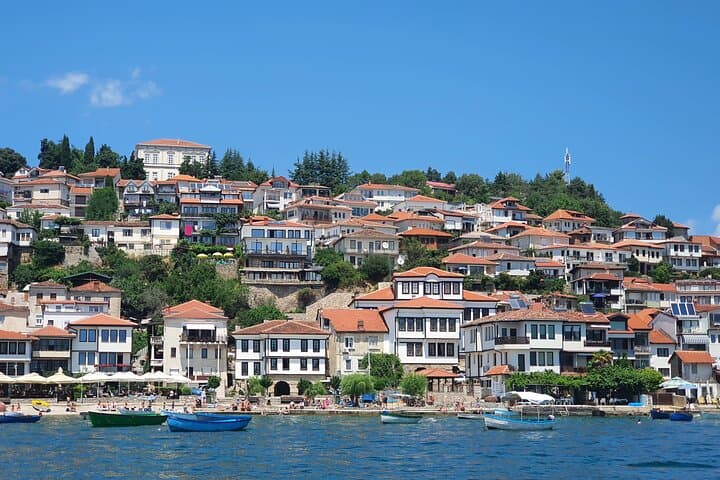

Stone alleys funnel sunlight into courtyards as the guide points to a chipped fresco and the church bell marks the hour — this is Ohrid Old Town on foot. You arrive at narrow lanes where red-tiled roofs slope toward Lake Ohrid, and the guide unpacks stories that make the stones themselves feel like pages of a living book.
Stone alleys funnel sunlight into courtyards as the guide points to a chipped fresco and the church bell marks the hour — this is Ohrid Old Town on foot. You arrive at narrow lanes where red-tiled roofs slope toward Lake Ohrid, and the guide unpacks stories that make the stones themselves feel like pages of a living book.
Ohrid’s history stretches from Illyrian settlements through Byzantine rule to Ottoman influence; many monuments date to the early Christian and medieval periods. Geologically, the town sits on ancient lake terraces formed by tectonic movements that carved Lake Ohrid — one of Europe’s oldest and deepest lakes — supplying a unique freshwater ecosystem that shaped local crafts like the Ohrid pearl tradition.
Culturally, the walk highlights Orthodox churches (Hagia Sophia, St. John at Kaneo), Tsar Samoil’s Fortress, the amphitheater, and family merchant houses where woodcarving and pearl workshops persist. The guide’s local anecdotes illuminate the 365-church legend, the town’s role on Balkan trade routes, and contemporary life around lakeside cafés.
Practical guidance: expect 2–3 hours of mostly cobbled walking with short stair sections and optional climbs at the fortress; comfortable shoes and sun protection are smart. Bring cash for small-entry fees (many sites ~€3) and leave room for a coffee break with a lake view. Morning or late-afternoon departures avoid the midday crowd and offer better light for photos. The pace is flexible and suitable for most fitness levels, but the route rewards steady footing and curiosity — this is a tour designed to connect history, place, and the people who keep it alive.