THE ADVENTURE COLLECTIVE® · Independent discovery and booking for outdoor travel

Experience the thrill of Africa's only urban safari at Nairobi National Park, where sprawling savannas meet city skyline. Discover iconic wildlife just outside Nairobi and learn about Kenya's conservation legacy on this 4–5 hour guided tour.
Experience the thrill of Africa's only urban safari at Nairobi National Park, where sprawling savannas meet city skyline. Discover iconic wildlife just outside Nairobi and learn about Kenya's conservation legacy on this 4–5 hour guided tour.
At the edge of Nairobi’s urban sprawl, where city noise yields to the rustling grasslands, Nairobi National Park stakes its claim as Africa’s only urban safari. As the sun climbs, golden light stretches over open plains peppered with acacia trees and acrobatic giraffes. Lions lounge in shaded bush, their eyes heavy but watchful. An open-roofed van becomes a vessel bridging two worlds: a bustling metropolis and raw wilderness just miles apart.
Verified experiences and guided adventures in the surrounding area.
Operated by Gucu travels and adventures · Nairobi, Nairobi County
At the edge of Nairobi’s urban sprawl, where city noise yields to the rustling grasslands, Nairobi National Park stakes its claim as Africa’s only urban safari. As the sun climbs, golden light stretches over open plains peppered with acacia trees and acrobatic giraffes. Lions lounge in shaded bush, their eyes heavy but watchful. An open-roofed van becomes a vessel bridging two worlds: a bustling metropolis and raw wilderness just miles apart.
This 4-to-5-hour safari offers a compact yet intimate glimpse into Kenya’s incredible wildlife heritage without the long drive usually required. The park’s flat savanna landscape is home to iconic species—zebra herds blur in graceful lines, rhinos wallow in mud pools daring the heat, and cheetahs dart across the grasses like living arrows. Birdsong, punctuated by baritone calls from hippos in the rivers, fills the air, while elevated lookout points provide sweeping panoramas of the park against Nairobi’s skyline.
Founded in 1946, Nairobi National Park serves as both a sanctuary for endangered species and a daily reminder of Kenya's intertwined urban-wildlife relationship. The ivory-burning site monument inside the park is a powerful emblem of Kenya’s stand against poaching and illegal trade, rooting the experience in conservation history and ongoing efforts.
Visitors don’t just watch wildlife; they witness a vibrant ecosystem persisting alongside human development. This juxtaposition requires both respect and preparation. Safari ranges over 117 square kilometers of mostly flat terrain, making it accessible for nearly all fitness levels.
Practical advice for this urban safari: Mornings and late afternoons heighten game sightings and keep you comfortable amid Nairobi's temperatures. Dress in neutral, lightweight layers to adjust as the day shifts. Bring a hat and sunscreen—the sun demands attention even in cooler months. Binoculars and a good camera zoom bring elusive wildlife within reach.
Park admission fees and bottled water come included in most tours, along with hotel pickup and drop-off for seamless logistics. Guides offer localized knowledge that enriches each encounter—identifying tracks, behaviors, and the best vantage points. Keep an eye out for quieter corners often overlooked by buses, where shy species linger and birds on small waterholes thrive.
Nairobi National Park challenges ideas of what a safari can be. It invites adventurers to engage with an evolving ecosystem where the city’s pulse beats alongside the calls of the wild, reminding us that nature adapts as it perseveres.
easy.
4–5 hours.
Suitable for all physical fitness levels; minimal walking as game drives are vehicle-based.
Safety regulations require vehicles to keep a respectful distance from wildlife, but the open-roof design allows unobstructed views and photography opportunities.
Yes, both transportation and park surfaces are wheelchair accessible, making this safari suitable for guests with mobility challenges.
Infants must sit on an adult’s lap, and the safari is suitable for children with adult supervision, given the vehicle and park rules.
Visitors often see lions, giraffes, zebras, buffalos, rhinos, cheetahs, and a wide variety of bird species.
Bottled water is included, and some tours may include a picnic break; always confirm with your tour operator.
Absolutely. The safari is vehicle-based and involves minimal walking, making it accessible for most fitness levels.
Founded in 1946, Nairobi National Park is Africa’s first national park and uniquely positioned at the city’s doorstep, serving as an early model for urban wildlife conservation.
The park supports ongoing anti-poaching efforts and environmental education, balancing urban expansion with wildlife protection.
Gucu travels and adventures operates guided outdoor trips and adventures with an emphasis on safety, stewardship, and memorable experiences.
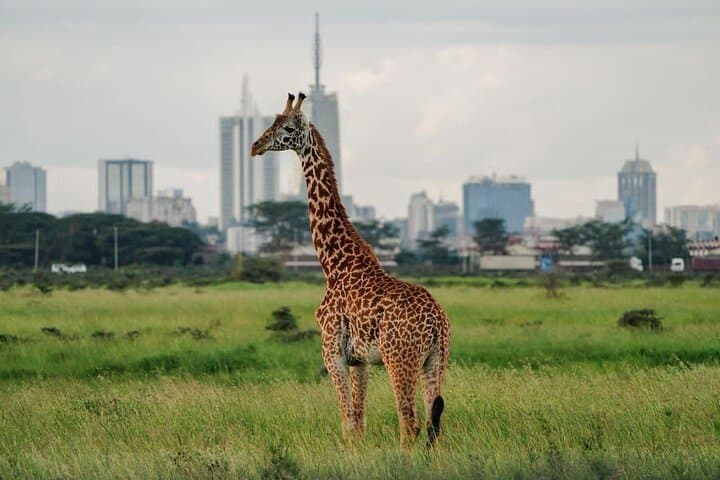



At the edge of Nairobi’s urban sprawl, where city noise yields to the rustling grasslands, Nairobi National Park stakes its claim as Africa’s only urban safari. As the sun climbs, golden light stretches over open plains peppered with acacia trees and acrobatic giraffes. Lions lounge in shaded bush, their eyes heavy but watchful. An open-roofed van becomes a vessel bridging two worlds: a bustling metropolis and raw wilderness just miles apart.
At the edge of Nairobi’s urban sprawl, where city noise yields to the rustling grasslands, Nairobi National Park stakes its claim as Africa’s only urban safari. As the sun climbs, golden light stretches over open plains peppered with acacia trees and acrobatic giraffes. Lions lounge in shaded bush, their eyes heavy but watchful. An open-roofed van becomes a vessel bridging two worlds: a bustling metropolis and raw wilderness just miles apart.
This 4-to-5-hour safari offers a compact yet intimate glimpse into Kenya’s incredible wildlife heritage without the long drive usually required. The park’s flat savanna landscape is home to iconic species—zebra herds blur in graceful lines, rhinos wallow in mud pools daring the heat, and cheetahs dart across the grasses like living arrows. Birdsong, punctuated by baritone calls from hippos in the rivers, fills the air, while elevated lookout points provide sweeping panoramas of the park against Nairobi’s skyline.
Founded in 1946, Nairobi National Park serves as both a sanctuary for endangered species and a daily reminder of Kenya's intertwined urban-wildlife relationship. The ivory-burning site monument inside the park is a powerful emblem of Kenya’s stand against poaching and illegal trade, rooting the experience in conservation history and ongoing efforts.
Visitors don’t just watch wildlife; they witness a vibrant ecosystem persisting alongside human development. This juxtaposition requires both respect and preparation. Safari ranges over 117 square kilometers of mostly flat terrain, making it accessible for nearly all fitness levels.
Practical advice for this urban safari: Mornings and late afternoons heighten game sightings and keep you comfortable amid Nairobi's temperatures. Dress in neutral, lightweight layers to adjust as the day shifts. Bring a hat and sunscreen—the sun demands attention even in cooler months. Binoculars and a good camera zoom bring elusive wildlife within reach.
Park admission fees and bottled water come included in most tours, along with hotel pickup and drop-off for seamless logistics. Guides offer localized knowledge that enriches each encounter—identifying tracks, behaviors, and the best vantage points. Keep an eye out for quieter corners often overlooked by buses, where shy species linger and birds on small waterholes thrive.
Nairobi National Park challenges ideas of what a safari can be. It invites adventurers to engage with an evolving ecosystem where the city’s pulse beats alongside the calls of the wild, reminding us that nature adapts as it perseveres.