THE ADVENTURE COLLECTIVE® · Independent discovery and booking for outdoor travel

Spend 2+ hours roaming Seville’s monumental core with a local guide. This small-group walk visits the Cathedral, Real Alcázar, Plaza de España and riverside landmarks while offering local context and practical tips for exploring the city.
Spend 2+ hours roaming Seville’s monumental core with a local guide. This small-group walk visits the Cathedral, Real Alcázar, Plaza de España and riverside landmarks while offering local context and practical tips for exploring the city.
The walk begins at Puerta de Jerez, where the city's palm-lined avenues and the Guadalquivir’s low, steady current dare you to slow down and look up.
Verified experiences and guided adventures in the surrounding area.
Operated by sevillaconguia · Seville, Andalusia
The walk begins at Puerta de Jerez, where the city's palm-lined avenues and the Guadalquivir’s low, steady current dare you to slow down and look up.
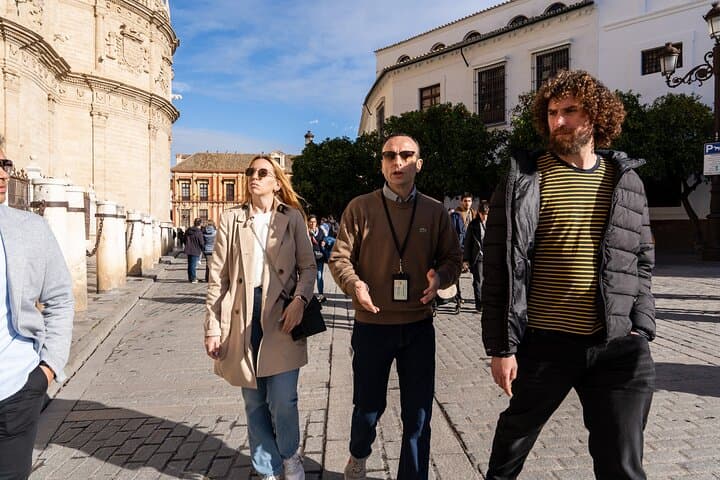
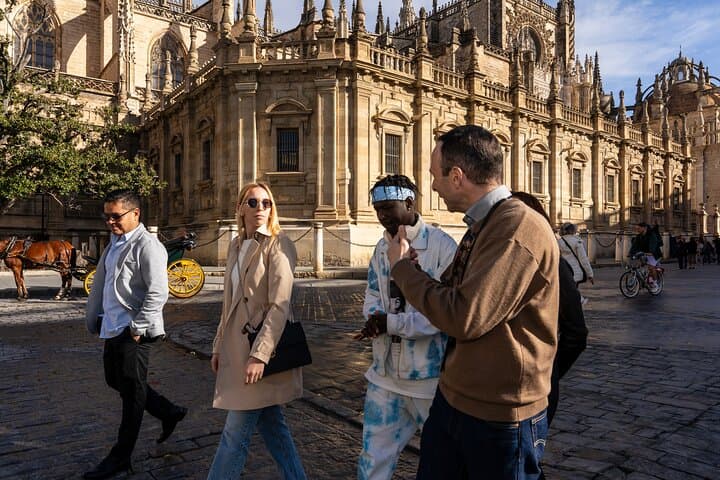
Over the next two hours and change, the guide threads the group through narrow alleys and open plazas, pausing at the Giralda to describe its Almohad foundations and later Christian additions, and lingering beneath the vaults of Seville Cathedral where stonework records the city’s imperial ambitions.
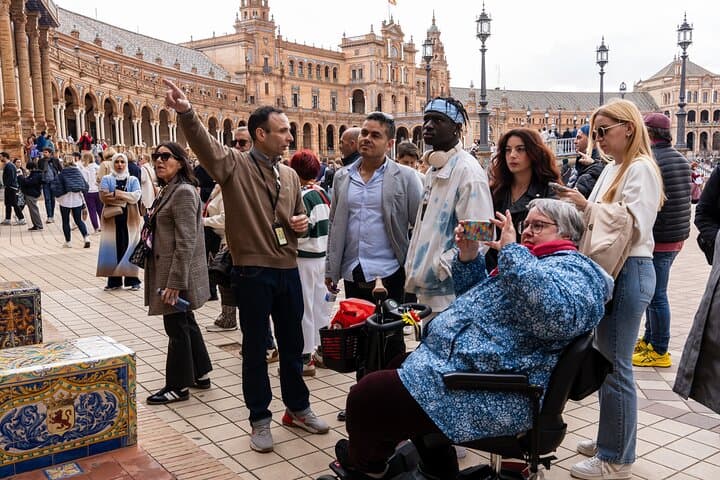
Geology here is urban: orange-tinged brick, limestone façades and mudéjar tilework that reflect centuries of trade across the Mediterranean. Culture arrives in plazas — the Plaza del Triunfo and the Plaza de España — built for the 1929 exposition, their ceramic benches mapping Spain’s provinces in color and story.
History converges at the Archive of the Indies and the Torre del Oro, monuments of exploration and riverine defense that helped make Seville a hub of the Age of Discovery.
Practical guidance is straightforward: expect roughly 2–2.5 hours of mostly flat walking (about 3–4 km) on cobbles and pavement, with short standing stops at monuments. Wear supportive shoes, bring a refillable water bottle and a sun hat in summer, and time the tour for morning or late afternoon to avoid peak heat and crowds. Public transit and accessibility are good in the historic center, but some streets are uneven. With a local guide and a small group, this tour balances brisk historical context with moments to breathe, photograph and plan a return to explore on your own.
easy.
2–2.5 hours.
Suitable for most fitness levels; involves continuous walking with intermittent standing and short stairs.
The tour lasts about 2–2.5 hours and covers roughly 3–4 km on mostly flat, paved and cobblestone streets.
This walking tour focuses on external viewpoints and guided commentary; admissions to interior sites are not included unless specifically stated on your booking page.
The listing advertises a maximum of 10 travelers for an intimate experience; book in advance to secure a small-group spot.
The itinerary notes stroller accessibility and nearby public transport; however, some historic streets and steps may limit full wheelchair access—check with the operator for specific accommodations.
Seville’s core grew under Islamic rule (8th–13th centuries) and later flourished as Spain’s Atlantic gateway during the Age of Discovery; many monuments reflect those layered eras.
High foot traffic can stress fragile tiles and plazas; stick to marked paths, avoid touching delicate ornamentation and support local conservation efforts by following guide instructions.
sevillaconguia operates guided outdoor trips and adventures with an emphasis on safety, stewardship, and memorable experiences.
The walk begins at Puerta de Jerez, where the city's palm-lined avenues and the Guadalquivir’s low, steady current dare you to slow down and look up.
The walk begins at Puerta de Jerez, where the city's palm-lined avenues and the Guadalquivir’s low, steady current dare you to slow down and look up.
Over the next two hours and change, the guide threads the group through narrow alleys and open plazas, pausing at the Giralda to describe its Almohad foundations and later Christian additions, and lingering beneath the vaults of Seville Cathedral where stonework records the city’s imperial ambitions.
Geology here is urban: orange-tinged brick, limestone façades and mudéjar tilework that reflect centuries of trade across the Mediterranean. Culture arrives in plazas — the Plaza del Triunfo and the Plaza de España — built for the 1929 exposition, their ceramic benches mapping Spain’s provinces in color and story.
History converges at the Archive of the Indies and the Torre del Oro, monuments of exploration and riverine defense that helped make Seville a hub of the Age of Discovery.
Practical guidance is straightforward: expect roughly 2–2.5 hours of mostly flat walking (about 3–4 km) on cobbles and pavement, with short standing stops at monuments. Wear supportive shoes, bring a refillable water bottle and a sun hat in summer, and time the tour for morning or late afternoon to avoid peak heat and crowds. Public transit and accessibility are good in the historic center, but some streets are uneven. With a local guide and a small group, this tour balances brisk historical context with moments to breathe, photograph and plan a return to explore on your own.