THE ADVENTURE COLLECTIVE® · Independent discovery and booking for outdoor travel

Walk Lyon’s two defining hills in a focused 2½‑hour guided route. Visit Roman ruins on Fourvière, descend into Croix‑Rousse’s silk‑weaver alleys and traboules, and learn the city’s social history while taking in sweeping views.
Walk Lyon’s two defining hills in a focused 2½‑hour guided route. Visit Roman ruins on Fourvière, descend into Croix‑Rousse’s silk‑weaver alleys and traboules, and learn the city’s social history while taking in sweeping views.
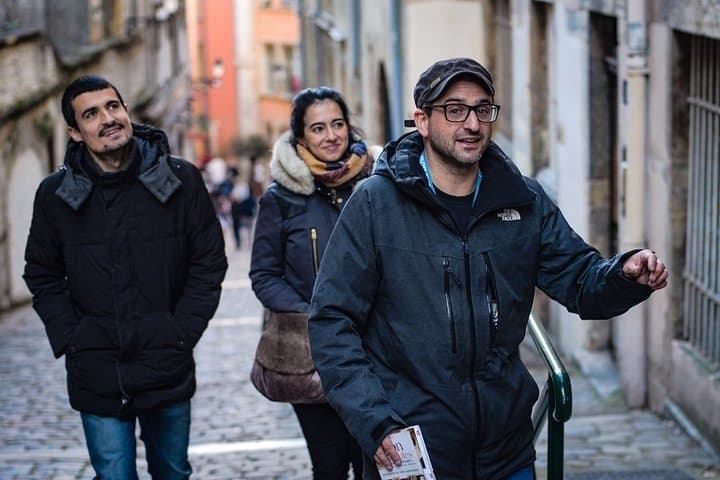
A morning in Lyon opens on uneven cobbles and the low roar of the Saône, the river daring you to climb. The tour begins in front of Saint-Jean Cathedral; within minutes the city shifts uphill into terraces of stone, stairways, and narrow lanes that funnel history into view.
Verified experiences and guided adventures in the surrounding area.
Operated by Unique Tours Lyon · Lyon, Auvergne-Rhône-Alpes
A morning in Lyon opens on uneven cobbles and the low roar of the Saône, the river daring you to climb. The tour begins in front of Saint-Jean Cathedral; within minutes the city shifts uphill into terraces of stone, stairways, and narrow lanes that funnel history into view.
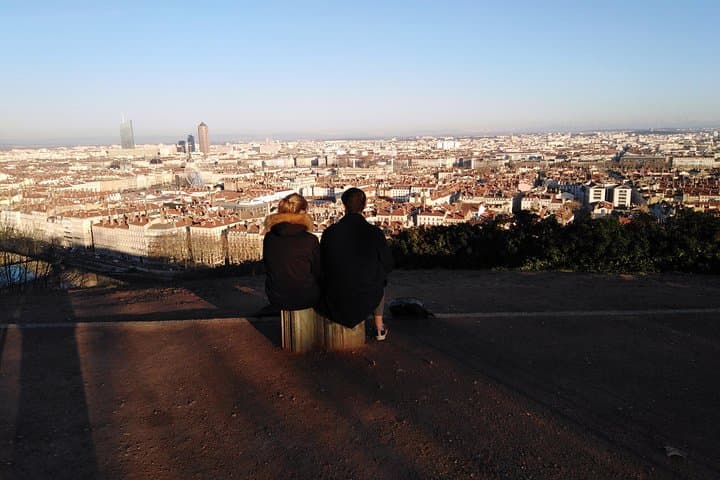
Fourvière rises first — the hill that held Lugdunum, Rome’s Gallic capital. The basilica watches over the city; nearby, the Roman theatre and odeon expose layers of public life that date to the first century BCE. Moving west, the guide traces the city's geological shoulders: limestone outcrops, sculpted by centuries of river and human hands, now framing panoramic views across rooftops.
On Croix-Rousse the mood changes: wider boulevards give way to ateliers, frescoes, and traboules — those covered passageways that silk workers used to move bolts of cloth. The Canuts’ uprisings are presented not as a museum piece but as a civic current that reshaped labor and identity here.
Practical edge: expect 2½ hours of mostly paved and cobbled walking, frequent staircases and short steep sections. The route is compact but varied—bring supportive shoes and a small daypack. The walk works year-round; spring and fall reduce heat and crowds, while winter calls for warmer layers and grip-friendly footwear.
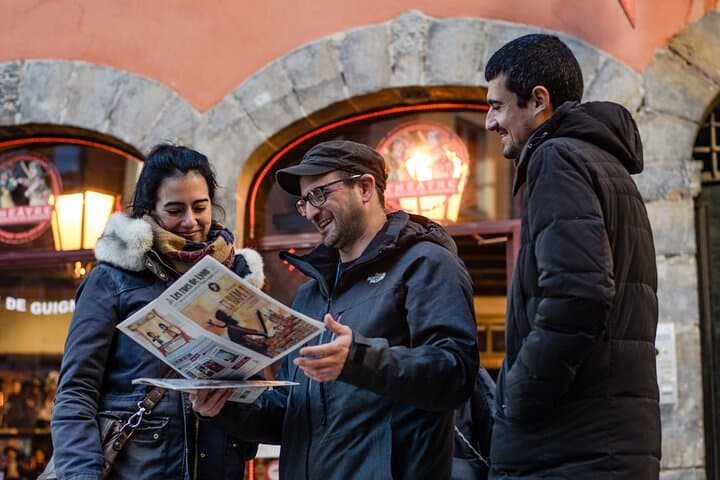
Small-group logistics are straightforward: meet at Saint-Jean, maximum ten travelers, and allow time for photos at viewpoints. The result is an urban hike that reads like a condensed history of Lyon—Roman stones, silk-era grit, and the river still nudging the city forward.
moderate.
2–3 hours.
Moderate fitness: comfortable walking for 2–3 hours, able to manage staircases and short steep stretches.
Meet in front of Saint-Jean Cathedral in Vieux Lyon; the guided walk is approximately 150 minutes (2½ hours).
Despite the name, this offering operates as a small-group tour with up to 10 participants per the itinerary details—confirm at booking for private-only options.
Some entry or admission fees may be included—check the booking details; many outdoor viewpoints and Roman ruins are visible without paid entry.
The route includes cobbles, narrow traboules, and staircases; it is not fully accessible for wheelchairs or standard strollers.
Lyon began as the Roman city Lugdunum (founded 43 BCE) and later became Europe’s silk capital in the 18th–19th centuries, with the Canuts’ revolts shaping labor history.
Many traboules and Roman remains are protected; visitors are asked to follow signage, avoid trespassing through private spaces and to minimize noise and litter to preserve fragile structures.
Unique Tours Lyon operates guided outdoor trips and adventures with an emphasis on safety, stewardship, and memorable experiences.

A morning in Lyon opens on uneven cobbles and the low roar of the Saône, the river daring you to climb. The tour begins in front of Saint-Jean Cathedral; within minutes the city shifts uphill into terraces of stone, stairways, and narrow lanes that funnel history into view.
A morning in Lyon opens on uneven cobbles and the low roar of the Saône, the river daring you to climb. The tour begins in front of Saint-Jean Cathedral; within minutes the city shifts uphill into terraces of stone, stairways, and narrow lanes that funnel history into view.
Fourvière rises first — the hill that held Lugdunum, Rome’s Gallic capital. The basilica watches over the city; nearby, the Roman theatre and odeon expose layers of public life that date to the first century BCE. Moving west, the guide traces the city's geological shoulders: limestone outcrops, sculpted by centuries of river and human hands, now framing panoramic views across rooftops.
On Croix-Rousse the mood changes: wider boulevards give way to ateliers, frescoes, and traboules — those covered passageways that silk workers used to move bolts of cloth. The Canuts’ uprisings are presented not as a museum piece but as a civic current that reshaped labor and identity here.
Practical edge: expect 2½ hours of mostly paved and cobbled walking, frequent staircases and short steep sections. The route is compact but varied—bring supportive shoes and a small daypack. The walk works year-round; spring and fall reduce heat and crowds, while winter calls for warmer layers and grip-friendly footwear.
Small-group logistics are straightforward: meet at Saint-Jean, maximum ten travelers, and allow time for photos at viewpoints. The result is an urban hike that reads like a condensed history of Lyon—Roman stones, silk-era grit, and the river still nudging the city forward.