THE ADVENTURE COLLECTIVE® · Independent discovery and booking for outdoor travel

Walk Lomé’s lively Grand Market, visit the Independence Monument and cool off on a private beach in a single half-day tour. This guided circuit pairs cultural context with practical local know-how so you breeze through markets, museums and coastal stops.
Walk Lomé’s lively Grand Market, visit the Independence Monument and cool off on a private beach in a single half-day tour. This guided circuit pairs cultural context with practical local know-how so you breeze through markets, museums and coastal stops.
You step out into a pulse: vendors call, the Atlantic breeze pushes heat off your neck, and colorful stalls spill onto the pavement. The Grand Market’s alleys press close around you—textiles, carved wood and the sharp, earthy scent of spices—and the sea keeps time a short walk away.
Verified experiences and guided adventures in the surrounding area.
Operated by west africa tourist guide · Lomé, Maritime
You step out into a pulse: vendors call, the Atlantic breeze pushes heat off your neck, and colorful stalls spill onto the pavement. The Grand Market’s alleys press close around you—textiles, carved wood and the sharp, earthy scent of spices—and the sea keeps time a short walk away.
Lomé’s story is visible in its streets: colonial-era buildings beside post-independence monuments, a cathedral whose stonework reflects French influence, and the Independence Monument that marks Togo’s break from colonial rule in 1960. Geologically, the coastline here is a low-lying littoral plain, where sand and surf shape the city’s edge and support the casual, barefoot rhythm of beach kiosks.
Culture is immediate—voodoo traditions at the Marché des Féticheurs, artisans shaping batik and wood in compact workshops, and the bright mosaics of Jean Koumy’s house offering a local creative pulse. The National Museum curates Togolese material culture and art under air-conditioned light, a useful counterpoint to the market’s sensory rush.
Practical guidance: expect flat, walkable routes and 3–5 hours of mixed walking and short vehicle hops. Carry water, small local currency (CFA francs) for market purchases, and sun protection—shade is limited along beach stretches. Wear comfortable closed or sturdy sandals for stalls and light shoes for museum floors. Plan morning or late afternoon starts to avoid peak heat; the market and artisanal village are best when sellers are active. A local guide will streamline negotiations, explain symbolism at the fetish market, and point out quieter corners—hidden murals, seaside cafés, and artisanal studios—so you leave with context as well as keepsakes.
easy.
3–5 hours.
Suitable for most fitness levels; involves several hours of walking at a relaxed pace with intermittent vehicle transfers.
Many local operators offer pickup—provide your arrival details at booking to arrange a convenient meeting point or hotel collection.
Guides commonly speak French and local languages; request English when booking if needed and confirm guide language availability.
The market is culturally rich but can be crowded and involve ritual objects; supervise children closely and ask your guide for context to frame what you see.
The itinerary lists admission for the National Museum and some sites; confirm at booking which entries are covered and whether extra fees apply for optional stops.
Lomé grew as a colonial port under German then French control and became Togo’s capital; Independence in 1960 reshaped civic spaces like Independence Square.
Coastal erosion and plastic pollution are ongoing concerns—support local beach cleanups, minimize single-use plastics and buy from artisans directly to support sustainable livelihoods.
west africa tourist guide operates guided outdoor trips and adventures with an emphasis on safety, stewardship, and memorable experiences.
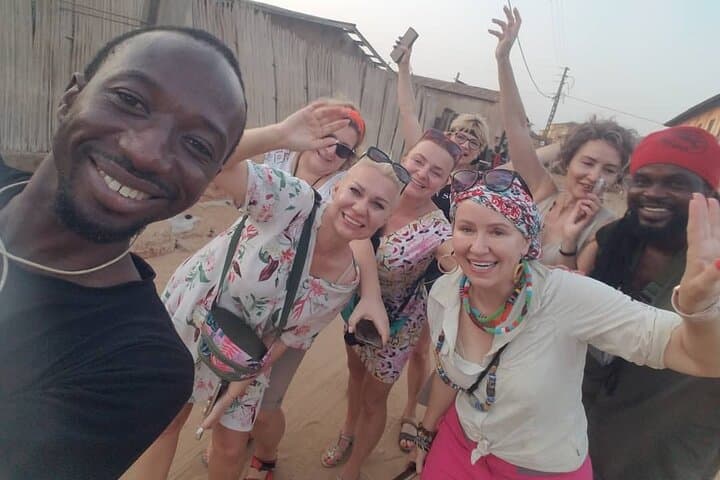


You step out into a pulse: vendors call, the Atlantic breeze pushes heat off your neck, and colorful stalls spill onto the pavement. The Grand Market’s alleys press close around you—textiles, carved wood and the sharp, earthy scent of spices—and the sea keeps time a short walk away.
You step out into a pulse: vendors call, the Atlantic breeze pushes heat off your neck, and colorful stalls spill onto the pavement. The Grand Market’s alleys press close around you—textiles, carved wood and the sharp, earthy scent of spices—and the sea keeps time a short walk away.
Lomé’s story is visible in its streets: colonial-era buildings beside post-independence monuments, a cathedral whose stonework reflects French influence, and the Independence Monument that marks Togo’s break from colonial rule in 1960. Geologically, the coastline here is a low-lying littoral plain, where sand and surf shape the city’s edge and support the casual, barefoot rhythm of beach kiosks.
Culture is immediate—voodoo traditions at the Marché des Féticheurs, artisans shaping batik and wood in compact workshops, and the bright mosaics of Jean Koumy’s house offering a local creative pulse. The National Museum curates Togolese material culture and art under air-conditioned light, a useful counterpoint to the market’s sensory rush.
Practical guidance: expect flat, walkable routes and 3–5 hours of mixed walking and short vehicle hops. Carry water, small local currency (CFA francs) for market purchases, and sun protection—shade is limited along beach stretches. Wear comfortable closed or sturdy sandals for stalls and light shoes for museum floors. Plan morning or late afternoon starts to avoid peak heat; the market and artisanal village are best when sellers are active. A local guide will streamline negotiations, explain symbolism at the fetish market, and point out quieter corners—hidden murals, seaside cafés, and artisanal studios—so you leave with context as well as keepsakes.