THE ADVENTURE COLLECTIVE® · Independent discovery and booking for outdoor travel

A half-day, small-group run from Banff that times Lake Louise for the low sun and changing foliage of spring and fall. Expect glacier-blue water, a guided shore stroll and quick lessons in mountain history and wildlife viewing.
A half-day, small-group run from Banff that times Lake Louise for the low sun and changing foliage of spring and fall. Expect glacier-blue water, a guided shore stroll and quick lessons in mountain history and wildlife viewing.
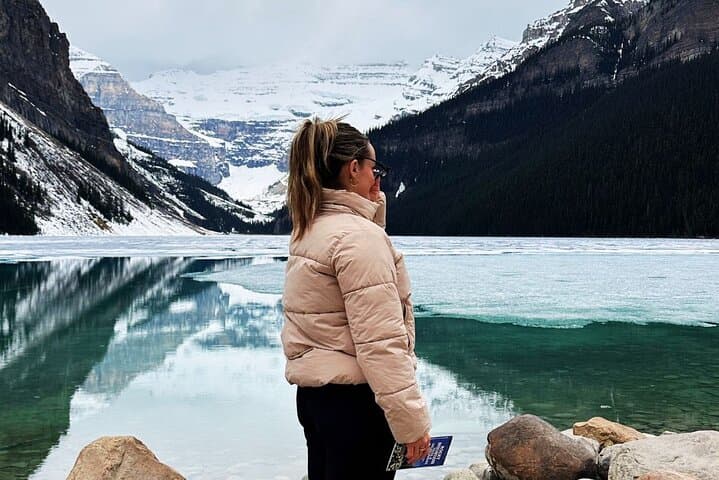
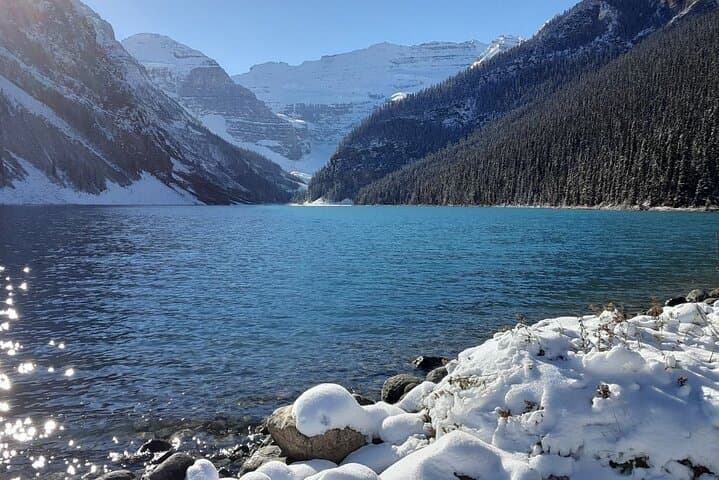
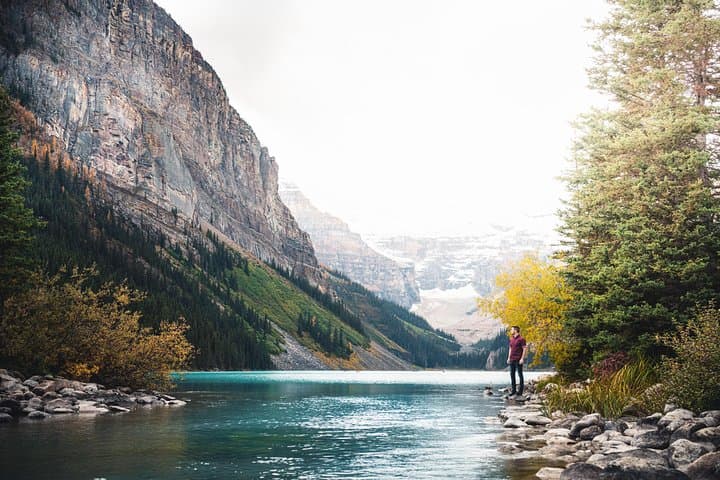
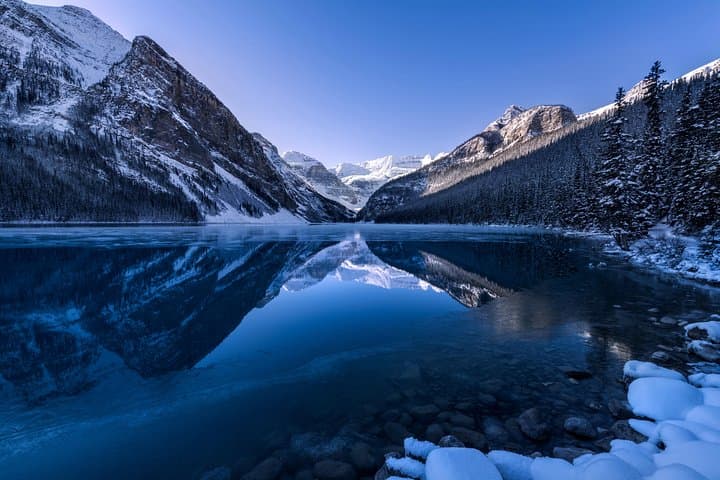
The motorcoach detaches from the Trans-Canada and slides onto the narrower Bow Valley Parkway, where pine-scented wind presses against the windows and the peaks crowd closer. By the time the bus rounds the final bend the lake appears like a polished shard of turquoise cradled by gray granite and the blue-white sweep of Victoria Glacier. Guides gesture toward the Chateau across the shore; for an hour the group disembarks, spreads out along the shoreline and lets the mountains do the organizing—every ridge, moraine and crevasse directing the eye.
Verified experiences and guided adventures in the surrounding area.
Operated by Discover Banff Tours · Lake Louise, Alberta
The motorcoach detaches from the Trans-Canada and slides onto the narrower Bow Valley Parkway, where pine-scented wind presses against the windows and the peaks crowd closer. By the time the bus rounds the final bend the lake appears like a polished shard of turquoise cradled by gray granite and the blue-white sweep of Victoria Glacier. Guides gesture toward the Chateau across the shore; for an hour the group disembarks, spreads out along the shoreline and lets the mountains do the organizing—every ridge, moraine and crevasse directing the eye.
Lake Louise is the product of ice. A glacier-carved cirque funnels meltwater into a basin filled with rock flour—suspended sediment that scatters light and gives the water its arresting color. That geology underpins the region’s human story, too: early 20th-century mountaineering used these same ridgelines to test alpine technique, and a series of accidents in the park’s formative years accelerated the development of Canadian mountain rescue and safety practices still taught to climbers and guides.
Culture here is modest but tangible: the Fairmont Chateau, built to serve rail travelers, stands as a turn-of-the-century marker of tourism in the Rockies, while Stoney Nakoda and Ktunaxa histories thread through place names and traditional land use. Ecology is immediate—this valley is a seasonal corridor for elk and bighorn sheep and a favored feeding zone for birds of prey.
For travelers, the tour is straightforward and low-effort. It’s a small-group, half-day outing that departs Banff with several hotel pickup points (confirm your exact stop) and includes return transport and a one-hour stop at the lake. Guides provide local context—geology, mountaineering history and wildlife pointers—and hand out a maple cookie and hot chocolate when the air bites.
Practical edge: dress in layers and bring a waterproof shell—the weather flips quickly at 1,600 metres—and keep at least 100 meters from any large mammals. The shoreline is rocky and can be icy in spring or slick during fall rains, so stable footwear matters. Photography windows are broad: low sun in spring and fall slants off the glacier for dramatic contrast; early morning or late afternoon will yield the richest color. If you hope to canoe, note that most sightseeing stops don’t include rentals; check availability ahead.
Packing light keeps the hour at Lake Louise flexible—leave room for a short stroll, a viewpoint, and time to stand still. The tour’s cancellation policy allows refund up to 24 hours ahead, but weather closures are possible. For those who want more, nearby trails—Lake Agnes or the Plain of Six Glaciers—offer immediate extensions to move from spectacle to exertion.
easy.
4–5 hours.
Suitable for most fitness levels—minimal walking involved during the one-hour stop but expect uneven ground.
The tour includes approximately a one-hour stop at the lake for shoreline strolls and photos.
Yes—multiple Banff hotel pickups are listed but you must select a pickup point and be ready five minutes early.
Yes; the tour is classified easy and accessible for most ages, though shoreline terrain is uneven.
Canoe rentals are not included—seasonal rentals may be available on-site but check current availability separately.
Expect to see elk and bighorn sheep along the Bow Valley Parkway and near the lake; always observe from a safe distance.
Full refunds are available if you cancel at least 24 hours before the scheduled departure; tours may be canceled for bad weather.
Early railway and hotel development shaped tourism here; mountaineering in the late 19th and early 20th centuries brought both exploration and changes in mountain rescue practices.
Lake Louise sits inside Banff National Park—stay on designated paths, pack out waste, and follow park guidelines to minimize human impact.
Discover Banff Tours operates guided outdoor trips and adventures with an emphasis on safety, stewardship, and memorable experiences.
The motorcoach detaches from the Trans-Canada and slides onto the narrower Bow Valley Parkway, where pine-scented wind presses against the windows and the peaks crowd closer. By the time the bus rounds the final bend the lake appears like a polished shard of turquoise cradled by gray granite and the blue-white sweep of Victoria Glacier. Guides gesture toward the Chateau across the shore; for an hour the group disembarks, spreads out along the shoreline and lets the mountains do the organizing—every ridge, moraine and crevasse directing the eye.
The motorcoach detaches from the Trans-Canada and slides onto the narrower Bow Valley Parkway, where pine-scented wind presses against the windows and the peaks crowd closer. By the time the bus rounds the final bend the lake appears like a polished shard of turquoise cradled by gray granite and the blue-white sweep of Victoria Glacier. Guides gesture toward the Chateau across the shore; for an hour the group disembarks, spreads out along the shoreline and lets the mountains do the organizing—every ridge, moraine and crevasse directing the eye.
Lake Louise is the product of ice. A glacier-carved cirque funnels meltwater into a basin filled with rock flour—suspended sediment that scatters light and gives the water its arresting color. That geology underpins the region’s human story, too: early 20th-century mountaineering used these same ridgelines to test alpine technique, and a series of accidents in the park’s formative years accelerated the development of Canadian mountain rescue and safety practices still taught to climbers and guides.
Culture here is modest but tangible: the Fairmont Chateau, built to serve rail travelers, stands as a turn-of-the-century marker of tourism in the Rockies, while Stoney Nakoda and Ktunaxa histories thread through place names and traditional land use. Ecology is immediate—this valley is a seasonal corridor for elk and bighorn sheep and a favored feeding zone for birds of prey.
For travelers, the tour is straightforward and low-effort. It’s a small-group, half-day outing that departs Banff with several hotel pickup points (confirm your exact stop) and includes return transport and a one-hour stop at the lake. Guides provide local context—geology, mountaineering history and wildlife pointers—and hand out a maple cookie and hot chocolate when the air bites.
Practical edge: dress in layers and bring a waterproof shell—the weather flips quickly at 1,600 metres—and keep at least 100 meters from any large mammals. The shoreline is rocky and can be icy in spring or slick during fall rains, so stable footwear matters. Photography windows are broad: low sun in spring and fall slants off the glacier for dramatic contrast; early morning or late afternoon will yield the richest color. If you hope to canoe, note that most sightseeing stops don’t include rentals; check availability ahead.
Packing light keeps the hour at Lake Louise flexible—leave room for a short stroll, a viewpoint, and time to stand still. The tour’s cancellation policy allows refund up to 24 hours ahead, but weather closures are possible. For those who want more, nearby trails—Lake Agnes or the Plain of Six Glaciers—offer immediate extensions to move from spectacle to exertion.