THE ADVENTURE COLLECTIVE® · Independent discovery and booking for outdoor travel

Transform sounds into characters in a two-hour shodō workshop in Fukuoka. Learn kanji selection, practice brush strokes, and leave with a framed print and tea.
Transform sounds into characters in a two-hour shodō workshop in Fukuoka. Learn kanji selection, practice brush strokes, and leave with a framed print and tea.
The room smells faintly of ink and warm paper; a low table waits with a bottle of sumi ink, a soft fude brush, and a sheet of rice paper that will soon carry a new personal mark. In central Fukuoka, the workshop folds traditional shodō techniques into a two-hour, hands-on lesson where the teacher translates sounds and meanings into kanji choices and guides your hand as strokes take shape.
Verified experiences and guided adventures in the surrounding area.
Operated by Discover Kanji Fun: Create Your Name in Japanese Calligraphy in Fukuoka · Fukuoka, Fukuoka Prefecture
The room smells faintly of ink and warm paper; a low table waits with a bottle of sumi ink, a soft fude brush, and a sheet of rice paper that will soon carry a new personal mark. In central Fukuoka, the workshop folds traditional shodō techniques into a two-hour, hands-on lesson where the teacher translates sounds and meanings into kanji choices and guides your hand as strokes take shape.
Kanji arrived on the Japanese islands with Chinese script centuries ago and became a core part of written culture. In Fukuoka—an old port city where trade and local craft meet—you'll sense both history and the practical present: the same strokes practiced by monks and merchants now framed as urban hospitality. The instructor pairs explanation of character etymology with tactile demos of brush pressure, rhythm, and composition; the ink seems to hesitate then commit, like a current finding a channel.
Practical guidance: the class is accessible to beginners and families, lasting about two hours and ending with tea and a small confection. Provide the pronunciation and any desired meaning for the name in advance to speed selection of kanji options. Wear clothes comfortable around ink (light stains possible) and allow time after the session to let your framed print dry before packing.
Expect quiet focus, clear instruction, and a tangible souvenir—your name rendered in kanji, printed and framed. It's cultural learning distilled into practice: language, history, and craft in one tidy, memorable experience.
easy.
2 hours.
Minimal physical exertion; suitable for most ages and mobility levels
No—basic English is sufficient and the instructor uses translation devices when needed to explain kanji choices and technique.
The instructor will suggest kanji that match pronunciation and respectful meanings; final selection is collaborative and guided by cultural suitability.
Yes; the activity is family-friendly and the studio notes stroller and infant accommodations, though small children may need supervision around ink.
You’ll receive a handwritten kanji, a printed and framed version to take home, plus tea and a traditional sweet.
Kanji characters were adopted from Chinese script over a millennium ago and reshaped in Japan into distinct readings and aesthetic traditions such as shodō (calligraphy).
Workshops typically use locally sourced paper and traditional ink; participants are encouraged to handle materials respectfully and dispose of trial sheets in provided recycling bins.
Discover Kanji Fun: Create Your Name in Japanese Calligraphy in Fukuoka operates guided outdoor trips and adventures with an emphasis on safety, stewardship, and memorable experiences.
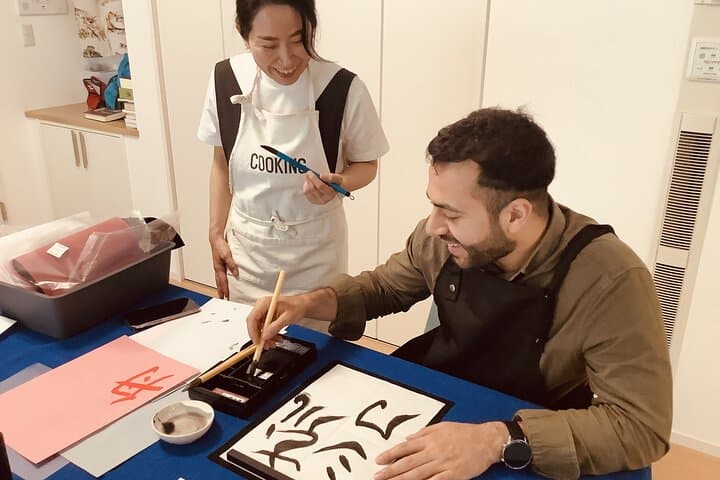
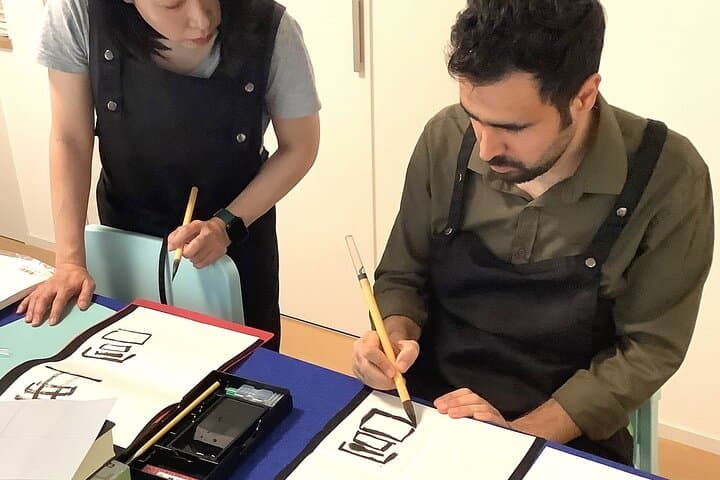
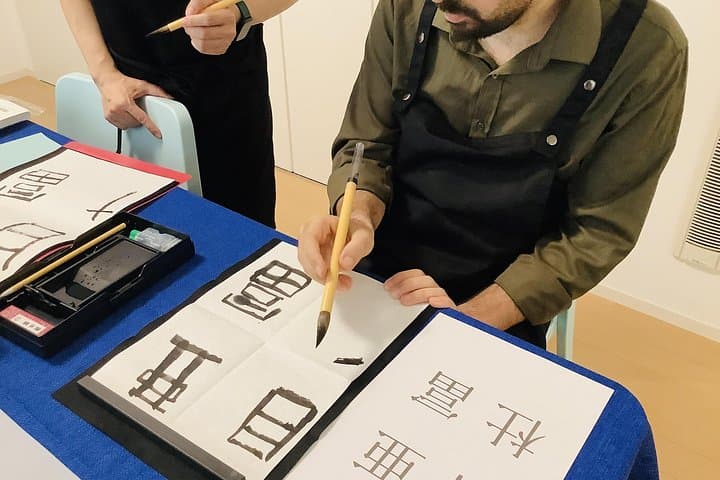
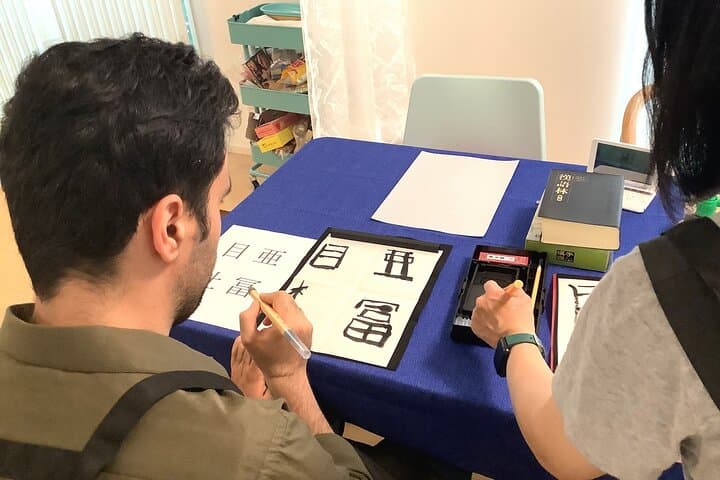
The room smells faintly of ink and warm paper; a low table waits with a bottle of sumi ink, a soft fude brush, and a sheet of rice paper that will soon carry a new personal mark. In central Fukuoka, the workshop folds traditional shodō techniques into a two-hour, hands-on lesson where the teacher translates sounds and meanings into kanji choices and guides your hand as strokes take shape.
The room smells faintly of ink and warm paper; a low table waits with a bottle of sumi ink, a soft fude brush, and a sheet of rice paper that will soon carry a new personal mark. In central Fukuoka, the workshop folds traditional shodō techniques into a two-hour, hands-on lesson where the teacher translates sounds and meanings into kanji choices and guides your hand as strokes take shape.
Kanji arrived on the Japanese islands with Chinese script centuries ago and became a core part of written culture. In Fukuoka—an old port city where trade and local craft meet—you'll sense both history and the practical present: the same strokes practiced by monks and merchants now framed as urban hospitality. The instructor pairs explanation of character etymology with tactile demos of brush pressure, rhythm, and composition; the ink seems to hesitate then commit, like a current finding a channel.
Practical guidance: the class is accessible to beginners and families, lasting about two hours and ending with tea and a small confection. Provide the pronunciation and any desired meaning for the name in advance to speed selection of kanji options. Wear clothes comfortable around ink (light stains possible) and allow time after the session to let your framed print dry before packing.
Expect quiet focus, clear instruction, and a tangible souvenir—your name rendered in kanji, printed and framed. It's cultural learning distilled into practice: language, history, and craft in one tidy, memorable experience.