THE ADVENTURE COLLECTIVE® · Independent discovery and booking for outdoor travel

See Washington, D.C.’s iconic landmarks without the herd: a four-hour private tour for up to 12 guests that mixes drive-by highlights with curated walk-throughs of the Mall’s major memorials. Ideal for travelers who want context, photos, and flexible pacing.
See Washington, D.C.’s iconic landmarks without the herd: a four-hour private tour for up to 12 guests that mixes drive-by highlights with curated walk-throughs of the Mall’s major memorials. Ideal for travelers who want context, photos, and flexible pacing.
The bus eases away from 1000 H Street NW and the city opens like a map: broad avenues, columns of stone, a slice of sky above the Washington Monument. For four hours a guide becomes both driver and translator—navigating traffic and the city’s dense history while the monuments, museums and memorials drift past the window. When the vehicle stops, you step onto the Mall’s wide promenades where bronze faces, reflective pools and river views demand quiet and attention.
Verified experiences and guided adventures in the surrounding area.
Operated by See DC Today · Washington, District of Columbia
The bus eases away from 1000 H Street NW and the city opens like a map: broad avenues, columns of stone, a slice of sky above the Washington Monument. For four hours a guide becomes both driver and translator—navigating traffic and the city’s dense history while the monuments, museums and memorials drift past the window. When the vehicle stops, you step onto the Mall’s wide promenades where bronze faces, reflective pools and river views demand quiet and attention.
Washington, D.C. is younger than its monuments suggest. Built on the fall line between the Piedmont and the Atlantic coastal plain, the city’s low hills and the Potomac’s tidal influence shaped trade routes and early development—facts that matter when you notice how the Tidal Basin cradles the Jefferson Memorial and cherry trees lean toward the water. From the neoclassical sweep of the US Capitol to the cool granite of the Lincoln Memorial, the built environment tells political and cultural stories: federal design decisions, memorial practices, and the evolution of public protest and commemoration.
A good guide here is more than facts; they connect moments—Lincoln’s address, Jefferson’s library, the cherries’ gift from Japan—so the route reads as narrative. Expect quick stops at the World War II, Korean, and Vietnam memorials, longer pauses around the Lincoln and Jefferson memorials, and drive-bys of museums like the National Gallery and the Smithsonian Castle. The group size—max 12—means you’ll have room to ask questions, frame photos, and move at a pace that’s not dictated by crowds.
Practicalities are straightforward. The tour lasts about four hours with roughly 1–2 miles of walking (mostly flat, paved surfaces; minimal elevation gain). Pack a light daypack with water and a portable charger; wear comfortable walking shoes—paved stone and occasional steps at memorials require sure footing. Security checks at major sites are standard; keep bags small and expect some lines during peak season. For cherry blossoms plan for early starts; for golden-hour photos aim for a late afternoon Jefferson stop when the monument reflects on the basin.
Customization is the tour’s advantage: you can request hotel pickup, swap stops, or linger longer at a favorite memorial. If you want to dig deeper—capitol history, civil rights monuments, or a focused museum stop—ask ahead so your guide can adjust the route. Whether you’re a first-time visitor or someone tracing a theme through the city’s plazas, this private small-group format gives context, pacing, and the practical elements you need to turn sightseeing into a coherent, memorable exploration.
easy.
4 hours.
Light walking ability; suitable for most fitness levels and families
The meeting point is in front of the Starbucks at the Grand Hyatt, 1000 H Street NW; pickup and drop-off at hotels within downtown D.C. can be arranged.
Expect roughly 1–2 miles of walking total with short stops for photos and exploration; the tour uses a vehicle between major sites.
Yes—tour pacing is gentle and the route is accessible; let the operator know of mobility needs so they can plan appropriate stops.
Yes—this private tour is designed to be flexible. Request longer stops or different sites when booking or in the pre-tour confirmation.
Large bags may be subject to inspection and metal detectors are common at memorials; travel light to speed through security.
For a full refund cancel at least 24 hours before the scheduled start time; cancellations within 24 hours are not refundable.
The National Mall and its monuments were largely developed in the early 20th century as part of the McMillan Plan, a movement to shape Washington into a ceremonial capital.
Heavy foot traffic and seasonal events stress green spaces; stick to paths, pack out trash, and respect restricted areas to help preserve the Mall.
See DC Today operates guided outdoor trips and adventures with an emphasis on safety, stewardship, and memorable experiences.

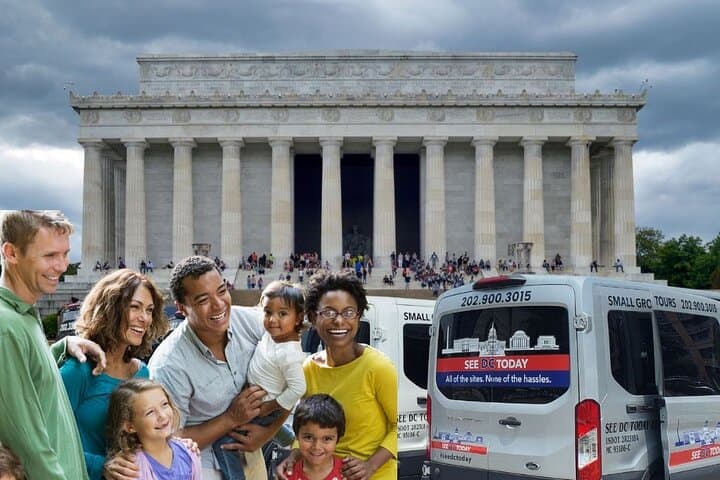

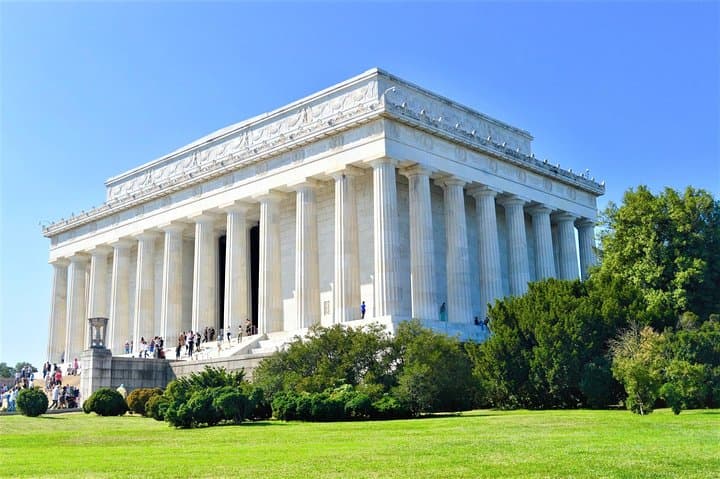
The bus eases away from 1000 H Street NW and the city opens like a map: broad avenues, columns of stone, a slice of sky above the Washington Monument. For four hours a guide becomes both driver and translator—navigating traffic and the city’s dense history while the monuments, museums and memorials drift past the window. When the vehicle stops, you step onto the Mall’s wide promenades where bronze faces, reflective pools and river views demand quiet and attention.
The bus eases away from 1000 H Street NW and the city opens like a map: broad avenues, columns of stone, a slice of sky above the Washington Monument. For four hours a guide becomes both driver and translator—navigating traffic and the city’s dense history while the monuments, museums and memorials drift past the window. When the vehicle stops, you step onto the Mall’s wide promenades where bronze faces, reflective pools and river views demand quiet and attention.
Washington, D.C. is younger than its monuments suggest. Built on the fall line between the Piedmont and the Atlantic coastal plain, the city’s low hills and the Potomac’s tidal influence shaped trade routes and early development—facts that matter when you notice how the Tidal Basin cradles the Jefferson Memorial and cherry trees lean toward the water. From the neoclassical sweep of the US Capitol to the cool granite of the Lincoln Memorial, the built environment tells political and cultural stories: federal design decisions, memorial practices, and the evolution of public protest and commemoration.
A good guide here is more than facts; they connect moments—Lincoln’s address, Jefferson’s library, the cherries’ gift from Japan—so the route reads as narrative. Expect quick stops at the World War II, Korean, and Vietnam memorials, longer pauses around the Lincoln and Jefferson memorials, and drive-bys of museums like the National Gallery and the Smithsonian Castle. The group size—max 12—means you’ll have room to ask questions, frame photos, and move at a pace that’s not dictated by crowds.
Practicalities are straightforward. The tour lasts about four hours with roughly 1–2 miles of walking (mostly flat, paved surfaces; minimal elevation gain). Pack a light daypack with water and a portable charger; wear comfortable walking shoes—paved stone and occasional steps at memorials require sure footing. Security checks at major sites are standard; keep bags small and expect some lines during peak season. For cherry blossoms plan for early starts; for golden-hour photos aim for a late afternoon Jefferson stop when the monument reflects on the basin.
Customization is the tour’s advantage: you can request hotel pickup, swap stops, or linger longer at a favorite memorial. If you want to dig deeper—capitol history, civil rights monuments, or a focused museum stop—ask ahead so your guide can adjust the route. Whether you’re a first-time visitor or someone tracing a theme through the city’s plazas, this private small-group format gives context, pacing, and the practical elements you need to turn sightseeing into a coherent, memorable exploration.