THE ADVENTURE COLLECTIVE® · Independent discovery and booking for outdoor travel

Swap London's bustle for a private guided visit to Charles Darwin's Down House and gardens. This full‑day tour pairs history, botany and a scenic English countryside drive — ideal for curious travelers who want context as well as atmosphere.
Swap London's bustle for a private guided visit to Charles Darwin's Down House and gardens. This full‑day tour pairs history, botany and a scenic English countryside drive — ideal for curious travelers who want context as well as atmosphere.
You step out of an air-conditioned car onto a narrow lane framed by hawthorn and beech — the city noise has been traded for the hush of Down village. Sunlight falls across the slate roof of Down House and the guide points to the low study window where Charles Darwin worked, a place where ideas met close observation of the natural world.
Verified experiences and guided adventures in the surrounding area.
Operated by European Voyages · Downe, Greater London
You step out of an air-conditioned car onto a narrow lane framed by hawthorn and beech — the city noise has been traded for the hush of Down village. Sunlight falls across the slate roof of Down House and the guide points to the low study window where Charles Darwin worked, a place where ideas met close observation of the natural world.
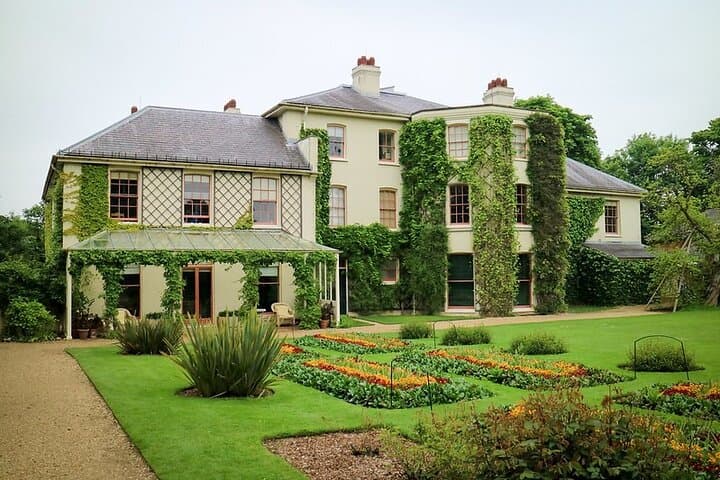
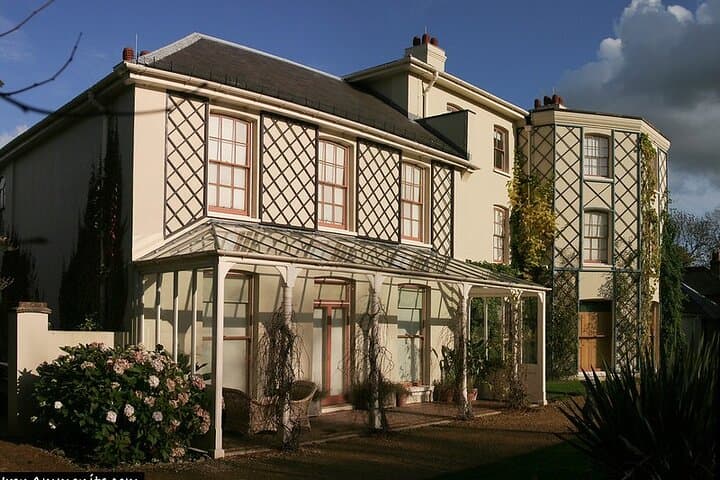
The house itself is a late-Georgian country home set in gardens Darwin used for botanical experiments; the story here is both scientific and domestic. Inside, the study, specimen cabinets and family rooms show how Victorian life and an emerging theory of evolution coexisted. Geologically the area sits on London Clay with gentle rolling topography, which made it ideal for the garden plots Darwin used to test plant variation. Locally, the village retains a rural character—pubs and footpaths that predate the commuter era—and the house is an important cultural link to 19th-century science.
Practicalities are straightforward: expect a roughly 60–90 minute drive from central London (around 15–25 miles depending on your start point), included admission and private transport, and about 1–2 miles of mostly flat walking on compacted garden paths. Wear comfortable shoes and bring a light waterproof if skies look variable; the site accepts strollers but some paths are uneven.
Best times are spring and early autumn when the experimental plots and borders are most informative. Bring a notepad or camera — the power here is in observation: the beds Darwin measured are still willing teachers.
easy.
6–7 hours (including travel).
Minimal fitness required; able to stand and walk 1–2 miles at a gentle pace
Typical drive time is 60–90 minutes depending on traffic and your pickup point; the tour includes transport time in the itinerary.
The site is stroller-friendly on main paths, but some areas have uneven surfaces; check with the operator for specific mobility assistance and access options.
Yes, the tour price includes entrance to Down House as well as private transportation and a professional guide.
The guided visit covers the main rooms and garden highlights, and there is time to stroll parts of the gardens independently within the allotted visit period.
Down House was Darwin’s family home from 1842 to 1882 and is where he wrote On the Origin of Species and conducted many garden experiments that informed his theories.
Historic England manages the site with an emphasis on conserving period landscapes and minimizing visitor impact; follow designated paths and avoid disturbing planted research beds.
European Voyages operates guided outdoor trips and adventures with an emphasis on safety, stewardship, and memorable experiences.
You step out of an air-conditioned car onto a narrow lane framed by hawthorn and beech — the city noise has been traded for the hush of Down village. Sunlight falls across the slate roof of Down House and the guide points to the low study window where Charles Darwin worked, a place where ideas met close observation of the natural world.
You step out of an air-conditioned car onto a narrow lane framed by hawthorn and beech — the city noise has been traded for the hush of Down village. Sunlight falls across the slate roof of Down House and the guide points to the low study window where Charles Darwin worked, a place where ideas met close observation of the natural world.
The house itself is a late-Georgian country home set in gardens Darwin used for botanical experiments; the story here is both scientific and domestic. Inside, the study, specimen cabinets and family rooms show how Victorian life and an emerging theory of evolution coexisted. Geologically the area sits on London Clay with gentle rolling topography, which made it ideal for the garden plots Darwin used to test plant variation. Locally, the village retains a rural character—pubs and footpaths that predate the commuter era—and the house is an important cultural link to 19th-century science.
Practicalities are straightforward: expect a roughly 60–90 minute drive from central London (around 15–25 miles depending on your start point), included admission and private transport, and about 1–2 miles of mostly flat walking on compacted garden paths. Wear comfortable shoes and bring a light waterproof if skies look variable; the site accepts strollers but some paths are uneven.
Best times are spring and early autumn when the experimental plots and borders are most informative. Bring a notepad or camera — the power here is in observation: the beds Darwin measured are still willing teachers.