THE ADVENTURE COLLECTIVE® · Independent discovery and booking for outdoor travel

Experience four days in Dakar where Atlantic winds, living history on Gorée Island, and a thriving arts scene combine. This guide outlines what to see, local insights, and practical tips for an efficient, culturally rich stay.
Experience four days in Dakar where Atlantic winds, living history on Gorée Island, and a thriving arts scene combine. This guide outlines what to see, local insights, and practical tips for an efficient, culturally rich stay.
The Atlantic pushes against Dakar’s headlands and the city answers with a restless energy: fishermen hauling nets at dawn, open-air markets erupting into color, and coastal roads that give way to wide ocean views.
Verified experiences and guided adventures in the surrounding area.
The Atlantic pushes against Dakar’s headlands and the city answers with a restless energy: fishermen hauling nets at dawn, open-air markets erupting into color, and coastal roads that give way to wide ocean views.
Start with Gorée Island’s cobbled lanes — they keep a heavy history in the stone, a stark reminder of Senegal’s role in the transatlantic slave trade. The city itself sits on a narrow peninsula of basalt and sand; wind-carved rock and sandy beaches frame neighborhoods where colonial architecture meets contemporary studios and street murals.
Dakar’s cultural pulse is immediate: Senegalese modern art in small galleries, the rhythmic call of sabar drums, and markets where fishmongers and goldsmiths work side by side. Sample yassa and thieboudienne at a corner eatery, then drift to the Musée Théodore Monod (IFAN) to see artifacts that trace regional empires and colonial encounters.
Practical rhythm matters here. Plan early-morning walks to beat traffic and heat, schedule the ferry to Gorée in advance, and allow time for unhurried bargaining at the markets. Respect local customs around dress in religious neighborhoods and carry small bills for taxis and tips.
For travelers who want an active, culturally rich four-day itinerary, Dakar serves equal measures of history, surf-side wind, and contemporary creativity — a city that asks you to listen, look, and move at its brisk coastal pace.
moderate.
4 days.
Moderate — expect daily walking of several miles, some stairs and uneven cobbles
Visa requirements depend on your nationality — check the Senegalese embassy website for up-to-date entry rules and whether you can obtain a visa on arrival.
Regular passenger ferries run from Dakar’s port; buy tickets at the terminal or online when available and arrive early during high season.
Central Dakar is generally safe in well-traveled areas, but use common-sense precautions: avoid poorly lit streets, take taxis after dark, and keep valuables discreet.
French and Wolof are most common; English is spoken at hotels and some tours, but basic French or Wolof phrases and a translation app improve interactions.
Dakar grew from a colonial port into Senegal’s capital; Gorée Island is a focal site preserving evidence of the transatlantic slave trade and colonial-era exchanges.
Coastal erosion and marine pollution are active concerns; support local protected area initiatives and choose responsible tour operators to minimize impact.
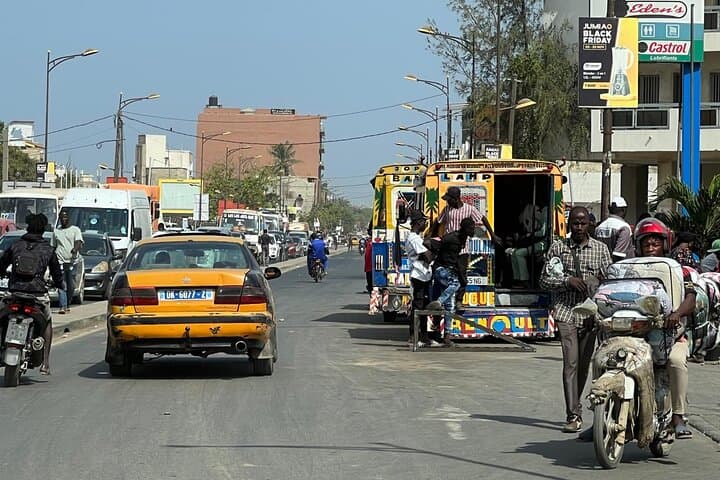
The Atlantic pushes against Dakar’s headlands and the city answers with a restless energy: fishermen hauling nets at dawn, open-air markets erupting into color, and coastal roads that give way to wide ocean views.
The Atlantic pushes against Dakar’s headlands and the city answers with a restless energy: fishermen hauling nets at dawn, open-air markets erupting into color, and coastal roads that give way to wide ocean views.
Start with Gorée Island’s cobbled lanes — they keep a heavy history in the stone, a stark reminder of Senegal’s role in the transatlantic slave trade. The city itself sits on a narrow peninsula of basalt and sand; wind-carved rock and sandy beaches frame neighborhoods where colonial architecture meets contemporary studios and street murals.
Dakar’s cultural pulse is immediate: Senegalese modern art in small galleries, the rhythmic call of sabar drums, and markets where fishmongers and goldsmiths work side by side. Sample yassa and thieboudienne at a corner eatery, then drift to the Musée Théodore Monod (IFAN) to see artifacts that trace regional empires and colonial encounters.
Practical rhythm matters here. Plan early-morning walks to beat traffic and heat, schedule the ferry to Gorée in advance, and allow time for unhurried bargaining at the markets. Respect local customs around dress in religious neighborhoods and carry small bills for taxis and tips.
For travelers who want an active, culturally rich four-day itinerary, Dakar serves equal measures of history, surf-side wind, and contemporary creativity — a city that asks you to listen, look, and move at its brisk coastal pace.