THE ADVENTURE COLLECTIVE® · Independent discovery and booking for outdoor travel

Scale the high trails of Cotopaxi National Park on a guided, all‑inclusive day tour that reaches the José Rivas refuge and visits Laguna Limpiopungo. Expect thin air, volcanic scree, sweeping highland views and practical guidance on coping with altitude.
Scale the high trails of Cotopaxi National Park on a guided, all‑inclusive day tour that reaches the José Rivas refuge and visits Laguna Limpiopungo. Expect thin air, volcanic scree, sweeping highland views and practical guidance on coping with altitude.
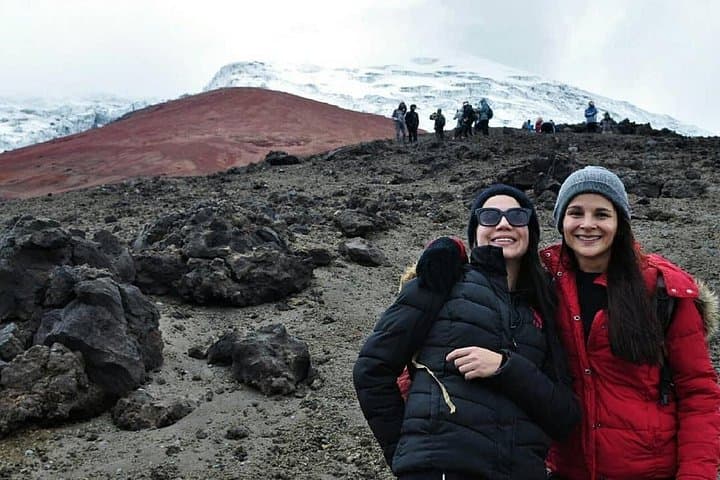
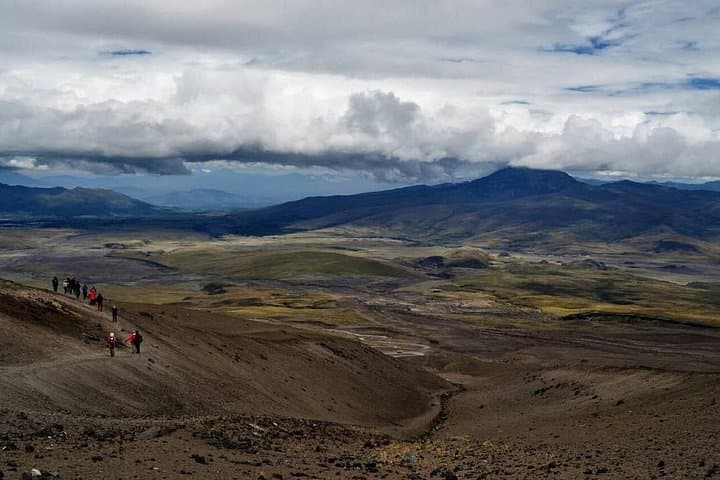
Fog thins against a black volcanic cone as the minibus eases into Cotopaxi National Park; wind lifts grit and páramo grass, and the volcano seems to breathe. Participants disembark at the trailhead, shoulders tightened against the altitude, and begin the steady climb toward the José Rivas refuge at 4,897 meters. The air is thin, the trail alternates between volcanic scree and compacted earth, and views open in stages — distant Ilinizas to the west, the broad circle of the highlands around you.
Verified experiences and guided adventures in the surrounding area.
Operated by El Barak Ecuador Travel · Latacunga, Cotopaxi
Fog thins against a black volcanic cone as the minibus eases into Cotopaxi National Park; wind lifts grit and páramo grass, and the volcano seems to breathe. Participants disembark at the trailhead, shoulders tightened against the altitude, and begin the steady climb toward the José Rivas refuge at 4,897 meters. The air is thin, the trail alternates between volcanic scree and compacted earth, and views open in stages — distant Ilinizas to the west, the broad circle of the highlands around you.
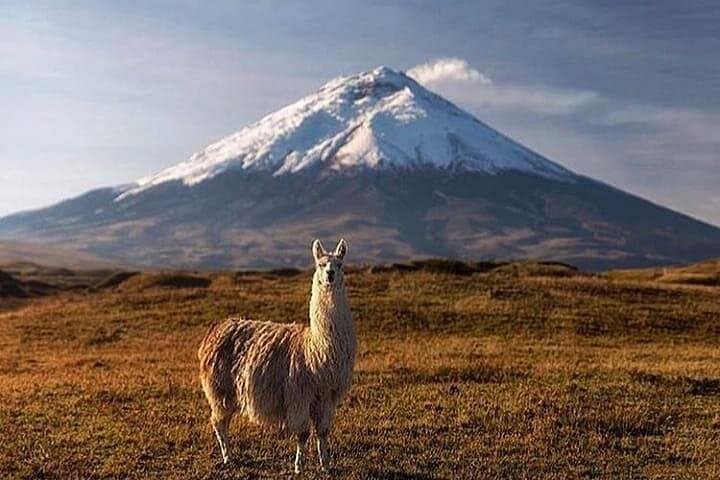
Cotopaxi is one of the world’s highest active stratovolcanoes (summit 5,897 m). The park protects páramo and high Andean lakes carved by glacial movement; Laguna Limpiopungo sits lower in the basin and often mirrors the cone when skies clear. Indigenous groups long held Cotopaxi as a landmark of seasonal cycles and travel routes, and modern conservation efforts focus on fragile peat soils and retreating ice fields.
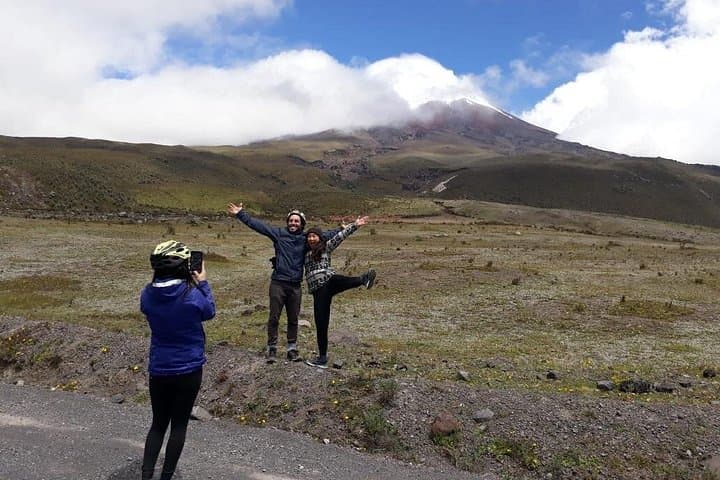
Expect a full day: a gradual ascent to the refuge, an optional approach to the glacier edge near 5,000 m (conditions permitting), then a deliberate descent to Limpiopungo for lunch and photos. Terrain is alpine — loose scree, packed ash, and short rocky sections — and weather changes fast.
Practical edge: start early to avoid afternoon storms, carry layered insulation and high-calorie snacks, and pace for altitude. Guides included on all-inclusive departures manage permits and logistics, but acclimatization is the traveler’s responsibility. Respect trail closures around glacier and wildlife; the park’s high‑altitude ecosystem recovers slowly from erosion.
challenging.
8–10 hours.
Moderate to fit — able to hike several hours at altitude with short steep sections; prior experience at 3,000–4,000 m helpful
The tour reaches José Rivas refuge at about 4,897 m, with an optional approach to the glacier near 5,000 m depending on conditions.
No technical climbing skills are required for the refuge visit—this is a high‑altitude hike on marked trails, not a summit climb.
Visibility depends on weather; guides aim for viewpoints and, when safe, a controlled approach to the glacier edge, but summit views and glacier access cannot be guaranteed.
Yes — the tour is all‑inclusive and provides transport from Quito, a bilingual guide, and lunch at the end of the hike.
Cotopaxi has been a landmark and spiritual reference for Andean cultures for centuries and was first climbed in the 19th century; its dramatic cone formed through repeated volcanic eruptions over millennia.
The park protects fragile páramo soils and shrinking glaciers; visitors should stick to trails, avoid disturbing native grasses, and pack out waste to limit erosion and pollution.
El Barak Ecuador Travel operates guided outdoor trips and adventures with an emphasis on safety, stewardship, and memorable experiences.
Fog thins against a black volcanic cone as the minibus eases into Cotopaxi National Park; wind lifts grit and páramo grass, and the volcano seems to breathe. Participants disembark at the trailhead, shoulders tightened against the altitude, and begin the steady climb toward the José Rivas refuge at 4,897 meters. The air is thin, the trail alternates between volcanic scree and compacted earth, and views open in stages — distant Ilinizas to the west, the broad circle of the highlands around you.
Fog thins against a black volcanic cone as the minibus eases into Cotopaxi National Park; wind lifts grit and páramo grass, and the volcano seems to breathe. Participants disembark at the trailhead, shoulders tightened against the altitude, and begin the steady climb toward the José Rivas refuge at 4,897 meters. The air is thin, the trail alternates between volcanic scree and compacted earth, and views open in stages — distant Ilinizas to the west, the broad circle of the highlands around you.
Cotopaxi is one of the world’s highest active stratovolcanoes (summit 5,897 m). The park protects páramo and high Andean lakes carved by glacial movement; Laguna Limpiopungo sits lower in the basin and often mirrors the cone when skies clear. Indigenous groups long held Cotopaxi as a landmark of seasonal cycles and travel routes, and modern conservation efforts focus on fragile peat soils and retreating ice fields.
Expect a full day: a gradual ascent to the refuge, an optional approach to the glacier edge near 5,000 m (conditions permitting), then a deliberate descent to Limpiopungo for lunch and photos. Terrain is alpine — loose scree, packed ash, and short rocky sections — and weather changes fast.
Practical edge: start early to avoid afternoon storms, carry layered insulation and high-calorie snacks, and pace for altitude. Guides included on all-inclusive departures manage permits and logistics, but acclimatization is the traveler’s responsibility. Respect trail closures around glacier and wildlife; the park’s high‑altitude ecosystem recovers slowly from erosion.