THE ADVENTURE COLLECTIVE® · Independent discovery and booking for outdoor travel

Walk beyond Galle Face Green and the postcard views to discover colonial lanes, a 1952 lighthouse, Dutch-era buildings and the cell that held Sri Lanka’s last king. This two‑hour guided tour reveals Colombo’s layered history and everyday rhythms.
Walk beyond Galle Face Green and the postcard views to discover colonial lanes, a 1952 lighthouse, Dutch-era buildings and the cell that held Sri Lanka’s last king. This two‑hour guided tour reveals Colombo’s layered history and everyday rhythms.
The ocean breeze from Galle Face Green pushes warm air across the promenade as your guide leads the group past a working lighthouse and into a maze of colonial stone and narrow shopfronts. Pavement gives way to flagstones and shaded arcades; palm trees lean like locals watching the city hurry by.
Verified experiences and guided adventures in the surrounding area.
Operated by Free Tour Expert · Colombo, Western Province
The ocean breeze from Galle Face Green pushes warm air across the promenade as your guide leads the group past a working lighthouse and into a maze of colonial stone and narrow shopfronts. Pavement gives way to flagstones and shaded arcades; palm trees lean like locals watching the city hurry by.
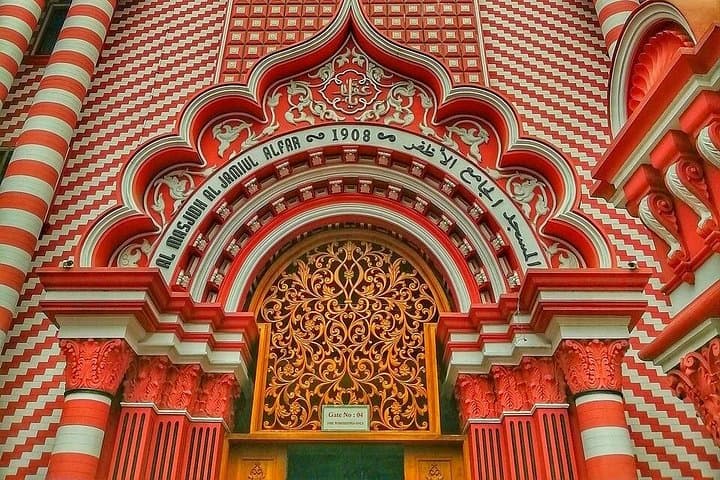
Colombo’s streets record the island’s layered history—Portuguese forts, Dutch warehouses converted into hospitals in the 1600s, and British commercial boulevards that once controlled spice trade routes. Geologically the area is flat coastal plain, so expect negligible elevation gain; the route covers roughly 3–4 km of mostly paved urban terrain with occasional uneven stones. Culture shows itself in roadside shrines, mosque and temple façades, and hawker stalls serving sambol and coconut roti.
This two-hour walking tour moves at an easy pace; the guide points out the cell where the last king of Kandy was held after 1815, the 1952 lighthouse guarding Colombo’s harbor, and quiet alleys that reveal the city’s everyday rhythms.
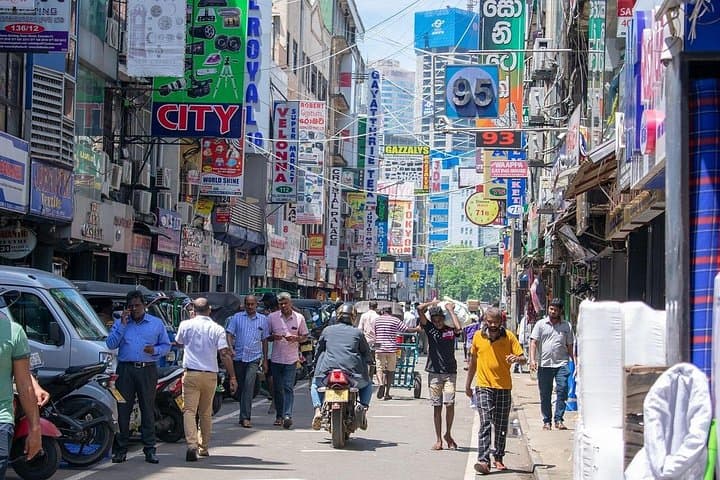
Plan for heat and traffic — mornings or late afternoons are best for softer light and cooler air. Wear sturdy walking shoes, carry water, and bring small change for market purchases or temple offerings. Expect bustling streets, occasional honking, and friendly bargaining in Pettah if you wander after the tour. With basic mobility and an interest in history, this walk gives a compact, sensory-rich introduction to Colombo’s colonial past and living present.
easy.
2 hours.
Suitable for most travelers with basic mobility; low aerobic demand but expect standing and walking for two hours.
Meeting locations vary by operator, but tours commonly begin near Galle Face Green or a central Fort-area landmark—confirm the exact meeting point on your booking confirmation.
Yes; the tour is classified as physically easy and covers flat terrain, but participants should be comfortable walking 3–4 km and able to navigate city sidewalks.
Guides often speak English and may offer insights in other languages depending on the group; check the booking page for language options.
Yes—small backpacks are fine; the guide will point out local food stalls and markets where you can sample snacks after or during the walk.
Colombo’s waterfront and fort areas reflect nearly 500 years of colonial rule—Portuguese, Dutch and British—whose administrative and trading buildings still shape the downtown street pattern.
Dense urban visitation stresses pavements and public spaces; avoid littering, use refillable bottles, and follow guide advice to minimize impact.
Free Tour Expert operates guided outdoor trips and adventures with an emphasis on safety, stewardship, and memorable experiences.

The ocean breeze from Galle Face Green pushes warm air across the promenade as your guide leads the group past a working lighthouse and into a maze of colonial stone and narrow shopfronts. Pavement gives way to flagstones and shaded arcades; palm trees lean like locals watching the city hurry by.
The ocean breeze from Galle Face Green pushes warm air across the promenade as your guide leads the group past a working lighthouse and into a maze of colonial stone and narrow shopfronts. Pavement gives way to flagstones and shaded arcades; palm trees lean like locals watching the city hurry by.
Colombo’s streets record the island’s layered history—Portuguese forts, Dutch warehouses converted into hospitals in the 1600s, and British commercial boulevards that once controlled spice trade routes. Geologically the area is flat coastal plain, so expect negligible elevation gain; the route covers roughly 3–4 km of mostly paved urban terrain with occasional uneven stones. Culture shows itself in roadside shrines, mosque and temple façades, and hawker stalls serving sambol and coconut roti.
This two-hour walking tour moves at an easy pace; the guide points out the cell where the last king of Kandy was held after 1815, the 1952 lighthouse guarding Colombo’s harbor, and quiet alleys that reveal the city’s everyday rhythms.
Plan for heat and traffic — mornings or late afternoons are best for softer light and cooler air. Wear sturdy walking shoes, carry water, and bring small change for market purchases or temple offerings. Expect bustling streets, occasional honking, and friendly bargaining in Pettah if you wander after the tour. With basic mobility and an interest in history, this walk gives a compact, sensory-rich introduction to Colombo’s colonial past and living present.