THE ADVENTURE COLLECTIVE® · Independent discovery and booking for outdoor travel

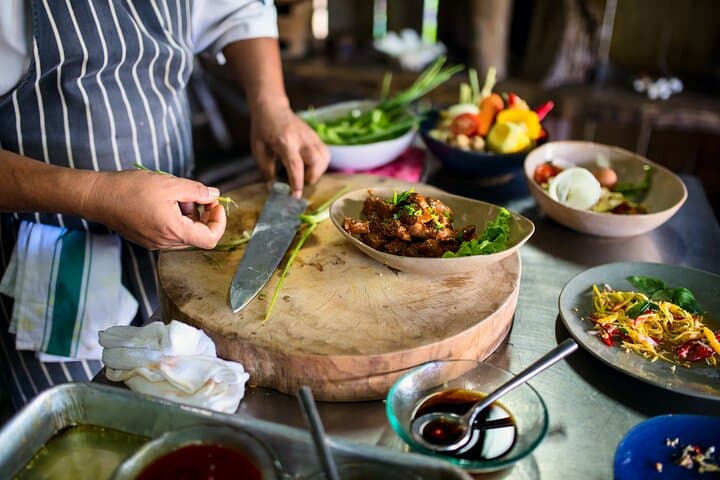
Walk through the rise and fall of the Khmer Empire on a six-day tour that pairs Angkor’s monumental temples with village life on Tonle Sap. Expect morning temple circuits, a Khmer cooking class, Apsara dance, and a boat visit to floating communities.
Walk through the rise and fall of the Khmer Empire on a six-day tour that pairs Angkor’s monumental temples with village life on Tonle Sap. Expect morning temple circuits, a Khmer cooking class, Apsara dance, and a boat visit to floating communities.
Morning light slides over sandstone galleries as you step from an air-conditioned vehicle into the vast hush of Angkor’s temple fields. Stone bas-reliefs lean like old storytellers; strangler figs tug at lintels and the paths hum with the steady footfall of travelers and monks alike.
Verified experiences and guided adventures in the surrounding area.
Operated by TripCompanion Tours · Siem Reap, Siem Reap Province
Morning light slides over sandstone galleries as you step from an air-conditioned vehicle into the vast hush of Angkor’s temple fields. Stone bas-reliefs lean like old storytellers; strangler figs tug at lintels and the paths hum with the steady footfall of travelers and monks alike.
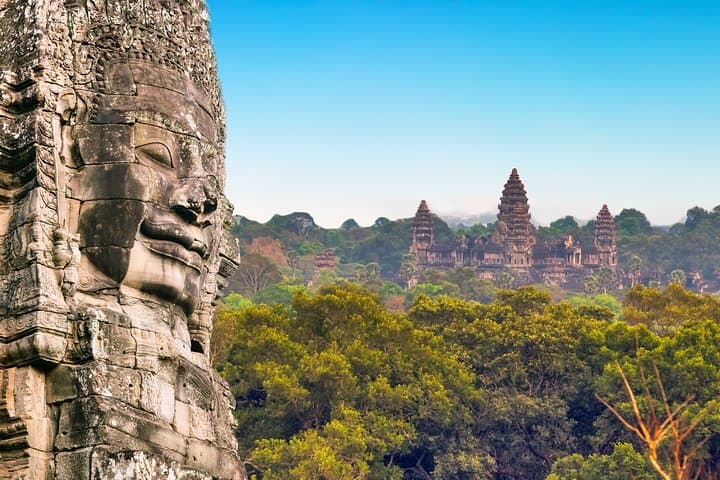
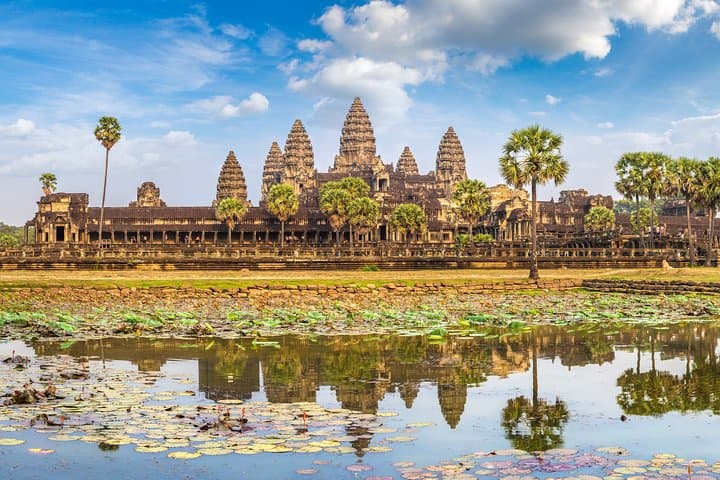
This six-day circuit threads through the Khmer Empire’s greatest works — Angkor Thom’s Bayon with its carved faces, the soaring symmetry of Angkor Wat, the jungle-wrapped romance of Ta Prohm, and the pink sandstone finesse of Banteay Srei. Geologically, the temples rest on laterite and sandstone quarried from nearby ridges; centuries of seasonal floods from the Tonle Sap shaped settlement patterns and rice-baray irrigation that powered the empire.
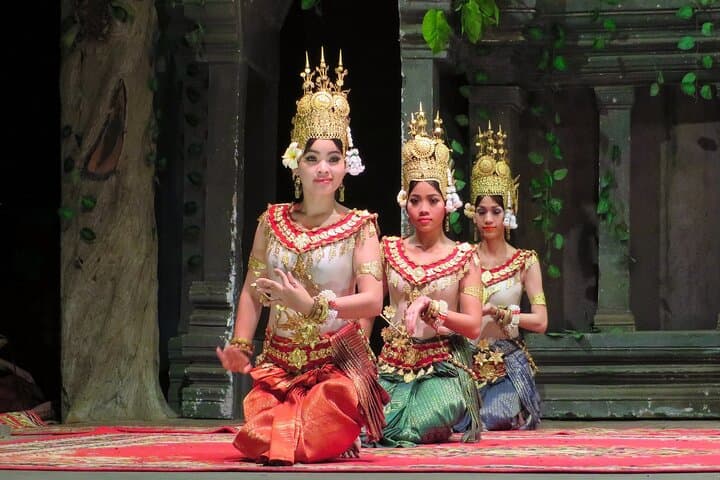
Culture is immediate here: saffron-robed monks receiving alms, Apsara dancers re-enacting courtly myths, and living artisans continuing stone and silk traditions taught at Les Chantiers École. A morning on Tonle Sap Lake shows a water world that swells and retreats with the monsoon — the lake itself seems to breathe, pushing life up onto stilts and floating houses.
Practical guidance: plan early starts to avoid midday heat, carry 2–3 liters of water and a sun hat, and wear comfortable closed-toe shoes for uneven temple stones. Dress respectfully — shoulders and knees covered for pagodas. Expect guided transfers between sites, modest daily walking (some uneven steps and muddy trails), and an itinerary balanced between temples, cultural experiences, and a boat ride on Tonle Sap. Book entrance passes in advance and budget time for crowds at Angkor Wat during sunrise. With sensible preparation, the trip is a compact, immersive primer on Cambodia’s history and living culture.
moderate.
6 days.
Moderate fitness: light to moderate walking each day with some uneven steps and short climbs; comfortable for most active travelers.
Yes — an Angkor Archaeological Park pass is required; single- and multi-day tickets are sold at the park entrance and should be purchased before visiting peak sites.
Families can participate; infants may need laps on transport and some sites have uneven ground, so stroller use is limited at many temples.
Most guides in Siem Reap speak English; private tours often provide multilingual guides on request — confirm language when booking.
Breakfasts are included daily per the itinerary; other meals may be included depending on your chosen accommodations or add-ons — confirm at booking.
The Angkor complex developed between the 9th and 15th centuries under the Khmer Empire, whose irrigation systems and hydraulic engineering supported a dense urban population.
Rising tourism and seasonal water fluctuations pressure the park and Tonle Sap; support certified guides and local conservation groups, and avoid touching carvings to reduce wear.
TripCompanion Tours operates guided outdoor trips and adventures with an emphasis on safety, stewardship, and memorable experiences.
Morning light slides over sandstone galleries as you step from an air-conditioned vehicle into the vast hush of Angkor’s temple fields. Stone bas-reliefs lean like old storytellers; strangler figs tug at lintels and the paths hum with the steady footfall of travelers and monks alike.
Morning light slides over sandstone galleries as you step from an air-conditioned vehicle into the vast hush of Angkor’s temple fields. Stone bas-reliefs lean like old storytellers; strangler figs tug at lintels and the paths hum with the steady footfall of travelers and monks alike.
This six-day circuit threads through the Khmer Empire’s greatest works — Angkor Thom’s Bayon with its carved faces, the soaring symmetry of Angkor Wat, the jungle-wrapped romance of Ta Prohm, and the pink sandstone finesse of Banteay Srei. Geologically, the temples rest on laterite and sandstone quarried from nearby ridges; centuries of seasonal floods from the Tonle Sap shaped settlement patterns and rice-baray irrigation that powered the empire.
Culture is immediate here: saffron-robed monks receiving alms, Apsara dancers re-enacting courtly myths, and living artisans continuing stone and silk traditions taught at Les Chantiers École. A morning on Tonle Sap Lake shows a water world that swells and retreats with the monsoon — the lake itself seems to breathe, pushing life up onto stilts and floating houses.
Practical guidance: plan early starts to avoid midday heat, carry 2–3 liters of water and a sun hat, and wear comfortable closed-toe shoes for uneven temple stones. Dress respectfully — shoulders and knees covered for pagodas. Expect guided transfers between sites, modest daily walking (some uneven steps and muddy trails), and an itinerary balanced between temples, cultural experiences, and a boat ride on Tonle Sap. Book entrance passes in advance and budget time for crowds at Angkor Wat during sunrise. With sensible preparation, the trip is a compact, immersive primer on Cambodia’s history and living culture.