THE ADVENTURE COLLECTIVE® · Independent discovery and booking for outdoor travel

Explore Brooklyn’s hidden subway history on a two-hour private walk that visits abandoned stations, public artwork like the Masstransiscope, and skyline views from the Manhattan Bridge. Expert guides explain the engineering and urban growth shaped by rail lines.
Explore Brooklyn’s hidden subway history on a two-hour private walk that visits abandoned stations, public artwork like the Masstransiscope, and skyline views from the Manhattan Bridge. Expert guides explain the engineering and urban growth shaped by rail lines.
A rumble underfoot announces the start: the subway breathes and pulls you into the city’s underbelly as you meet outside 50 Court Street. Within minutes the tour moves from sunlit sidewalks into tiled corridors where echoes of past commuters still cling to the grout. The walk traces service lines and dead-ends — staircases folding away into silence, platforms that once took in rush-hour tides now quiet enough to hear your shoes.
Verified experiences and guided adventures in the surrounding area.
Operated by Region NYC · Brooklyn, New York
A rumble underfoot announces the start: the subway breathes and pulls you into the city’s underbelly as you meet outside 50 Court Street. Within minutes the tour moves from sunlit sidewalks into tiled corridors where echoes of past commuters still cling to the grout. The walk traces service lines and dead-ends — staircases folding away into silence, platforms that once took in rush-hour tides now quiet enough to hear your shoes.
Brooklyn’s transit story is industrial and civic — 19th- and early-20th-century railroads, private companies like the BRT and later municipal unification, shaped neighborhoods and spurred growth. Geology here matters less than engineering: cut-and-cover trenches, deep-bored tubes and elevated structures that negotiate bedrock, river crossings and changing street grids. Culture threads through the tour — public art like the Masstransiscope and the filmed choreography of pop culture — reminding you this is a living, layered city.
Expect a mix of well-maintained public stations and visible remnants of decommissioned spaces. The Manhattan Bridge walk yields skyline tableaux; higher rapid-transit platforms afford unusual perspectives on Brooklyn and Manhattan. Guides explain signaling, power, and the schedules that keep trains moving 24/7.
Practical notes: this private two-hour tour covers stairs and city walking on uneven surfaces; wear supportive footwear, bring a small water bottle and a charged phone for photos. Fare is provided, and earpieces ensure you won’t miss historical anecdotes. The route ends at Atlantic Terminal — plan transit or rideshare from there.
easy.
2 hours.
Suitable for people comfortable walking and climbing stairs for up to two hours; not strenuous but constant on-foot movement.
Yes — the tour provides full subway fare for included rides during the itinerary.
No — the tour visits public areas only; guides point out abandoned stations visible from active platforms and passages.
The experience involves multiple flights of stairs and is not recommended for those with difficulty navigating steps; contact the operator for specific accommodations.
Meet outside the Starbucks at 50 Court Street in Brooklyn; the tour finishes at Atlantic Terminal.
Brooklyn’s subway and commuter rail network grew through private lines in the late 1800s and early 1900s; municipal consolidation and later expansions tied borough neighborhoods together and to Manhattan.
Stay on public walkways and obey posted signs — trespassing into closed tunnels damages historic infrastructure and risks safety. Carry out trash and avoid flash photography in sensitive artworks.
Region NYC operates guided outdoor trips and adventures with an emphasis on safety, stewardship, and memorable experiences.
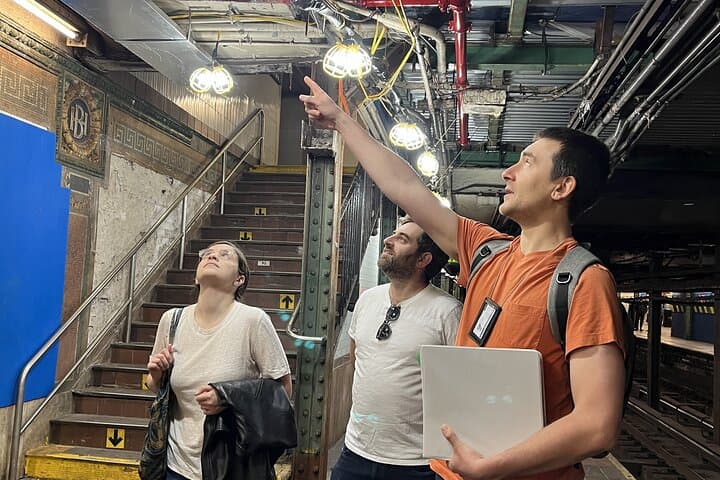


A rumble underfoot announces the start: the subway breathes and pulls you into the city’s underbelly as you meet outside 50 Court Street. Within minutes the tour moves from sunlit sidewalks into tiled corridors where echoes of past commuters still cling to the grout. The walk traces service lines and dead-ends — staircases folding away into silence, platforms that once took in rush-hour tides now quiet enough to hear your shoes.
A rumble underfoot announces the start: the subway breathes and pulls you into the city’s underbelly as you meet outside 50 Court Street. Within minutes the tour moves from sunlit sidewalks into tiled corridors where echoes of past commuters still cling to the grout. The walk traces service lines and dead-ends — staircases folding away into silence, platforms that once took in rush-hour tides now quiet enough to hear your shoes.
Brooklyn’s transit story is industrial and civic — 19th- and early-20th-century railroads, private companies like the BRT and later municipal unification, shaped neighborhoods and spurred growth. Geology here matters less than engineering: cut-and-cover trenches, deep-bored tubes and elevated structures that negotiate bedrock, river crossings and changing street grids. Culture threads through the tour — public art like the Masstransiscope and the filmed choreography of pop culture — reminding you this is a living, layered city.
Expect a mix of well-maintained public stations and visible remnants of decommissioned spaces. The Manhattan Bridge walk yields skyline tableaux; higher rapid-transit platforms afford unusual perspectives on Brooklyn and Manhattan. Guides explain signaling, power, and the schedules that keep trains moving 24/7.
Practical notes: this private two-hour tour covers stairs and city walking on uneven surfaces; wear supportive footwear, bring a small water bottle and a charged phone for photos. Fare is provided, and earpieces ensure you won’t miss historical anecdotes. The route ends at Atlantic Terminal — plan transit or rideshare from there.