THE ADVENTURE COLLECTIVE® · Independent discovery and booking for outdoor travel

Walk from the Library of Birmingham into the Jewellery Quarter on a focused two‑hour tour that blends industrial history, Georgian and Victorian architecture, and working workshops. Hear the guide through a personal receiver and discover routes even locals miss.
Walk from the Library of Birmingham into the Jewellery Quarter on a focused two‑hour tour that blends industrial history, Georgian and Victorian architecture, and working workshops. Hear the guide through a personal receiver and discover routes even locals miss.
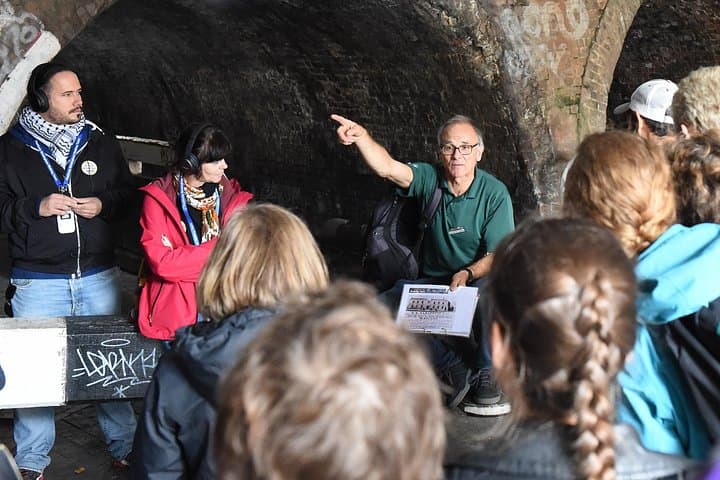
The guide's voice comes through a small receiver as the Library of Birmingham's façade slides past — a modern face for a city with older bones. Follow narrow streets and a tucked canal route into the Jewellery Quarter; metal shutters, workshop doors and the faint smell of oil and metal mark a place where craft still sets the pace.
Verified experiences and guided adventures in the surrounding area.
Operated by Positively Birmingham Walking Tours · Birmingham, West Midlands
The guide's voice comes through a small receiver as the Library of Birmingham's façade slides past — a modern face for a city with older bones. Follow narrow streets and a tucked canal route into the Jewellery Quarter; metal shutters, workshop doors and the faint smell of oil and metal mark a place where craft still sets the pace.
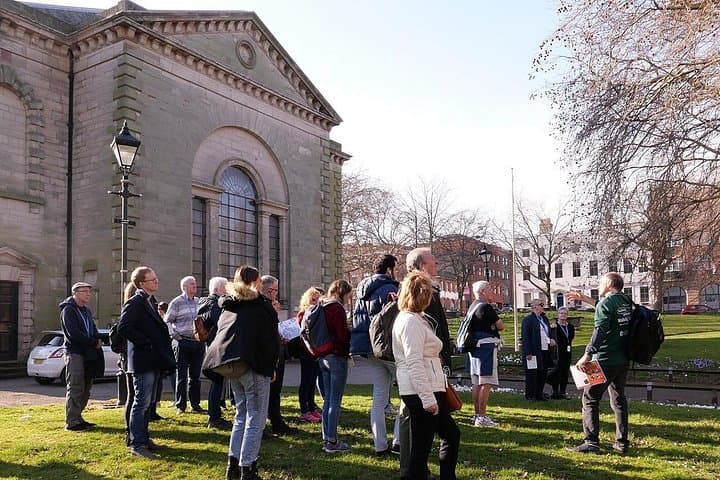
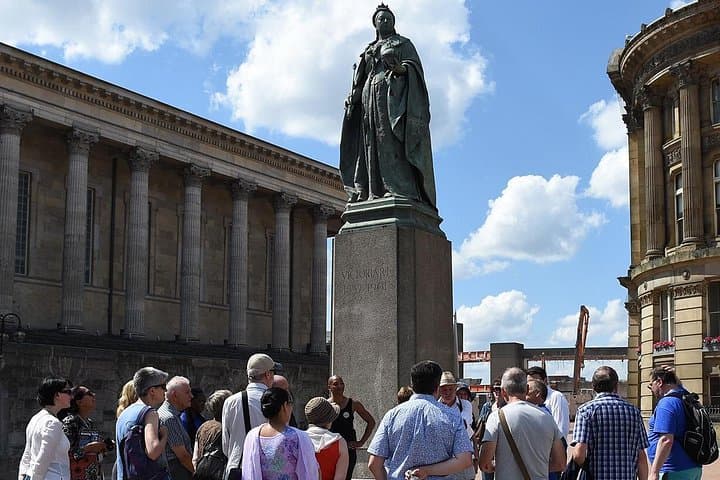
Birmingham grew rapidly during the Industrial Revolution, its canals once carrying coal and goods that powered factories. The Jewellery Quarter itself traces that arc from Georgian entrepreneurs to Victorian workshops producing pins, badges and the silverwork that made the city famous. St. Philip’s Cathedral and the compact Georgian church of 1779 punctuate the route, while post-war civic planning and recent regeneration explain the city's evolving skyline.
Cultural notes: expect an admixture of working artisans, new creative spaces and canal-side industrial architecture. The secret canal entrance into the Quarter is a local touch — a quieter approach even many residents miss.
Practical guidance: this 2-hour walking tour covers paved city streets and short uneven sections near older workshops; bring comfortable shoes and a light rain layer. Guides use a transmitter so you hear commentary clearly from a distance; tours run rain or shine unless icy. Start at the Library of Birmingham for easy transit connections and allow a short buffer for post-tour wandering in the Quarter’s small museums and independent shops.
Timing tip: mid-morning or late afternoon avoids the busiest commuter window and gives the canal better light for photography.
easy.
2 hours.
Moderate: suitable for anyone comfortable walking 4–5 km on city streets with short stops and brief standing periods
Meet at the main entrance of the Library of Birmingham on Centenary Square; the tour returns to nearby squares close to the library.
Yes — the tour is stroller accessible and suitable for older children, though some sections have narrow canalside paths.
Tours run in light rain; bring a coat or umbrella. Routes may be adapted in icy conditions for safety.
General commentary includes exterior views; any optional entry (e.g., into the cathedral when available) is subject to time and may require separate admission.
Birmingham’s canals and workshops were central to its rise in the Industrial Revolution; the Jewellery Quarter became a global centre for metalwork and jewellery from the 18th century onward.
The canal network and many Quarter buildings are subject to heritage conservation; visitors can help by staying on paths, avoiding entrance into private workshops without permission, and supporting local artisans.
Positively Birmingham Walking Tours operates guided outdoor trips and adventures with an emphasis on safety, stewardship, and memorable experiences.
The guide's voice comes through a small receiver as the Library of Birmingham's façade slides past — a modern face for a city with older bones. Follow narrow streets and a tucked canal route into the Jewellery Quarter; metal shutters, workshop doors and the faint smell of oil and metal mark a place where craft still sets the pace.
The guide's voice comes through a small receiver as the Library of Birmingham's façade slides past — a modern face for a city with older bones. Follow narrow streets and a tucked canal route into the Jewellery Quarter; metal shutters, workshop doors and the faint smell of oil and metal mark a place where craft still sets the pace.
Birmingham grew rapidly during the Industrial Revolution, its canals once carrying coal and goods that powered factories. The Jewellery Quarter itself traces that arc from Georgian entrepreneurs to Victorian workshops producing pins, badges and the silverwork that made the city famous. St. Philip’s Cathedral and the compact Georgian church of 1779 punctuate the route, while post-war civic planning and recent regeneration explain the city's evolving skyline.
Cultural notes: expect an admixture of working artisans, new creative spaces and canal-side industrial architecture. The secret canal entrance into the Quarter is a local touch — a quieter approach even many residents miss.
Practical guidance: this 2-hour walking tour covers paved city streets and short uneven sections near older workshops; bring comfortable shoes and a light rain layer. Guides use a transmitter so you hear commentary clearly from a distance; tours run rain or shine unless icy. Start at the Library of Birmingham for easy transit connections and allow a short buffer for post-tour wandering in the Quarter’s small museums and independent shops.
Timing tip: mid-morning or late afternoon avoids the busiest commuter window and gives the canal better light for photography.