THE ADVENTURE COLLECTIVE® · Independent discovery and booking for outdoor travel

Explore Al Ula’s archaeological heart in a single full day: Hegra’s Nabataean tombs, the ancient sites of Dadan and Ikmah, and sunset at the Elephant Rock. This guided loop balances short walks, delivered context, and dramatic desert viewpoints.
Explore Al Ula’s archaeological heart in a single full day: Hegra’s Nabataean tombs, the ancient sites of Dadan and Ikmah, and sunset at the Elephant Rock. This guided loop balances short walks, delivered context, and dramatic desert viewpoints.
You step from the hotel into dry air that smells faintly of warmed stone; the desert around Al Ula holds a sharp stillness broken by the soft rumble of the tour vehicle and the occasional birdcall. The day unfolds across sandstone canyons and open plain—first Hegra’s carved facades, then the compact ruins of Dadan and Ikmah, ending as the sun throws long shadows across Jabal AlFil, the Elephant Rock.
Verified experiences and guided adventures in the surrounding area.
Operated by Gray Line - Kurban Tours · AlUla, Al Madinah Region
You step from the hotel into dry air that smells faintly of warmed stone; the desert around Al Ula holds a sharp stillness broken by the soft rumble of the tour vehicle and the occasional birdcall. The day unfolds across sandstone canyons and open plain—first Hegra’s carved facades, then the compact ruins of Dadan and Ikmah, ending as the sun throws long shadows across Jabal AlFil, the Elephant Rock.
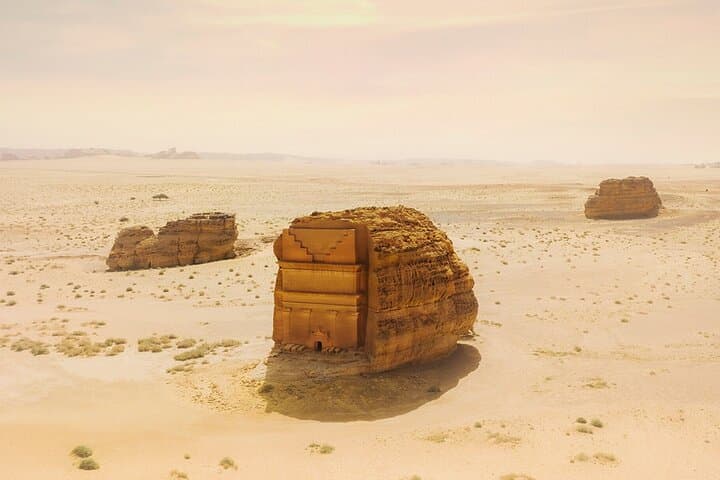
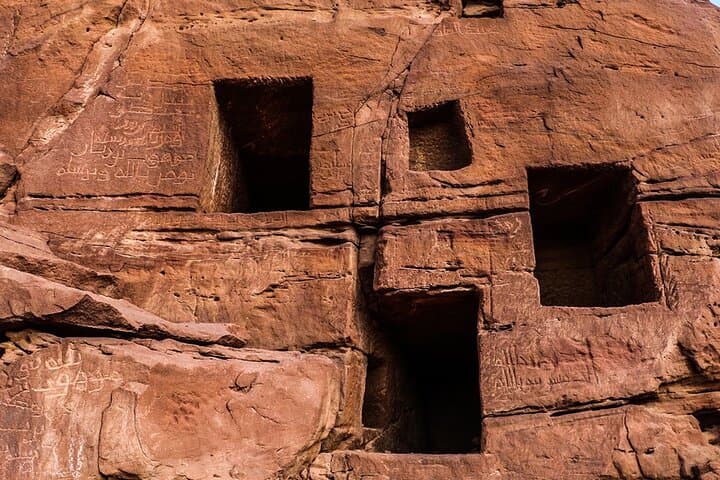
Hegra (Madâin Sâlih) is Saudi Arabia’s first UNESCO site, the southern echo of Nabataean engineering and funerary architecture—over 110 tombs carved into monolithic rock. Dadan and Ikmah predate that era, with early Arab inscriptions and tombs from the Dadanite and Lihyanite kingdoms that map a continuity of trade and settlement. Geologically, the region’s wind-carved sandstone creates arches, stacked plates, and perched blocks; these shapes control light and temperature and make for dramatic viewpoints.
The Royal Commission for AlUla has opened much of this landscape with managed access, guided routes, and onsite interpretation; respect directional signage and fragile surfaces. Practical rhythm: expect several short walks on uneven packed sand and rock—nothing technical but bring sturdy footwear. Lunch in town breaks the day and offers local dishes before the late-afternoon pilgrimage to Elephant Rock for golden-hour photography. Hydrate early, use sun protection, and plan for strong sun and high contrast scenes if you’re shooting photos. The tour is full-day but low-impact physically—an excellent primer to Al Ula’s archaeology, geology, and desert light.
easy.
7 hours.
Suitable for most fitness levels; requires short walks (10–30 minutes) on uneven desert and rock surfaces throughout the day.
Yes—entrance to Hegra, Dadan & Ikmah, and the Elephant Rock area is included in the tour price.
Yes—pickup and drop-off from AlUla hotels are included; confirm your pickup location when booking.
Yes—the tour is listed as suitable for all fitness levels; expect short on-foot sections on uneven ground and bring mobility support if needed.
Drone use in Saudi Arabia and at protected sites is strictly regulated and generally requires permits—check with your operator or the guide before attempting any drone use.
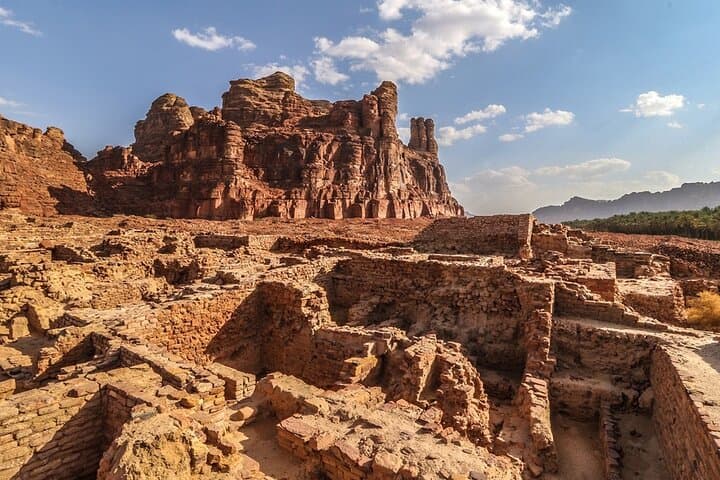
Hegra served as the Nabataean kingdom’s southern necropolis and trading outpost; Dadan and Ikmah were power centers for the Dadanite and Lihyanite kingdoms that controlled caravan routes before the Nabataeans.
The Royal Commission for AlUla manages visitation, conservation, and restoration projects; staying on designated paths and following guides helps minimize erosion and damage to rock-cut monuments.
Gray Line - Kurban Tours operates guided outdoor trips and adventures with an emphasis on safety, stewardship, and memorable experiences.

You step from the hotel into dry air that smells faintly of warmed stone; the desert around Al Ula holds a sharp stillness broken by the soft rumble of the tour vehicle and the occasional birdcall. The day unfolds across sandstone canyons and open plain—first Hegra’s carved facades, then the compact ruins of Dadan and Ikmah, ending as the sun throws long shadows across Jabal AlFil, the Elephant Rock.
You step from the hotel into dry air that smells faintly of warmed stone; the desert around Al Ula holds a sharp stillness broken by the soft rumble of the tour vehicle and the occasional birdcall. The day unfolds across sandstone canyons and open plain—first Hegra’s carved facades, then the compact ruins of Dadan and Ikmah, ending as the sun throws long shadows across Jabal AlFil, the Elephant Rock.
Hegra (Madâin Sâlih) is Saudi Arabia’s first UNESCO site, the southern echo of Nabataean engineering and funerary architecture—over 110 tombs carved into monolithic rock. Dadan and Ikmah predate that era, with early Arab inscriptions and tombs from the Dadanite and Lihyanite kingdoms that map a continuity of trade and settlement. Geologically, the region’s wind-carved sandstone creates arches, stacked plates, and perched blocks; these shapes control light and temperature and make for dramatic viewpoints.
The Royal Commission for AlUla has opened much of this landscape with managed access, guided routes, and onsite interpretation; respect directional signage and fragile surfaces. Practical rhythm: expect several short walks on uneven packed sand and rock—nothing technical but bring sturdy footwear. Lunch in town breaks the day and offers local dishes before the late-afternoon pilgrimage to Elephant Rock for golden-hour photography. Hydrate early, use sun protection, and plan for strong sun and high contrast scenes if you’re shooting photos. The tour is full-day but low-impact physically—an excellent primer to Al Ula’s archaeology, geology, and desert light.