THE ADVENTURE COLLECTIVE® · Independent discovery and booking for outdoor travel

Experience dining inside Dubai’s sail-shaped hotel where Michelin-level menus sit beside panoramic Gulf views. Read on for what each venue offers, timing and practical tips to plan your visit.
Experience dining inside Dubai’s sail-shaped hotel where Michelin-level menus sit beside panoramic Gulf views. Read on for what each venue offers, timing and practical tips to plan your visit.
You step off the causeway and the sea has already set the scene: the Persian Gulf presses cool air against the hotel's glass and steel, daring the building's sail-shape to hold its stance against horizon light. Inside, glass elevators lift you through a cavernous atrium; chandeliers drip like frozen tides while staff guide you toward a chosen table with practiced calm.
Verified experiences and guided adventures in the surrounding area.
Operated by Travzi World Travel & Tourism LLC · Dubai, Dubai
You step off the causeway and the sea has already set the scene: the Persian Gulf presses cool air against the hotel's glass and steel, daring the building's sail-shape to hold its stance against horizon light. Inside, glass elevators lift you through a cavernous atrium; chandeliers drip like frozen tides while staff guide you toward a chosen table with practiced calm.
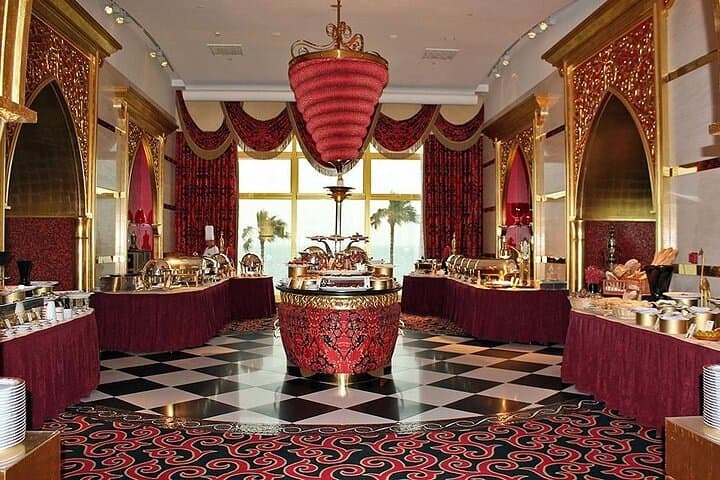
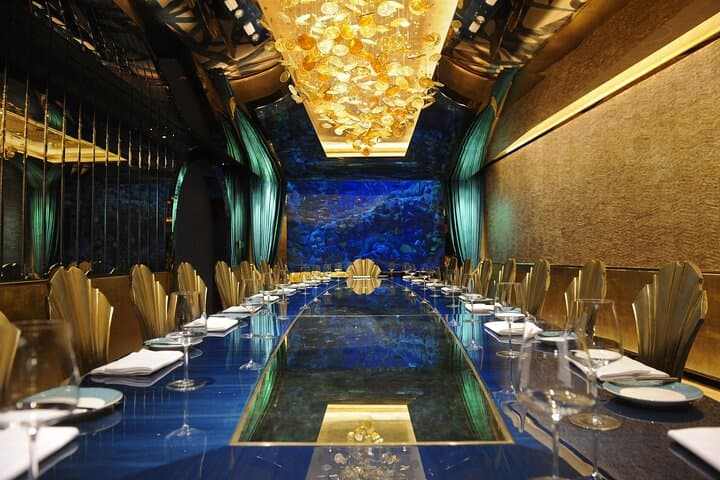
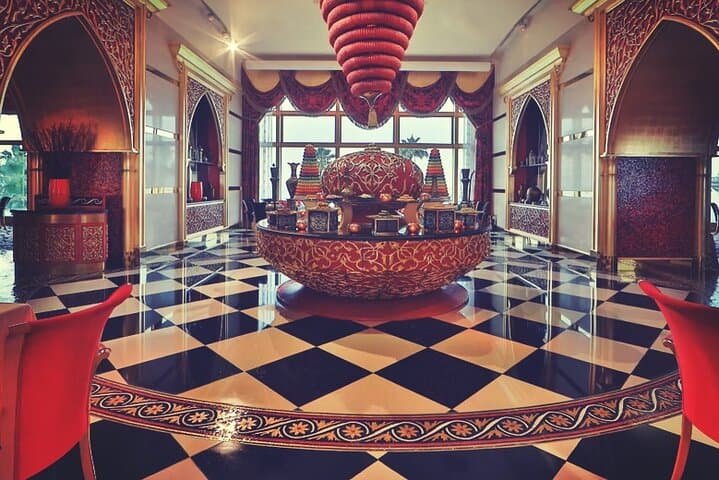
Opened in 1999 and built on a man-made island, Burj Al Arab quickly became an architectural marker of Dubai’s rapid expansion—a deliberately theatrical landmark by British architect Tom Wright. The hotel’s foundations rest on reclaimed coastal sand and concrete piles; its public rooms draw from Emirati hospitality, mixing Arabic buffet tradition with Michelin-level European service across venues such as Al Iwan, Al Mahara and Al Muntaha.
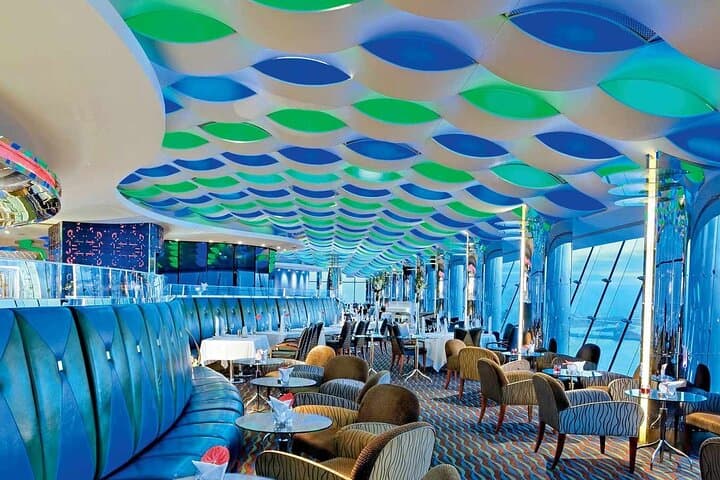
Culturally, dining here is as much about ceremony as it is about cuisine: seafood prepared with Mediterranean technique, refined French-Italian tasting menus, and sky-high afternoon tea with views that track the sun’s arc over the Gulf.
Practical guidance: book well in advance and select your venue—options range from buffet to Michelin-curated tasting menus; most reservations are for a fixed two-hour seating. Bring passport or photo ID for entry and expect a smart-casual to formal dress code at upscale venues. Public transport options exist, but allow extra time for security checks and valet. The provider’s policy requires cancellation at least 24 hours in advance for a full refund. For best light and fewer crowds, aim for late afternoon service into sunset.
This is dining as an event—precise, polished and anchored to one of Dubai’s most recognizable profiles.
easy.
2 hours.
Suitable for all fitness levels; primarily a seated dining experience with minimal walking
Yes—entry is granted for guests who have a confirmed reservation and will partake of cuisine or tea as per the chosen venue.
Yes—most of the Burj Al Arab’s fine-dining venues require smart-casual to formal attire; beachwear and flip-flops are not permitted.
Infants and small children are permitted, but some venues recommend quieter dining times and infants must sit on an adult’s lap if no separate seating is provided.
The provider’s policy allows a full refund if you cancel at least 24 hours before the scheduled reservation; same-day cancellations are non-refundable.
Completed in 1999 on a man-made island, the sail-shaped Burj Al Arab was conceived as a symbol of Dubai’s modern ambitions and luxury hospitality.
Coastal development in Dubai affects shoreline ecosystems; many hotels now manage water and energy use carefully—ask venues about specific sustainability measures when booking.
Travzi World Travel & Tourism LLC operates guided outdoor trips and adventures with an emphasis on safety, stewardship, and memorable experiences.
You step off the causeway and the sea has already set the scene: the Persian Gulf presses cool air against the hotel's glass and steel, daring the building's sail-shape to hold its stance against horizon light. Inside, glass elevators lift you through a cavernous atrium; chandeliers drip like frozen tides while staff guide you toward a chosen table with practiced calm.
You step off the causeway and the sea has already set the scene: the Persian Gulf presses cool air against the hotel's glass and steel, daring the building's sail-shape to hold its stance against horizon light. Inside, glass elevators lift you through a cavernous atrium; chandeliers drip like frozen tides while staff guide you toward a chosen table with practiced calm.
Opened in 1999 and built on a man-made island, Burj Al Arab quickly became an architectural marker of Dubai’s rapid expansion—a deliberately theatrical landmark by British architect Tom Wright. The hotel’s foundations rest on reclaimed coastal sand and concrete piles; its public rooms draw from Emirati hospitality, mixing Arabic buffet tradition with Michelin-level European service across venues such as Al Iwan, Al Mahara and Al Muntaha.
Culturally, dining here is as much about ceremony as it is about cuisine: seafood prepared with Mediterranean technique, refined French-Italian tasting menus, and sky-high afternoon tea with views that track the sun’s arc over the Gulf.
Practical guidance: book well in advance and select your venue—options range from buffet to Michelin-curated tasting menus; most reservations are for a fixed two-hour seating. Bring passport or photo ID for entry and expect a smart-casual to formal dress code at upscale venues. Public transport options exist, but allow extra time for security checks and valet. The provider’s policy requires cancellation at least 24 hours in advance for a full refund. For best light and fewer crowds, aim for late afternoon service into sunset.
This is dining as an event—precise, polished and anchored to one of Dubai’s most recognizable profiles.