THE ADVENTURE COLLECTIVE® · Independent discovery and booking for outdoor travel

Hop a fast passenger ferry from Dingle and land on the Great Blasket Island—an uninhabited, literary-rich isle within Ireland’s only Marine National Park. Spend a half day exploring abandoned village ruins, windswept beaches, and rugged hill walks.
Hop a fast passenger ferry from Dingle and land on the Great Blasket Island—an uninhabited, literary-rich isle within Ireland’s only Marine National Park. Spend a half day exploring abandoned village ruins, windswept beaches, and rugged hill walks.
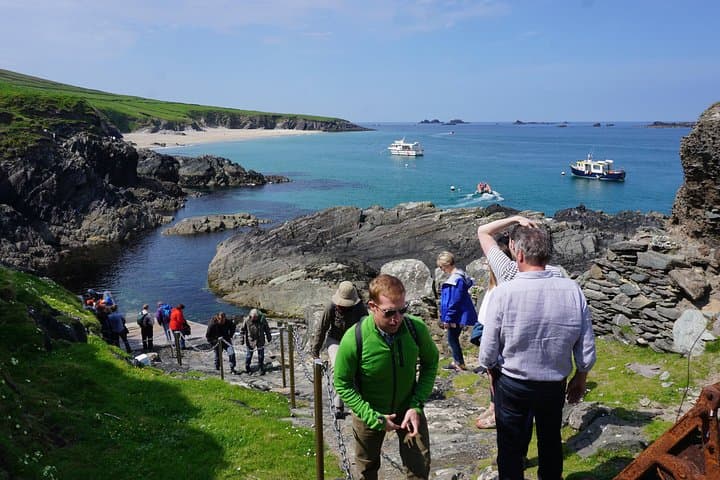
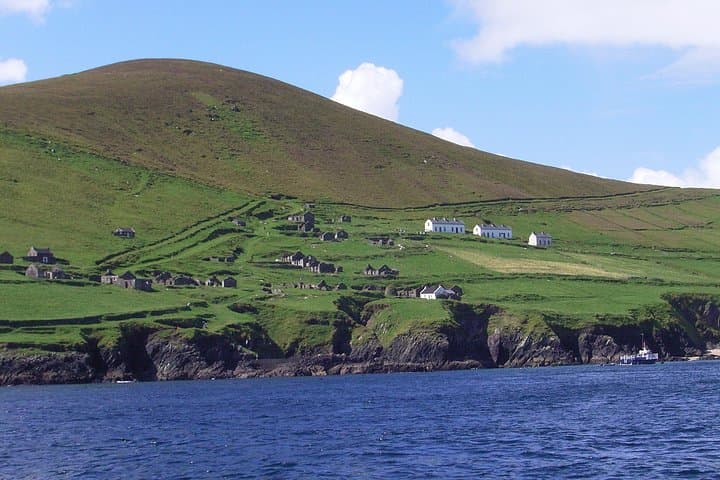
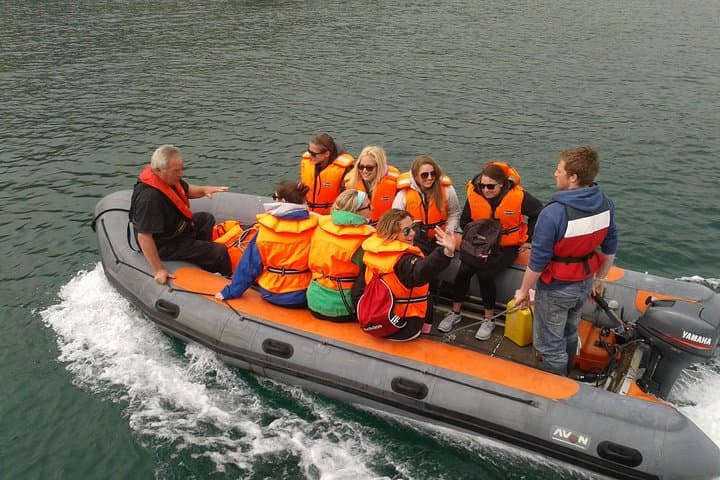
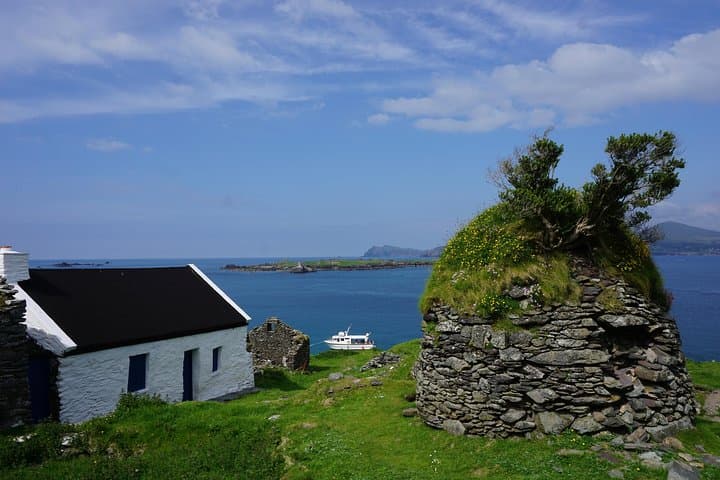
A brisk Atlantic wind meets the bow as the ferry slips out of Dingle Harbour and rounds Slea Head. Salt spray and high cliffs frame the approach to the Great Blasket Island; the sea narrows, gulls wheel, and the island’s low mountain ridgeline rises from the horizon. On a clear morning the rocks glitter, and the abandoned whitewashed houses of the old village appear like punctuation against peat and stone.
Verified experiences and guided adventures in the surrounding area.
Operated by Dingle Boat Tours · Dingle, County Kerry
A brisk Atlantic wind meets the bow as the ferry slips out of Dingle Harbour and rounds Slea Head. Salt spray and high cliffs frame the approach to the Great Blasket Island; the sea narrows, gulls wheel, and the island’s low mountain ridgeline rises from the horizon. On a clear morning the rocks glitter, and the abandoned whitewashed houses of the old village appear like punctuation against peat and stone.
The Great Blasket was inhabited for centuries and evacuated in 1953; its remote community produced some of Ireland’s best-known oral literature, including Peig Sayers’ memoirs. Geologically the island is composed of steep, exposed Atlantic sandstone and shale with thin soils, which shape the rough, largely treeless terrain and the sweeping, wind-carved beaches. Culturally the island is a living archive of Irish-language life — the village remains ruinous but legible to visitors who tread carefully among roofs and lanes.
Practically, the trip is a half-day excursion: about 50 minutes each way by fast passenger ferry with time ashore to walk across roughly 1,100 acres of uneven, often muddy ground. Paths are informal and can be steep; bring a waterproof layer, sturdy shoes, water and snacks. Watch tides and wind: operators cancel in rough conditions for safety. Restrooms are available on board but limited facilities are ashore. Expect abundant seabirds, possible dolphins near Dingle Bay, and a quiet, elemental landscape that rewards a steady pace and respect for fragile ruins and habitats.
moderate.
4–5 hours.
Moderate fitness recommended — expect irregular terrain, short steep sections, and several kilometers of walking on uneven ground
The fast passenger ferry takes about 50 minutes each way from Dingle Marina; total trip time including time ashore is typically 4–5 hours.
Facilities are minimal—there are no shops and only basic shelter; there are restrooms on board the ferry but limited infrastructure ashore.
Short crossings may accommodate infants, but island terrain is uneven and not suitable for strollers beyond shoreline areas—supervise children closely.
Operators cancel crossings in high winds or heavy seas; check the 24-hour cancellation window and monitor local forecasts before travel.
The island sustained a small Irish-speaking community until its evacuation in 1953 and produced notable oral literature, including writers like Peig Sayers.
The Blasket area is part of Ireland’s marine conservation efforts; stick to marked routes, pack out waste, and avoid disturbing nesting birds and archaeological remains.
Dingle Boat Tours operates guided outdoor trips and adventures with an emphasis on safety, stewardship, and memorable experiences.
A brisk Atlantic wind meets the bow as the ferry slips out of Dingle Harbour and rounds Slea Head. Salt spray and high cliffs frame the approach to the Great Blasket Island; the sea narrows, gulls wheel, and the island’s low mountain ridgeline rises from the horizon. On a clear morning the rocks glitter, and the abandoned whitewashed houses of the old village appear like punctuation against peat and stone.
A brisk Atlantic wind meets the bow as the ferry slips out of Dingle Harbour and rounds Slea Head. Salt spray and high cliffs frame the approach to the Great Blasket Island; the sea narrows, gulls wheel, and the island’s low mountain ridgeline rises from the horizon. On a clear morning the rocks glitter, and the abandoned whitewashed houses of the old village appear like punctuation against peat and stone.
The Great Blasket was inhabited for centuries and evacuated in 1953; its remote community produced some of Ireland’s best-known oral literature, including Peig Sayers’ memoirs. Geologically the island is composed of steep, exposed Atlantic sandstone and shale with thin soils, which shape the rough, largely treeless terrain and the sweeping, wind-carved beaches. Culturally the island is a living archive of Irish-language life — the village remains ruinous but legible to visitors who tread carefully among roofs and lanes.
Practically, the trip is a half-day excursion: about 50 minutes each way by fast passenger ferry with time ashore to walk across roughly 1,100 acres of uneven, often muddy ground. Paths are informal and can be steep; bring a waterproof layer, sturdy shoes, water and snacks. Watch tides and wind: operators cancel in rough conditions for safety. Restrooms are available on board but limited facilities are ashore. Expect abundant seabirds, possible dolphins near Dingle Bay, and a quiet, elemental landscape that rewards a steady pace and respect for fragile ruins and habitats.