THE ADVENTURE COLLECTIVE® · Independent discovery and booking for outdoor travel

Walk former battle lines, visit the Victory Museum and De Castries' bunker, then share a Black Thai homestay lunch in Muong Phang. This full-day tour pairs clear historical interpretation with mountain scenery and local culture.
Walk former battle lines, visit the Victory Museum and De Castries' bunker, then share a Black Thai homestay lunch in Muong Phang. This full-day tour pairs clear historical interpretation with mountain scenery and local culture.
A low, cool mist lifts off terraced rice paddies as your vehicle winds up from Dien Bien Phu city toward the ridgelines that framed one of the 20th century’s decisive encounters. By midmorning you stand below A1 Hill: scarred slopes, scattered concrete bunkers, and walkways that still mark the ring of trenches where soldiers dug in and fought for control.
Verified experiences and guided adventures in the surrounding area.
Operated by LOCAL TOURS VIETNAM · Dien Bien Phu, Dien Bien Province
A low, cool mist lifts off terraced rice paddies as your vehicle winds up from Dien Bien Phu city toward the ridgelines that framed one of the 20th century’s decisive encounters. By midmorning you stand below A1 Hill: scarred slopes, scattered concrete bunkers, and walkways that still mark the ring of trenches where soldiers dug in and fought for control.
The campaign here changed the map of Southeast Asia. In May 1954 Viet Minh forces encircled a French garrison—using artillery positioned on the surrounding high ground—and the resulting surrender precipitated the end of French Indochina. Geologically the region is a mix of limestone outcrops and compacted red soil; those tight ridges and steep valleys shaped tactics and movement during the battle. Cultural traces remain: Black Thai villages in Muong Phang and Ban Kha preserve local textile patterns and mountain cuisine served in homestays.
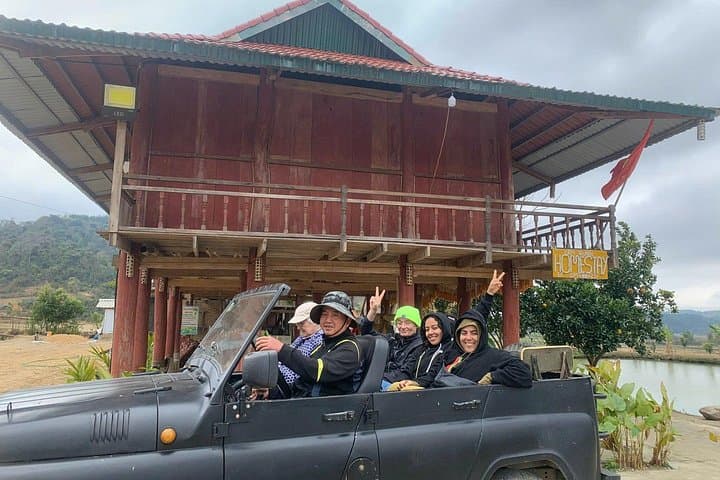
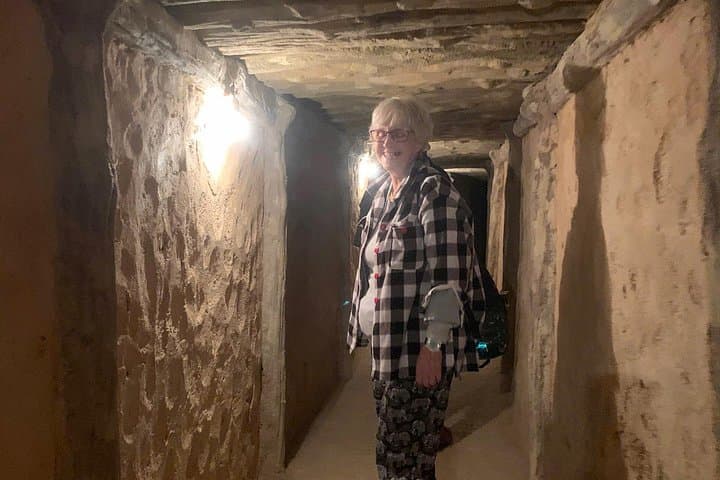
Practically, the day trip moves at a steady clip—museum exhibits, a solemn walk through the Martyrs' Cemetery, a guided visit to De Castries’ bunker, time in Ban Kha, and a restorative stop at Pha Khoang Lake. Expect several short uphill walks on uneven ground, dusty tracks, and steps inside memorial sites. Wear sturdy shoes, bring a refillable water bottle and sun protection, and plan for changing weather in the highlands. Guides handle logistics, translations, and a traditional Black Thai lunch in a family homestay.
This is a historically rich, accessible day outing that combines battlefield interpretation, living culture, and a taste of Dien Bien’s mountain landscapes—suitable for travelers ready for a full day on foot and curious about the events that reshaped the region.
easy.
9 hours.
Suitable for most travelers comfortable with several short uphill walks and standing through museum visits; minimal sustained hiking.
Yes — the tour includes pickup and drop-off from hotels in Dien Bien Phu city; confirm your lobby pickup point when booking.
Breakfast and a traditional Black Thai lunch are included; bottled water is provided during the tour.
The tour is generally suitable for most fitness levels but includes uneven terrain and steps; it is not recommended for travelers with serious back, heart conditions, or pregnancy.
The tour provides English- and Vietnamese-speaking guides; request language needs at booking if possible.
The 1954 Battle of Dien Bien Phu ended major French military presence in Indochina; the surrounding high ground, including A1 Hill, determined the battle’s outcome.
Sites are protected as memorials—stick to marked paths, avoid disturbing artifacts or vegetation, and support local homestays and vendors to benefit community conservation.
LOCAL TOURS VIETNAM operates guided outdoor trips and adventures with an emphasis on safety, stewardship, and memorable experiences.
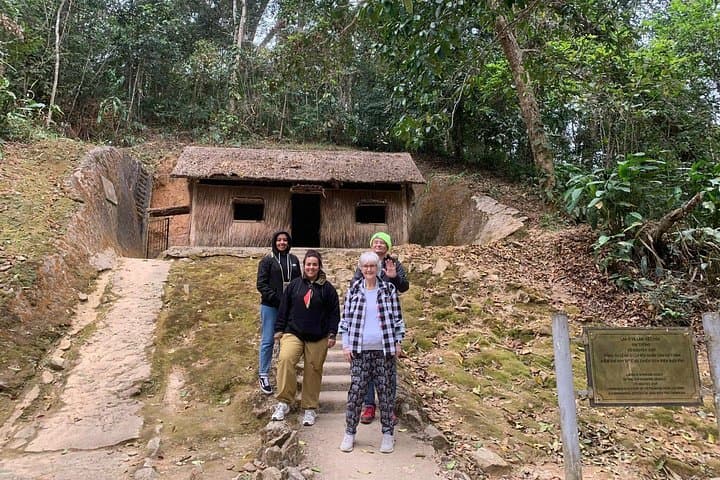
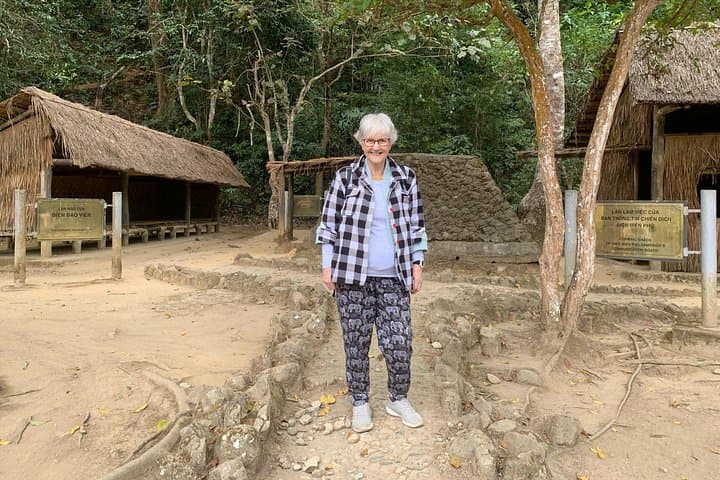
A low, cool mist lifts off terraced rice paddies as your vehicle winds up from Dien Bien Phu city toward the ridgelines that framed one of the 20th century’s decisive encounters. By midmorning you stand below A1 Hill: scarred slopes, scattered concrete bunkers, and walkways that still mark the ring of trenches where soldiers dug in and fought for control.
A low, cool mist lifts off terraced rice paddies as your vehicle winds up from Dien Bien Phu city toward the ridgelines that framed one of the 20th century’s decisive encounters. By midmorning you stand below A1 Hill: scarred slopes, scattered concrete bunkers, and walkways that still mark the ring of trenches where soldiers dug in and fought for control.
The campaign here changed the map of Southeast Asia. In May 1954 Viet Minh forces encircled a French garrison—using artillery positioned on the surrounding high ground—and the resulting surrender precipitated the end of French Indochina. Geologically the region is a mix of limestone outcrops and compacted red soil; those tight ridges and steep valleys shaped tactics and movement during the battle. Cultural traces remain: Black Thai villages in Muong Phang and Ban Kha preserve local textile patterns and mountain cuisine served in homestays.
Practically, the day trip moves at a steady clip—museum exhibits, a solemn walk through the Martyrs' Cemetery, a guided visit to De Castries’ bunker, time in Ban Kha, and a restorative stop at Pha Khoang Lake. Expect several short uphill walks on uneven ground, dusty tracks, and steps inside memorial sites. Wear sturdy shoes, bring a refillable water bottle and sun protection, and plan for changing weather in the highlands. Guides handle logistics, translations, and a traditional Black Thai lunch in a family homestay.
This is a historically rich, accessible day outing that combines battlefield interpretation, living culture, and a taste of Dien Bien’s mountain landscapes—suitable for travelers ready for a full day on foot and curious about the events that reshaped the region.