THE ADVENTURE COLLECTIVE® · Independent discovery and booking for outdoor travel

A two-hour private walking workshop that pairs London’s riverside views and historic streets with timed writing exercises inspired by Dickens, Woolf and Johnson. Expect short readings, location-based prompts and a final collaborative piece at a traditional London pub.
A two-hour private walking workshop that pairs London’s riverside views and historic streets with timed writing exercises inspired by Dickens, Woolf and Johnson. Expect short readings, location-based prompts and a final collaborative piece at a traditional London pub.
You start on Waterloo Bridge as the Thames pulls the city into motion: traffic hums, gulls wheel, and the broad view that once prompted Virginia Woolf’s reflective lines opens in front of you. The workshop uses that living view as a prompt — not a lecture hall — and asks you to write back at the places that shaped London’s voices.
Verified experiences and guided adventures in the surrounding area.
Operated by Joe Pierson · London, Greater London
You start on Waterloo Bridge as the Thames pulls the city into motion: traffic hums, gulls wheel, and the broad view that once prompted Virginia Woolf’s reflective lines opens in front of you. The workshop uses that living view as a prompt — not a lecture hall — and asks you to write back at the places that shaped London’s voices.
The route threads through the Strand and Somerset House, streets stamped by Georgian stone, Regency publishing houses, and the Victorian bustle Dickens described in alleyways and markets. St Mary le Strand and the close-quartered lanes around Fleet Street recall T.S. Eliot and Samuel Johnson; Johnson’s Dictionary reshaped English in the 18th century and the pub that closes the session keeps the same conversational pulse that sustained writers across two centuries.
Geology here is urban: reclaimed riverbank, a layered palimpsest of Roman foundations, medieval streets, and later neoclassical façades. Culturally the tour sits at a crossroads — legal, literary, theatrical — where words were printed, argued and performed.
Practically, expect a two-hour private walking workshop led by an experienced novelist-lecturer. Exercises alternate short readings, timed writing prompts, and paired critique at seated stops; pens and notebooks are available but bring your own. The pace is gentle with a few short steps between sites and full wheelchair access noted. Mornings fetch clearer light on the river; wet weather pauses are part of the cancellation policy. Bring weather-appropriate layers, a charged phone for notes or photos, and an Oyster or contactless card for easy arrival. The experience suits both curious beginners and seasoned writers who want place-based prompts and immediate feedback.
easy.
2 hours.
Suitable for all fitness levels; involves standing and short, flat walks between stops for about two hours.
Yes — exercises are designed for all levels; prompts focus on observation and short creative tasks rather than prior publication experience.
Meeting and finish points are central London locations near Waterloo Bridge and a nearby pub on the Strand; exact points are provided on booking confirmation.
Yes — the operator notes wheelchair accessibility and selects paths and stops that accommodate mobility needs; notify special requirements when booking.
The tour can be cancelled for a full refund if weather is judged unsuitable; smaller pauses or covered stops are used for light rain, and alternatives are arranged where possible.
The route traces literary layers from 18th-century lexicographers like Samuel Johnson to Victorian chroniclers such as Dickens and modernists like Virginia Woolf, reflecting how London’s streets shaped English letters.
High foot traffic can stress historic façades and riverfronts; mitigate impact by staying on designated paths, disposing of waste responsibly, and using reusable water bottles.
Joe Pierson operates guided outdoor trips and adventures with an emphasis on safety, stewardship, and memorable experiences.
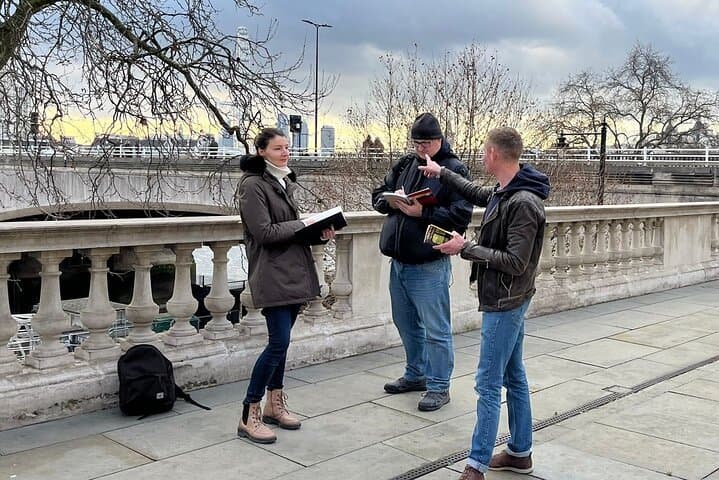
You start on Waterloo Bridge as the Thames pulls the city into motion: traffic hums, gulls wheel, and the broad view that once prompted Virginia Woolf’s reflective lines opens in front of you. The workshop uses that living view as a prompt — not a lecture hall — and asks you to write back at the places that shaped London’s voices.
You start on Waterloo Bridge as the Thames pulls the city into motion: traffic hums, gulls wheel, and the broad view that once prompted Virginia Woolf’s reflective lines opens in front of you. The workshop uses that living view as a prompt — not a lecture hall — and asks you to write back at the places that shaped London’s voices.
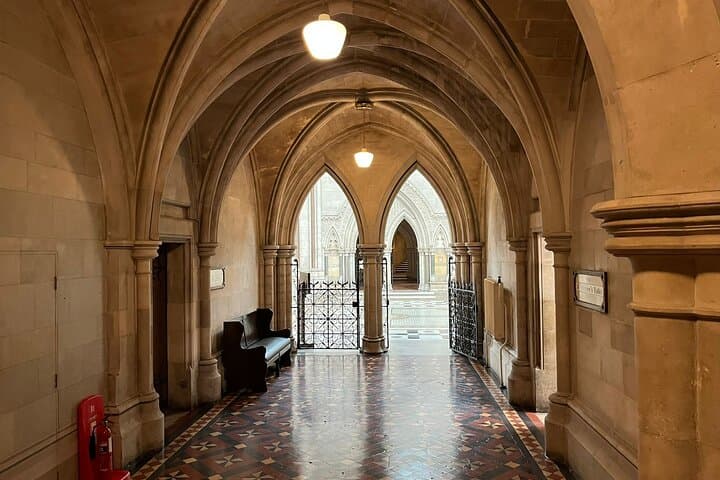
The route threads through the Strand and Somerset House, streets stamped by Georgian stone, Regency publishing houses, and the Victorian bustle Dickens described in alleyways and markets. St Mary le Strand and the close-quartered lanes around Fleet Street recall T.S. Eliot and Samuel Johnson; Johnson’s Dictionary reshaped English in the 18th century and the pub that closes the session keeps the same conversational pulse that sustained writers across two centuries.
Geology here is urban: reclaimed riverbank, a layered palimpsest of Roman foundations, medieval streets, and later neoclassical façades. Culturally the tour sits at a crossroads — legal, literary, theatrical — where words were printed, argued and performed.
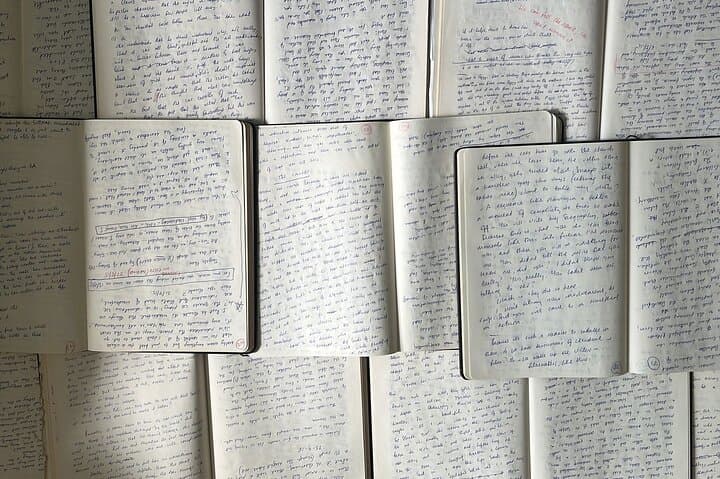
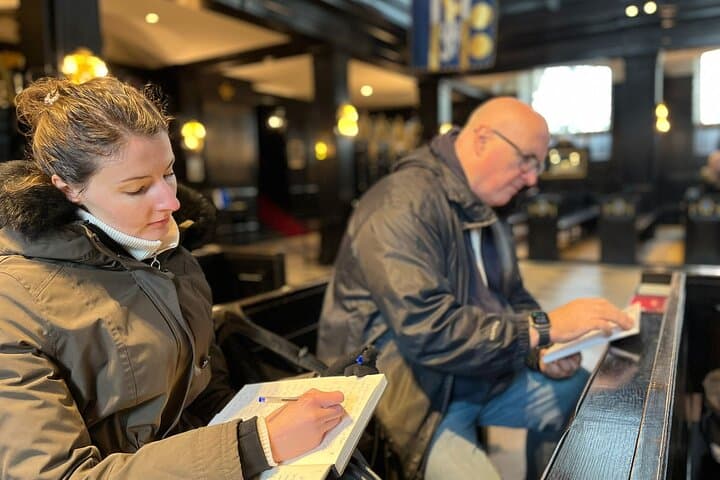
Practically, expect a two-hour private walking workshop led by an experienced novelist-lecturer. Exercises alternate short readings, timed writing prompts, and paired critique at seated stops; pens and notebooks are available but bring your own. The pace is gentle with a few short steps between sites and full wheelchair access noted. Mornings fetch clearer light on the river; wet weather pauses are part of the cancellation policy. Bring weather-appropriate layers, a charged phone for notes or photos, and an Oyster or contactless card for easy arrival. The experience suits both curious beginners and seasoned writers who want place-based prompts and immediate feedback.