THE ADVENTURE COLLECTIVE® · Independent discovery and booking for outdoor travel

Secure entry to one of Oahu’s most visited hikes and skip the reservation hassle. This guided Diamond Head hike covers the 1.5-mile crater trail, offers summit views, and includes your required reservation and ticket.
Secure entry to one of Oahu’s most visited hikes and skip the reservation hassle. This guided Diamond Head hike covers the 1.5-mile crater trail, offers summit views, and includes your required reservation and ticket.
You step onto the paved path before dawn, the smell of saltwater riding the cool trade-wind as the crater rim slices the skyline. Headlamps bob like slow-fire lanterns while the trail climbs through kiawe trees and low ohia scrub toward the crater’s rim. At 1.5 miles round trip with roughly 560 feet of elevation gain, the route moves from gentle switchbacks to exposed stairs and a short tunnel before the summit opens to a wide Pacific panorama.
Verified experiences and guided adventures in the surrounding area.
Operated by Fun Group Hawaii · Honolulu, Hawaii
You step onto the paved path before dawn, the smell of saltwater riding the cool trade-wind as the crater rim slices the skyline. Headlamps bob like slow-fire lanterns while the trail climbs through kiawe trees and low ohia scrub toward the crater’s rim. At 1.5 miles round trip with roughly 560 feet of elevation gain, the route moves from gentle switchbacks to exposed stairs and a short tunnel before the summit opens to a wide Pacific panorama.
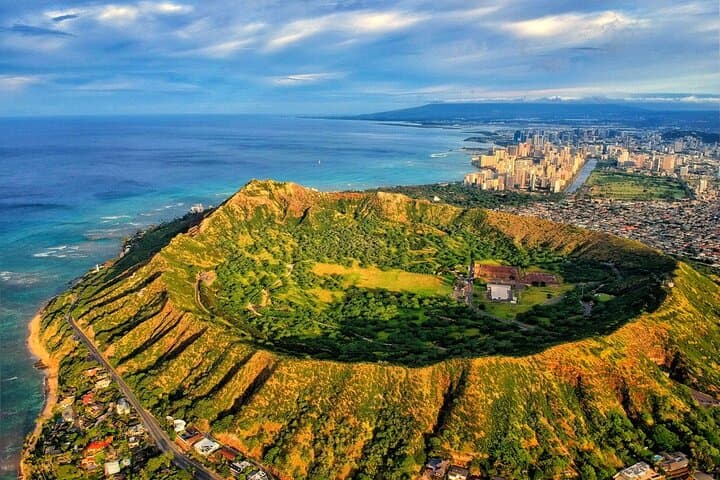
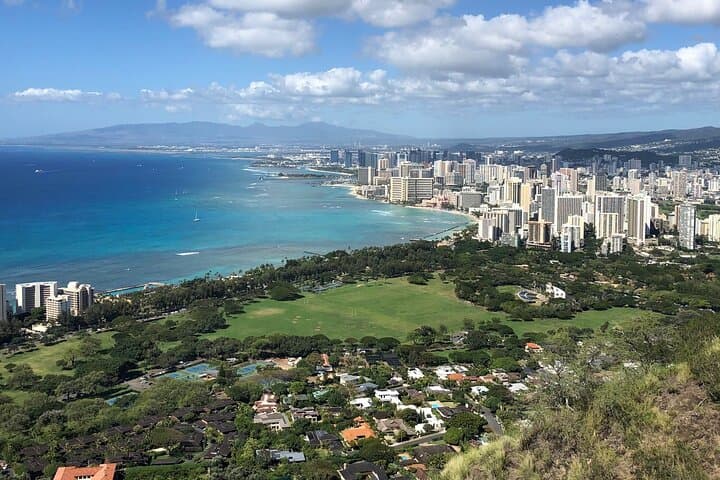
Diamond Head (Leahi) is a tuff cone born from a single explosive eruption in the Honolulu Volcanics; its crater walls and broken sea cliffs tell of violent ash and steam blasts hundreds of thousands of years ago. Military bunkers and observation posts carved into the rim evoke the 20th-century coastal defenses that repurposed this volcanic formation. Today the site sits beside Waikiki’s beach culture—locals jogging Kapiʻolani Park, surfers pushing out at dawn—so the hike is as much urban ritual as geological outing.
Expect paved switchbacks, a few steep staircases, a short dark tunnel and narrow viewing platforms; the trail is popular and reservations are required year-round. Practical notes: carry 1–2 liters of water, use sun protection, and wear grippy shoes for the packed dirt and steps. If you’re aiming for sunrise (best November–March), plan to arrive very early and allow time for the reservation check-in. After the summit, descend at a measured pace and cool off at nearby beaches or a café in Waikiki—this is a short, high-value outing that pairs easily with the rest of your Oahu day.
moderate.
2–3 hours.
Good for travelers with moderate fitness; expect steady climbing and short steep sections
Yes—reservations and an entry ticket are required year-round; this tour includes the reservation and mobile ticket.
The main trail is about 1.5 miles round trip with roughly 560 feet of elevation gain, paved switchbacks, stairs and a short tunnel—classified as moderate.
Yes—sunrise views are possible and popular, especially November–March; expect larger crowds for sunrise and plan an early arrival.
No—the trail includes stairs, a narrow tunnel and steep sections, so it’s not wheelchair- or stroller-accessible.
Diamond Head (Leahi) formed as a tuff cone in the Honolulu Volcanics; 20th-century coastal defenses left bunkers and tunnels that are still visible along the rim.
Visitor reservations and entrance fees help limit crowding and fund park maintenance; stay on marked trails and pack out all trash to protect fragile volcanic soils and native plants.
Fun Group Hawaii operates guided outdoor trips and adventures with an emphasis on safety, stewardship, and memorable experiences.

You step onto the paved path before dawn, the smell of saltwater riding the cool trade-wind as the crater rim slices the skyline. Headlamps bob like slow-fire lanterns while the trail climbs through kiawe trees and low ohia scrub toward the crater’s rim. At 1.5 miles round trip with roughly 560 feet of elevation gain, the route moves from gentle switchbacks to exposed stairs and a short tunnel before the summit opens to a wide Pacific panorama.
You step onto the paved path before dawn, the smell of saltwater riding the cool trade-wind as the crater rim slices the skyline. Headlamps bob like slow-fire lanterns while the trail climbs through kiawe trees and low ohia scrub toward the crater’s rim. At 1.5 miles round trip with roughly 560 feet of elevation gain, the route moves from gentle switchbacks to exposed stairs and a short tunnel before the summit opens to a wide Pacific panorama.
Diamond Head (Leahi) is a tuff cone born from a single explosive eruption in the Honolulu Volcanics; its crater walls and broken sea cliffs tell of violent ash and steam blasts hundreds of thousands of years ago. Military bunkers and observation posts carved into the rim evoke the 20th-century coastal defenses that repurposed this volcanic formation. Today the site sits beside Waikiki’s beach culture—locals jogging Kapiʻolani Park, surfers pushing out at dawn—so the hike is as much urban ritual as geological outing.
Expect paved switchbacks, a few steep staircases, a short dark tunnel and narrow viewing platforms; the trail is popular and reservations are required year-round. Practical notes: carry 1–2 liters of water, use sun protection, and wear grippy shoes for the packed dirt and steps. If you’re aiming for sunrise (best November–March), plan to arrive very early and allow time for the reservation check-in. After the summit, descend at a measured pace and cool off at nearby beaches or a café in Waikiki—this is a short, high-value outing that pairs easily with the rest of your Oahu day.