THE ADVENTURE COLLECTIVE® · Independent discovery and booking for outdoor travel

Step onto a glass bridge 240 meters above Dashbashi Canyon and follow a short trail to a waterfall on this full-day escape from Tbilisi. This guide covers the geology, local culture, and practical tips to make the most of the outing.
Step onto a glass bridge 240 meters above Dashbashi Canyon and follow a short trail to a waterfall on this full-day escape from Tbilisi. This guide covers the geology, local culture, and practical tips to make the most of the outing.
On the road out of Tbilisi the air thins and the landscape sharpens: limestone walls rise, streams gather momentum, and a glass ribbon appears suspended over a deep cleft. Standing on the Diamond Bridge, visitors feel the canyon’s draft beneath their feet and the river daring them to look down. The walk to the waterfall is short but honest — about 2 km on packed earth and rock — with switchbacks that reveal shelves of exposed strata and sudden windows into the gorge.
Verified experiences and guided adventures in the surrounding area.
Operated by Tranquil Holidays · Dashbashi, Kvemo Kartli
On the road out of Tbilisi the air thins and the landscape sharpens: limestone walls rise, streams gather momentum, and a glass ribbon appears suspended over a deep cleft. Standing on the Diamond Bridge, visitors feel the canyon’s draft beneath their feet and the river daring them to look down. The walk to the waterfall is short but honest — about 2 km on packed earth and rock — with switchbacks that reveal shelves of exposed strata and sudden windows into the gorge.
Dashbashi Canyon carved itself through volcanic tuffs and shale over millennia; its cliffs and plunge pools tell a geological story of erosion and rare microclimates. Locally, the valley has been a seasonal resource for shepherds and honey producers — a roadside vendor selling amber honey is a common stop on the drive. The recent addition of a glass bridge and elevated bike platforms has made the site a contemporary draw, balancing bold design with a dramatic natural feature.
Practically, the excursion is a full-day outing from Tbilisi (roughly 2 hours each way by road). Expect cool air in the shade, bright glare on exposed rock, and muddy patches after rain. Footwear with grip is recommended for the short waterfall trail; the bridge has railings but glass sections require care, especially if wet. Bring water, cash for local stalls, a wind layer, and a camera with a wide lens for the canyon vistas.
Timing your visit for morning or late afternoon avoids the busiest midday window and gives warmer light on the cliffs. Respect signage, stay on marked trails, and allow time to enjoy the geology and the simple, rural culture you pass on the route.
easy.
6–7 hours (including transport).
Basic mobility and comfort with a short 2 km walk; suitable for most fitness levels
The signed trail to the waterfall is roughly 2 km round trip on an uneven but well-trodden path; allow 30–60 minutes depending on stops.
The bridge is engineered for visitors and has railings; exercise caution on glass panels and avoid leaning or jumping.
Yes — the trail is short and the tour is considered easy, but supervise children on the bridge and those with mobility issues should note some uneven surfaces.
Yes, small village stalls often sell honey and snacks; bring cash as card acceptance may be limited.
The canyon formed through long-term erosion of volcanic and sedimentary rocks; nearby villages have long practiced transhumance and small-scale agriculture tied to the valley’s microclimate.
Visitors are asked to stay on marked paths to limit erosion and to avoid leaving waste; supporting local vendors helps incentivize sustainable tourism.
Tranquil Holidays operates guided outdoor trips and adventures with an emphasis on safety, stewardship, and memorable experiences.

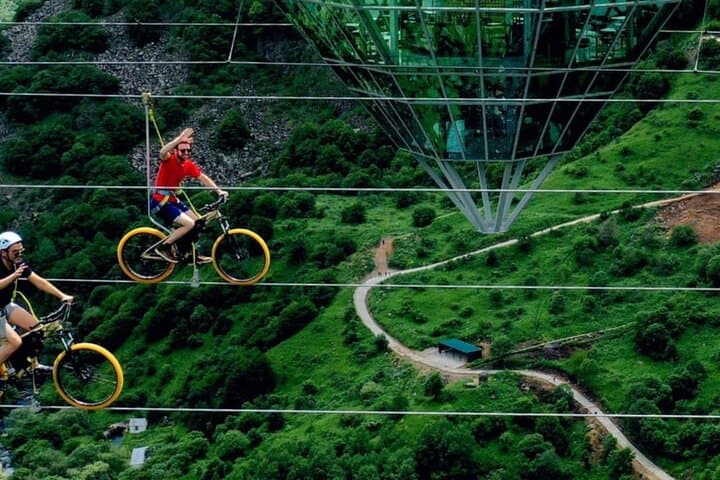


On the road out of Tbilisi the air thins and the landscape sharpens: limestone walls rise, streams gather momentum, and a glass ribbon appears suspended over a deep cleft. Standing on the Diamond Bridge, visitors feel the canyon’s draft beneath their feet and the river daring them to look down. The walk to the waterfall is short but honest — about 2 km on packed earth and rock — with switchbacks that reveal shelves of exposed strata and sudden windows into the gorge.
On the road out of Tbilisi the air thins and the landscape sharpens: limestone walls rise, streams gather momentum, and a glass ribbon appears suspended over a deep cleft. Standing on the Diamond Bridge, visitors feel the canyon’s draft beneath their feet and the river daring them to look down. The walk to the waterfall is short but honest — about 2 km on packed earth and rock — with switchbacks that reveal shelves of exposed strata and sudden windows into the gorge.
Dashbashi Canyon carved itself through volcanic tuffs and shale over millennia; its cliffs and plunge pools tell a geological story of erosion and rare microclimates. Locally, the valley has been a seasonal resource for shepherds and honey producers — a roadside vendor selling amber honey is a common stop on the drive. The recent addition of a glass bridge and elevated bike platforms has made the site a contemporary draw, balancing bold design with a dramatic natural feature.
Practically, the excursion is a full-day outing from Tbilisi (roughly 2 hours each way by road). Expect cool air in the shade, bright glare on exposed rock, and muddy patches after rain. Footwear with grip is recommended for the short waterfall trail; the bridge has railings but glass sections require care, especially if wet. Bring water, cash for local stalls, a wind layer, and a camera with a wide lens for the canyon vistas.
Timing your visit for morning or late afternoon avoids the busiest midday window and gives warmer light on the cliffs. Respect signage, stay on marked trails, and allow time to enjoy the geology and the simple, rural culture you pass on the route.