THE ADVENTURE COLLECTIVE® · Independent discovery and booking for outdoor travel

Short, scenic treks from Phedi up to Dhampus and Sarangkot combine village culture with sweeping Himalayan views. This 5-day loop pairs easy mountain walks with a full day exploring Pokhara’s lakes, caves and museums.
Short, scenic treks from Phedi up to Dhampus and Sarangkot combine village culture with sweeping Himalayan views. This 5-day loop pairs easy mountain walks with a full day exploring Pokhara’s lakes, caves and museums.
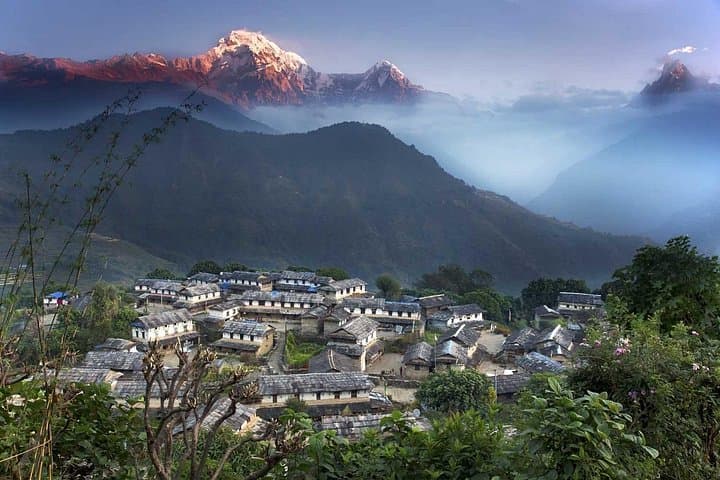
You start before dawn in Kathmandu, folding into a tourist coach that eases west across the Trishuli valley toward the lake city of Pokhara. The road opens into greener hills and terraced farms; by late afternoon you’re walking a short, steep trail from Phedi up to Dhampus—village roofs, prayer flags and the first hints of the Annapurna skyline.
Verified experiences and guided adventures in the surrounding area.
Operated by Liberty Holidays · Pokhara, Gandaki Province
You start before dawn in Kathmandu, folding into a tourist coach that eases west across the Trishuli valley toward the lake city of Pokhara. The road opens into greener hills and terraced farms; by late afternoon you’re walking a short, steep trail from Phedi up to Dhampus—village roofs, prayer flags and the first hints of the Annapurna skyline.
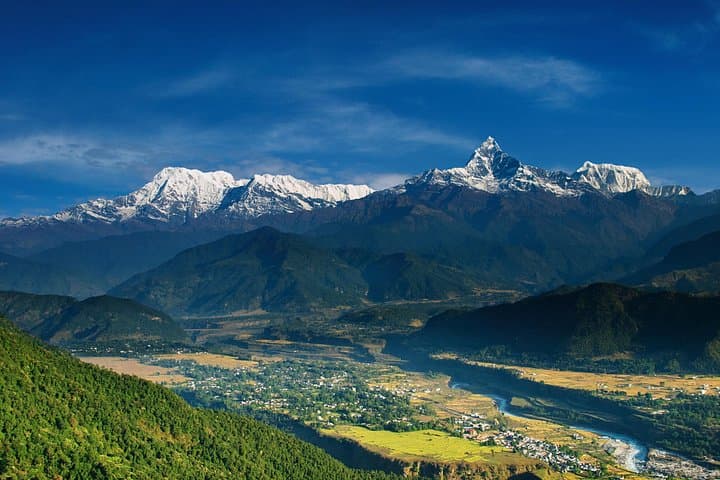
Dhampus and Sarangkot belong to a living mountain culture. Ghale and Gurung villages line the ridgelines; houses sit on old moraine and terraces carved from volcanic and metamorphic rock uplifted by the collision of the Indian and Eurasian plates. Sarangkot, a compact hilltop at around 1,600 m, became famous as a sunrise lookout for Dhaulagiri, Annapurna and Machhapuchhare. Pokhara itself is younger as a modern tourist hub but remains threaded with lakes, caves and the Seti River gorge.
Expect short day hikes rather than alpine expeditions: Phedi to Dhampus is roughly 2 hours (3–4 km, 200–400 m gain), Sarangkot a comparable stretch with well-marked village paths. Nights are in simple lodges and 3-star hotels in Pokhara; meals are provided during trekking. Practical notes: travel time by tourist bus is about five hours each way, mornings in Sarangkot are cold and wind-prone, and monsoon months can wash trails.
Pack layered clothing, sturdy footwear, and cash for teahouse purchases. The itinerary balances cultural insight and accessible mountain views—ideal for travelers wanting short, scenic treks without full expedition logistics.
moderate.
5 days.
Suitable for travelers with regular aerobic fitness able to hike 3–5 hours on hilly terrain; stairs and uneven surfaces are common.
For these short village hikes most operators handle any local entry fees; extended treks into the Annapurna Conservation Area require ACAP permits—confirm with your tour operator.
By tourist coach the road trip typically takes about five hours each way, depending on traffic and road conditions.
Yes—walking segments are short and lodges are comfortable, but expect stairs, uneven paths and some uphill walking; discuss mobility needs with the operator.
Spring (Mar–May) and autumn (Sep–Nov) offer the clearest mountain views; monsoon season brings heavy rain and possible trail closures, and winters can be cold at dawn.
Ghale and Gurung communities have farmed these terraced slopes for centuries; their seasonal festivals and stone-built homes reflect long mountain traditions.
The area sits on the edge of Annapurna landscape management; responsible waste practices and supporting local homestays help reduce tourism impact.
Liberty Holidays operates guided outdoor trips and adventures with an emphasis on safety, stewardship, and memorable experiences.

You start before dawn in Kathmandu, folding into a tourist coach that eases west across the Trishuli valley toward the lake city of Pokhara. The road opens into greener hills and terraced farms; by late afternoon you’re walking a short, steep trail from Phedi up to Dhampus—village roofs, prayer flags and the first hints of the Annapurna skyline.
You start before dawn in Kathmandu, folding into a tourist coach that eases west across the Trishuli valley toward the lake city of Pokhara. The road opens into greener hills and terraced farms; by late afternoon you’re walking a short, steep trail from Phedi up to Dhampus—village roofs, prayer flags and the first hints of the Annapurna skyline.
Dhampus and Sarangkot belong to a living mountain culture. Ghale and Gurung villages line the ridgelines; houses sit on old moraine and terraces carved from volcanic and metamorphic rock uplifted by the collision of the Indian and Eurasian plates. Sarangkot, a compact hilltop at around 1,600 m, became famous as a sunrise lookout for Dhaulagiri, Annapurna and Machhapuchhare. Pokhara itself is younger as a modern tourist hub but remains threaded with lakes, caves and the Seti River gorge.
Expect short day hikes rather than alpine expeditions: Phedi to Dhampus is roughly 2 hours (3–4 km, 200–400 m gain), Sarangkot a comparable stretch with well-marked village paths. Nights are in simple lodges and 3-star hotels in Pokhara; meals are provided during trekking. Practical notes: travel time by tourist bus is about five hours each way, mornings in Sarangkot are cold and wind-prone, and monsoon months can wash trails.
Pack layered clothing, sturdy footwear, and cash for teahouse purchases. The itinerary balances cultural insight and accessible mountain views—ideal for travelers wanting short, scenic treks without full expedition logistics.