THE ADVENTURE COLLECTIVE® · Independent discovery and booking for outdoor travel

A compact Himalayan day hike from Pokhara that climbs to Australian Camp for panoramic Annapurna views before descending into the Gurung village of Dhampus. It’s a culturally rich, moderate trek ideal for travelers wanting a single-day mountain experience.
A compact Himalayan day hike from Pokhara that climbs to Australian Camp for panoramic Annapurna views before descending into the Gurung village of Dhampus. It’s a culturally rich, moderate trek ideal for travelers wanting a single-day mountain experience.
You leave Pokhara before breakfast and the road climbs into terraced hills; mist lifts from rice paddies and the city shrinks behind you. By Kande you step out of the vehicle and begin the climb—stone steps, rhododendron-sheltered switchbacks and open ridgelines that push your lungs and reward your eyes. The high point, Australian Camp (≈2,100 m), opens the curtain on Annapurna South, Machapuchare (Fishtail) and Lamjung Himal.
Verified experiences and guided adventures in the surrounding area.
Operated by Altitude Himalaya · Dhampus, Kaski
You leave Pokhara before breakfast and the road climbs into terraced hills; mist lifts from rice paddies and the city shrinks behind you. By Kande you step out of the vehicle and begin the climb—stone steps, rhododendron-sheltered switchbacks and open ridgelines that push your lungs and reward your eyes. The high point, Australian Camp (≈2,100 m), opens the curtain on Annapurna South, Machapuchare (Fishtail) and Lamjung Himal.
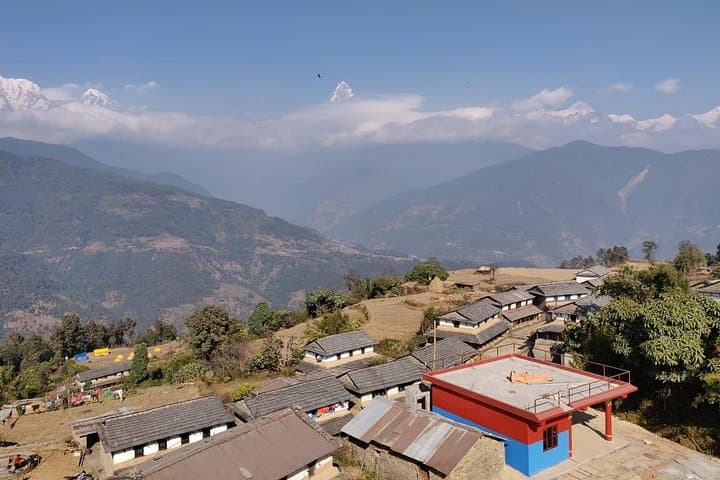
This route threads local Gurung settlements—Dhampus at about 1,650 m is a working village where stone houses, stacked grain and tea stalls reflect everyday life. Geologically the trail runs along the Lesser Himalaya’s folded slopes; soils are shallow in places so steps and retaining walls are a constant. Culturally, the Gurung people have long practiced hill agriculture and hospitality; a simple lunch in Dhampus often includes local tea and dal bhat.
For planning: expect 8–12 km of walking with roughly 500–700 m of ascent from Kande to Australian Camp, then a descending leg into Dhampus and down to Phedi where transport returns you to Pokhara. Trail surfaces vary—packed earth, stone staircases and occasional muddy sections after rain. Best times are clear pre- and post-monsoon months when alpine views are sharp. Bring layered clothing, sun protection and enough water; the pace is steady but keeps moving to preserve warm muscles. The hike is an excellent introduction to Himalayan day trekking—short enough for a relaxed day yet scenic enough to feel like an expedition.
moderate.
5–8 hours.
Requires moderate cardiovascular fitness and ability to hike uphill for several hours; good for regular walkers and first-time trekkers.
The walking portion is typically 8–12 km round trip, depending on exact start and finish points (Kande → Australian Camp → Dhampus → Phedi).
Dhampus and Australian Camp sit below 2,200 m, so serious altitude issues are uncommon, but stay hydrated and ascend at a comfortable pace if you’re sensitive to altitude.
Typical inclusions are private transport from Pokhara, bottled water, tea/coffee, lunch, and a local guide; confirm specifics with the operator before booking.
Clear-weather months—late September to November and March to May—offer the best mountain visibility; avoid the monsoon for slippery trails and low visibility.
Dhampus sits in the Kaski district, an area long inhabited by the Gurung people whose hill agriculture and village hospitality shape daily life along these trails.
Trail erosion and unmanaged waste are local concerns—stick to marked paths, pack out trash and support village-run facilities to keep the route sustainable.
Altitude Himalaya operates guided outdoor trips and adventures with an emphasis on safety, stewardship, and memorable experiences.
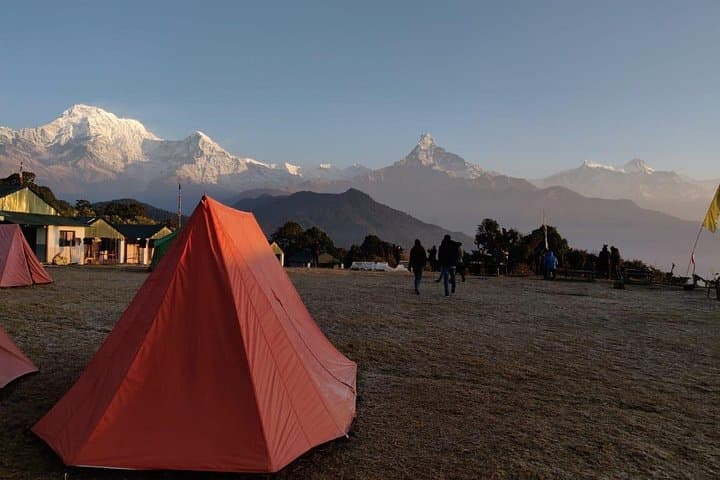
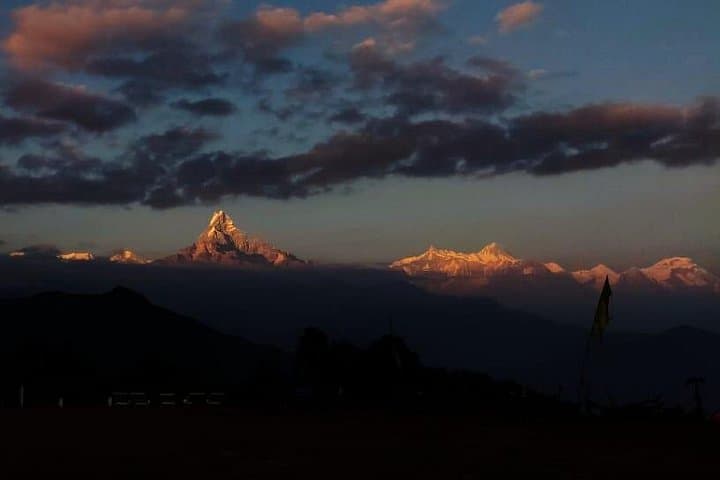
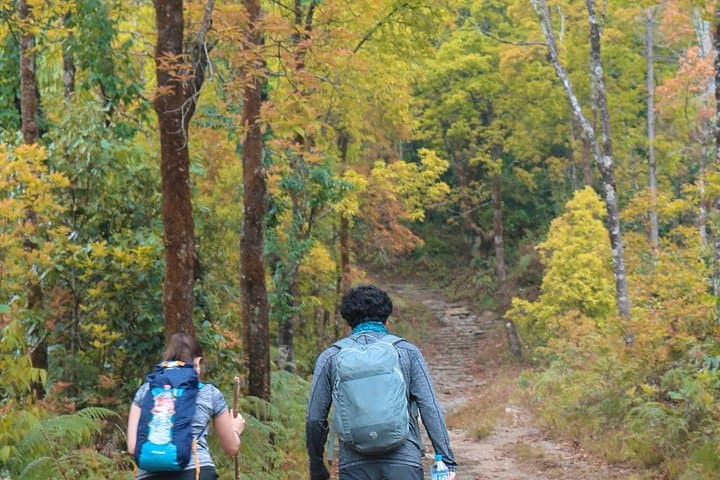
You leave Pokhara before breakfast and the road climbs into terraced hills; mist lifts from rice paddies and the city shrinks behind you. By Kande you step out of the vehicle and begin the climb—stone steps, rhododendron-sheltered switchbacks and open ridgelines that push your lungs and reward your eyes. The high point, Australian Camp (≈2,100 m), opens the curtain on Annapurna South, Machapuchare (Fishtail) and Lamjung Himal.
You leave Pokhara before breakfast and the road climbs into terraced hills; mist lifts from rice paddies and the city shrinks behind you. By Kande you step out of the vehicle and begin the climb—stone steps, rhododendron-sheltered switchbacks and open ridgelines that push your lungs and reward your eyes. The high point, Australian Camp (≈2,100 m), opens the curtain on Annapurna South, Machapuchare (Fishtail) and Lamjung Himal.
This route threads local Gurung settlements—Dhampus at about 1,650 m is a working village where stone houses, stacked grain and tea stalls reflect everyday life. Geologically the trail runs along the Lesser Himalaya’s folded slopes; soils are shallow in places so steps and retaining walls are a constant. Culturally, the Gurung people have long practiced hill agriculture and hospitality; a simple lunch in Dhampus often includes local tea and dal bhat.
For planning: expect 8–12 km of walking with roughly 500–700 m of ascent from Kande to Australian Camp, then a descending leg into Dhampus and down to Phedi where transport returns you to Pokhara. Trail surfaces vary—packed earth, stone staircases and occasional muddy sections after rain. Best times are clear pre- and post-monsoon months when alpine views are sharp. Bring layered clothing, sun protection and enough water; the pace is steady but keeps moving to preserve warm muscles. The hike is an excellent introduction to Himalayan day trekking—short enough for a relaxed day yet scenic enough to feel like an expedition.